Showcase your capabilities
If you design, build or supply Thermal IFF Beacons, create a profile to showcase your capabilities and connect with visitors who have an active requirement for your solutions.




IFF thermal beacons provide critical friend-or-foe identification by generating distinct signatures visible to MWIR and LWIR imaging systems. These devices ensure positive identification in high-clutter environments where standard infrared markers fail.
This category details leading providers and manufacturers of thermal beacon solutions, including active multi-spectral emitters and solid-state black body modules. The following guide explores the technical considerations for specifying an IFF thermal beacon within defense and security applications.
Read the Technology Overview
Advanced Infrared & Laser Technologies for Mission-Critical Military & Defense Applications

If you design, build or supply Thermal IFF Beacons, create a profile to showcase your capabilities and connect with visitors who have an active requirement for your solutions.

In the modern battlespace, achieving reliable Combat Identification (Combat ID) requires more than simple visual markers. Thermal beacons are engineered to be unambiguous to thermal imagers operating amidst operational clutter, such as engine heat, fires, or sun-warmed terrain. For procurement officers, the challenge lies not in mere detection, but in ensuring an iff thermal beacon is visible at the required range and angle without compromising the operator’s signature profile.
Successful integration requires treating these devices as a system interface. This involves a coordinated approach to mechanical mounting, power management, and signature behavior. Defining the observer chain early: whether it involves handheld thermal imagers (TI), vehicle-mounted sights, or airborne ISR pods: is essential for mission success.
In procurement specifications, the term “IR beacon” is often used loosely, leading to potential operational failure. Thermal beacons specifically target detection by systems in the Mid-Wave Infrared (MWIR, 3 to 5 µm) and Long-Wave Infrared (LWIR, 8 to 14 µm) bands. The gap between these bands, specifically the 5 to 8 µm range, is characterized by high atmospheric water vapor absorption, which renders it largely unusable for long-range identification.
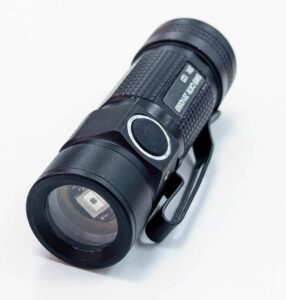
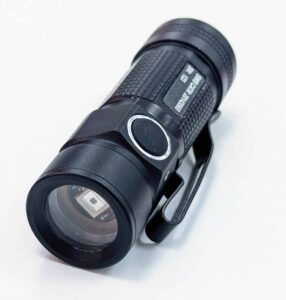
Keychain SWIR IFF beacon by Thermal Beacon.
There is a critical distinction between these and NIR/SWIR markers. Near-Infrared (NIR) strobes are optimized for Gen 3 Night Vision Goggles (NVGs), which typically peak around 0.9 µm. Short-Wave Infrared (SWIR) markers require specialized Indium Gallium Arsenide (InGaAs) detectors. A standard NIR strobe may appear brilliant through NVGs but remain completely invisible to a long-wave thermal imager. Conversely, a thermal beacon provides a clear cue to a TI while offering minimal signature to NVG-equipped observers.
Choosing between MWIR and LWIR depends on the primary sensor chains used by friendly forces. MWIR imagers often deliver high contrast through specific atmospheric conditions and are common in airborne platforms like the Litening pod. LWIR systems are more prevalent in ground vehicle sights and handheld units using microbolometer technology. Factors such as thermal crossover, which occurs at dawn and dusk when background temperatures converge, can make simple “hot spot” beacons ambiguous. Advanced solutions utilize patterning or controlled modulation to remain identifiable during these periods.
A thermal beacon is only effective if its signature is both distinct and interpretable under extreme stress. Many units fail when their “bright” lab signature becomes indistinguishable from hot rocks or vehicle exhaust in the field. Effective signature engineering, such as that found in solid-state black body emitters, controls the apparent temperature distribution and emissivity. This ensures the device forms a recognizable geometry across various viewing angles.
Procurement must address detectability management. Increasing friendly observability inherently increases adversary observability. Systems should offer multiple intensity modes and on/off discipline. Furthermore, specifiers should ensure the beacon does not “wash out” when subjected to the Automatic Gain Control (AGC) algorithms used in modern thermal sensors. Referencing STANAG 2129 for target marking can help align these signatures with international standardization agreements.
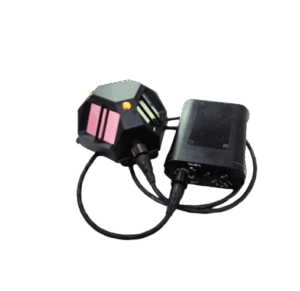
For helmet-mounted systems like the FireFly or Orion, integration must account for head motion and potential snag hazards. Occlusion is a primary concern: helmet covers, battery packs, and even the wearer’s shoulders can block the line of sight. Active multi-spectral beacons provide more consistency in cold environments than passive differential markers. Controls must be tactile and glove-friendly, often utilizing haptic feedback to confirm mode changes without a visual check.
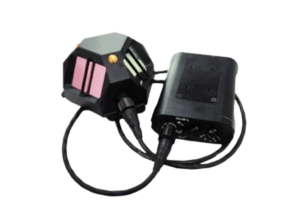
TRFlash-2 multispectral helmet-mounted IFF thermal beacon by Thermal Beacon.
Body-worn placement on plate carriers or packs involves a trade-off between visibility and protection. High placement improves line-of-sight for vehicles but risks being obscured by weapon slings or hydration tubes. Modular designs like the MS-DMR allow for rapid relocation between the chest and back or can be handheld and aimed like a flashlight for directional signaling.
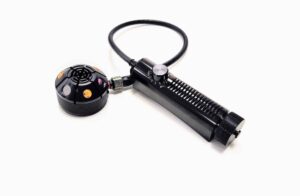
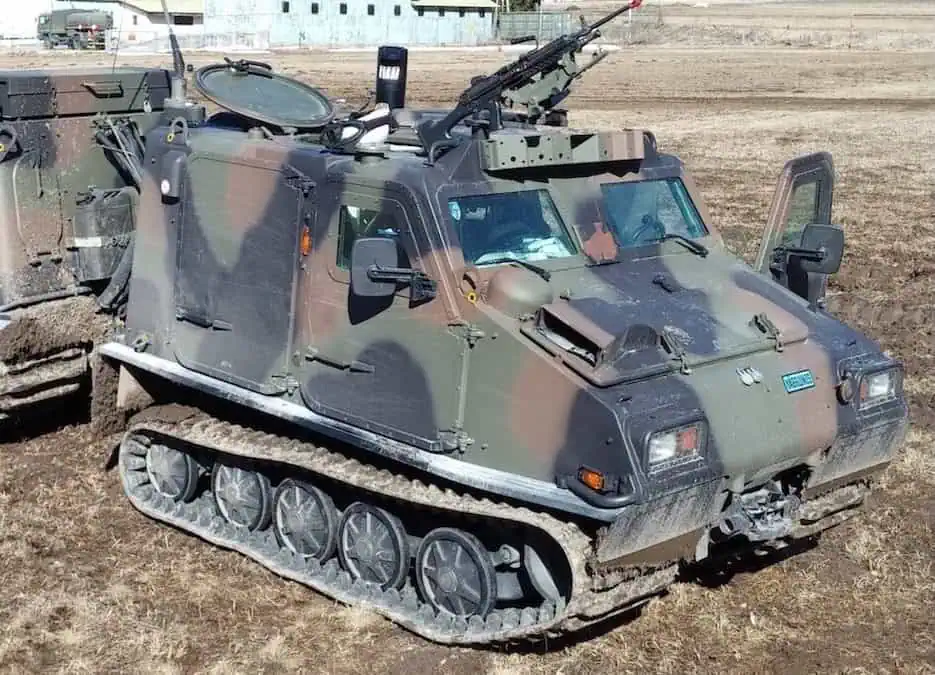
Vehicle-mounted beacons such as the Natally or MS-OMR III must survive extreme vibration, blast overpressure, and contamination from oil or exhaust soot. Mounting zones should be carefully selected to avoid heat-soak from engine decks, which can mask the beacon’s signature.
Cable routing is a frequent hidden cost. If a vehicle thermal beacon requires platform power (12/24VDC), it must utilize rugged connector standards and strain relief that do not compromise armor integrity. Integration kits should be validated on the harshest, noisiest vehicles in the fleet to ensure long-term durability.
Environmental factors can rapidly collapse thermal contrast. Dust and mud alter emissivity, while rain cools surfaces and creates false artifacts. Procurement should demand performance data across a full environmental envelope, not just a generic operating temperature range.
Beyond MIL-STD-810 for shock and vibration, active electronic beacons should be qualified against MIL-STD-461G for electromagnetic interference. This ensures that the beacon does not interfere with co-located GNSS or communication equipment. Ingress protection (IP67) ratings are essential for high-pressure washing and immersion. For SAR (Search and Rescue) applications, integrating a thermal emitter with an RF beacon significantly improves retrieval chances for survivors in maritime or mountain environments.
The directory at the top of this page features leading global manufacturers of IFF thermal beacons and serves as the primary resource for qualifying vendors against specific mission requirements. When selecting a partner, prioritize suppliers who provide comprehensive qualification data for both subassembly durability and signature stability over time. Evaluating a supplier’s ability to support sustainment, including spare mounts and replaceable protective windows, is essential for maintaining high operational availability.


 Searching Companies & Products