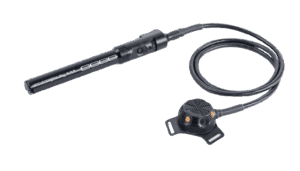
Infrared beacons and markers are critical electro-optical assets used for Identification Friend or Foe (IFF), Blue Force Tracking, and Search and Rescue operations. This category details leading providers of tactical IR beacon solutions, including IR strobe marker and IR locator beacon hardware. The following guide explores technical considerations for specifying an IR beacon within military and defense environments.
If you design, build or supply Infrared (IR) Beacons & Markers, create a profile to showcase your capabilities and connect with visitors who have an active requirement for your solutions.
In the field, an infrared signal is often the only thing standing between a successful extraction and a tragic blue-on-blue incident. These markers sit right at the convergence of tactical identity and platform survivability. They support everything from simple unit coordination to complex Search and Rescue (SAR) or Combat Search and Rescue (CSAR) localization using high-sensitivity night vision and Electro-Optical/Infrared (EO/IR) sensors. One hard reality for procurement officers is that infrared visibility is not a “one size fits all” metric. Performance fluctuates based on wavelength, radiometric output measured in Watts per Steradian (W/sr), beam geometry, and modulation coding.
Smart procurement means balancing peak visibility against the risk of being seen by the wrong people. A marker that is brilliant for friendly recognition might be a “shoot me” light for an adversary with modern sensors. Engineering teams have to translate mission use cases into testable, verifiable requirements. This means demanding objective evidence: spectral radiance data and environmental qualification: before you even think about standardizing an IFF IR beacon across a fleet or a brigade.
Active IR vs. Thermal Beacons: Understanding the Physics
A common point of confusion in requirements docs is the distinction between Near-Infrared (NIR) systems and thermal (MWIR/LWIR) emitters. They are not interchangeable.
IR Beacons (NIR/SWIR): These typically use an IR led beacon or laser source. They operate in the 0.7 to 1.7 micron range and require an IR beacon receiver or Night Vision Goggles (NVGs) to be seen. Because they use high-speed LEDs, they can flash in complex codes. This makes them ideal for an IR target marker or an IR strobe marker where you need a unique “fingerprint” to identify a specific team.
Thermal Beacons: These rely on heat. They emit in the Long-Wave Infrared (LWIR) or Mid-Wave Infrared (MWIR) bands. They are visible to thermal imagers (FLIR) rather than NVGs. While they are great for seeing through smoke or fog where an infrared led beacon might scatter, they are often “blob-like” and cannot be pulsed at high frequencies for complex IFF coding.
Choosing the wrong one means your beacon seeker will be looking for a signal that simply isn’t in its wavelength. Always specify based on the sensor the friendly force is actually carrying.
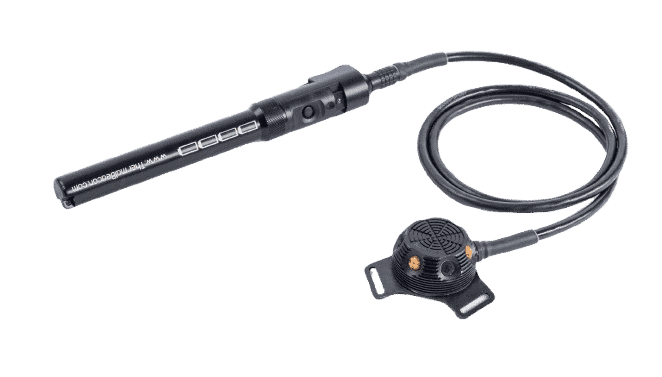
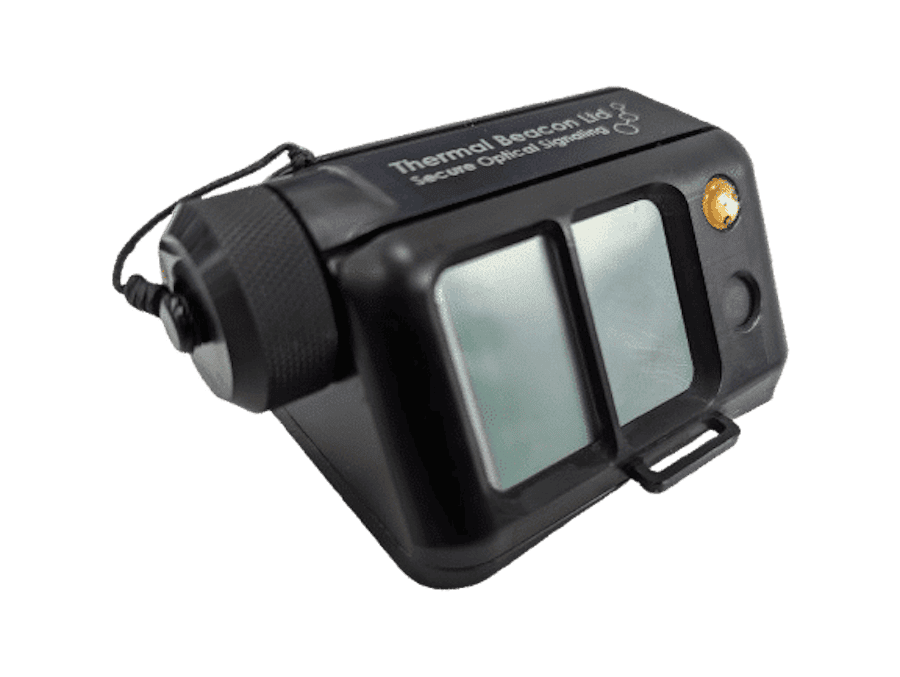
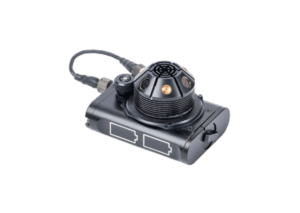
Infrared beacon, Orion, from Thermal Beacon.
Platform-Specific Integration Layers
Putting a marker on a helmet is easy. Putting one on a vehicle or a drone and expecting it to survive a six-month deployment is a different story. You have to look at three specific layers:
Physical Integration: Mounting stability, placement for line-of-sight, and making sure the device isn’t a snag hazard for fast-roping or vehicle egress.
Electrical Integration: Dealing with the messy power on military vehicles. You need protection against voltage transients and reverse polarity.
Optical Integration: Wavelength alignment is everything. If your IR beacon sensor is looking for SWIR and you provide NIR, the mission fails before it starts.
Dismounted Soldier and Special Operations (SOF)
For an operator on the ground, the “best” IR marker is the one they don’t have to think about. An IR helmet marker or a helmet IR beacon has to be identifiable in seconds. SOF teams usually want a mix: active emitters for high visibility and passive IR marker night vision patches for low-threat environments.
Check the specs for MIL-STD-3009 compliance to ensure the light doesn’t bloom out the user’s own NVGs. Also, look for tactile switches. If a soldier has to take off their gloves to turn on their military IR beacon, the design has failed. These devices live in a world of mud, sweat, and drop-shocks: they need to meet MIL-STD-810H just to stay in the game.
IR Beacons for Ground Vehicles: Armored and Tactical
On a vehicle, the challenge is vibration and “dirty” power. A vehicle IR beacon has to survive the constant rattle of a diesel engine and the shock of off-road movement. Sourcing specs must demand MIL-STD-461G for electromagnetic compatibility so the beacon doesn’t interfere with the radio or ECM gear.
The light needs to be seen from the air and from the ground. This means a wide angular coverage is better than a long, narrow beam. You want an IR strobe beacon that won’t wash out when an overhead ISR platform is looking down through a high-gain thermal turret.
UAVs and ISR Platforms
Using an IR beacon on a drone application is all about SWaP-C: Size, Weight, Power, and Cost. But the viewing geometry is brutal. A light that looks bright at 50 meters is almost invisible from 2,000 feet up. You need to tie your detection range to W/sr metrics. If the drone is the one detecting IR beacons on the ground, the IR beacon tracking software needs a stable, high-contrast signal to lock onto.
Maritime Surface Vessels
Salt is the enemy. For a military IR marker on a boat, MIL-STD-810 Method 509.7 (salt fog) is the only test that matters. The sea also creates reflections that can confuse an IR beacon sensor. You need a specific, stable modulation pattern so the beacon detector can tell the difference between a friendly vessel and moonlight reflecting off a wave.
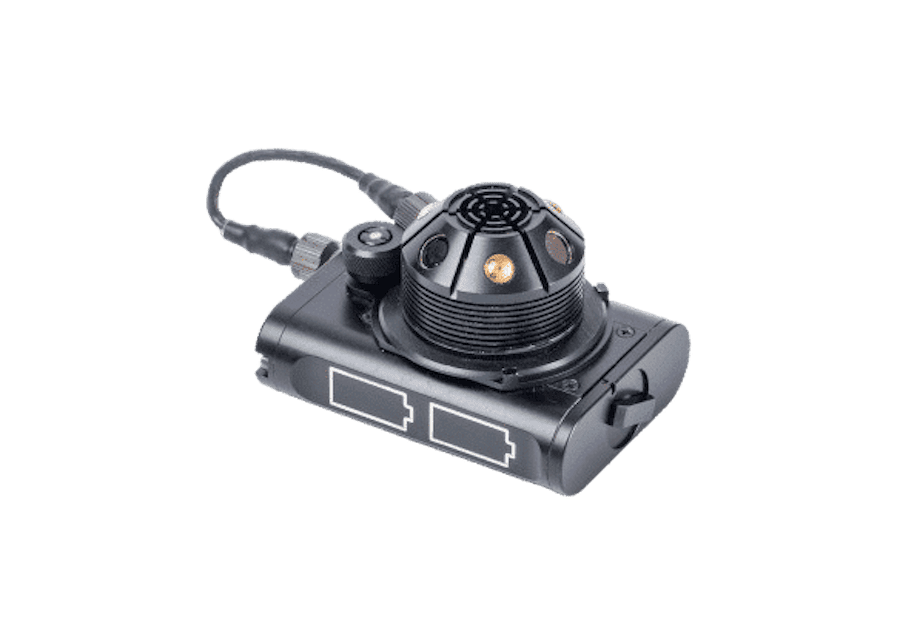
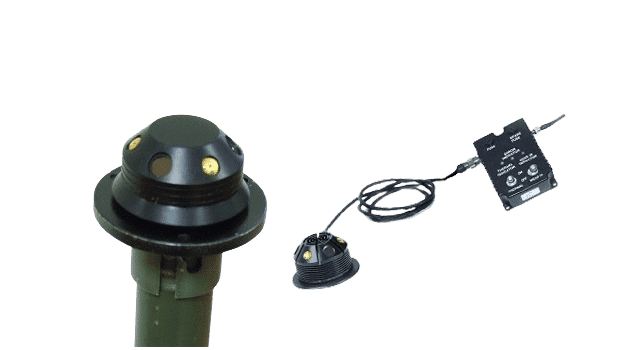
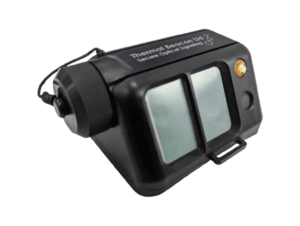
Infrared (IR) beacon, MS-OMR II, from Thermal Beacon.
Mission Challenges
Spectral Compatibility and the “Out-of-Band” Myth
“Out-of-band” is a buzzword that gets thrown around a lot. In the real world, it means moving the signature away from the 0.7 to 0.9 micron range where cheap, commercial NVGs operate. Moving to the SWIR spectrum (1.0 to 1.7 microns) provides a massive tactical advantage. It makes your long range IR beacon visible to your high-end sensors but invisible to an adversary using basic Gen 2 or Gen 3 tubes.
Radiometric Output and Range
Ignore brochures that say “visible for 5 miles.” Range is a variable, not a constant. It depends on the weather, the sensor’s noise floor, and the background clutter. Demand radiometric data. A military IR led beacon should be measured in its raw power output so your engineers can model the signal-to-noise ratio at the receiver.
Signature Management
What your friends can see, your enemies can see too. This is the uncomfortable truth of the infrared tactical beacon. Use devices with adjustable power levels. If you are in a high-threat area, you want to dial back the IR beacon transmitter to the lowest level that still gets the job done.
Selecting an IR Beacon Supplier
When you are qualifying a manufacturer, look past the glossy photos. A serious supplier will have spectral plots, radiometric test reports, and a clear understanding of MIL-STD requirements. The directory at the top of this page lists the global leaders in IR beacons and IR target marker technology. These are the vendors who understand that an IFF IR marker is more than just a light: it is a mission-critical life-preserver.
The latest defense technology news, straight to your inbox.
Get our weekly roundup of technology developments, new products and industry news.
THANK YOU FOR SIGNING UP
Thanks for joining us. Check your inbox.
We've sent you an email. Click the confirmation link to complete your subscription to the weekly eBrief. In the meantime, explore the latest news, suppliers and technologies on DA.
Advancing Defense Capability Through Strategic Collaboration
Defense Advancement works with major OEMs to foster collaboration and increase engagement with SMEs, to accelerate innovation and drive defense capabilities forward.