Missile Guidance Inertial Navigation Systems (INS)
Missile Inertial Navigation Systems (INS) provide autonomous navigation, guidance, and positioning by continuously measuring acceleration and angular velocity using onboard sensors and processing. Used across ballistic missiles, cruise missiles, tactical strike weapons, hypersonic platforms, anti-ship missiles, and loitering munitions, these systems deliver high-rate position, velocity, and attitude data without relying on external signals.
This category features missile inertial navigation system suppliers optimized for SWaP-C constraints, electronic warfare resilience, environmental qualification, and integration within advanced Guidance, Navigation, and Control (GNC) networks.
If you design, build or supply Missile Inertial Navigation Systems (INS), create a profile to showcase your capabilities and connect with visitors who have an active requirement for your solutions.
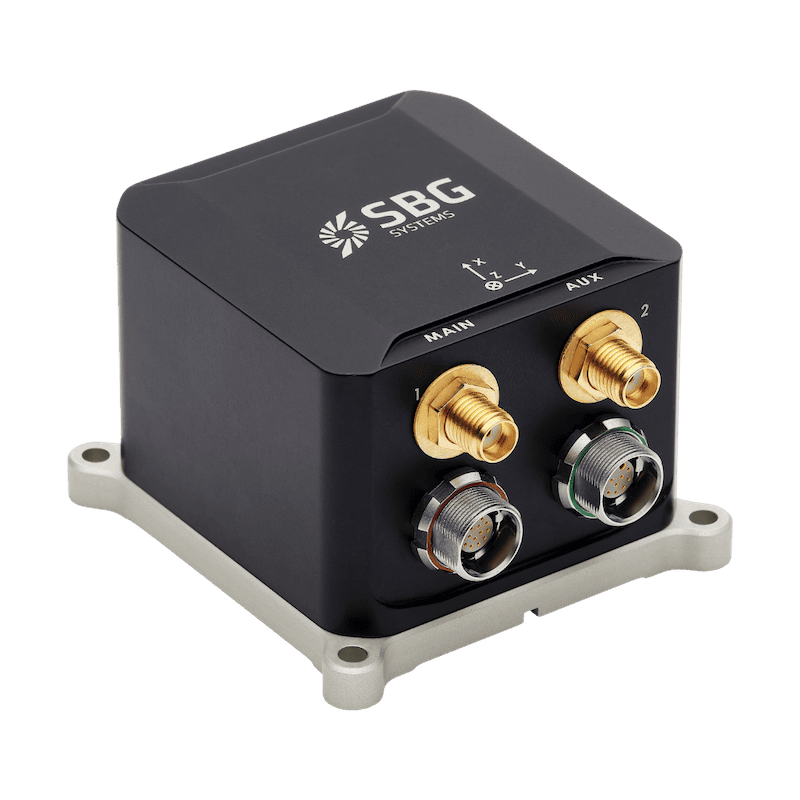
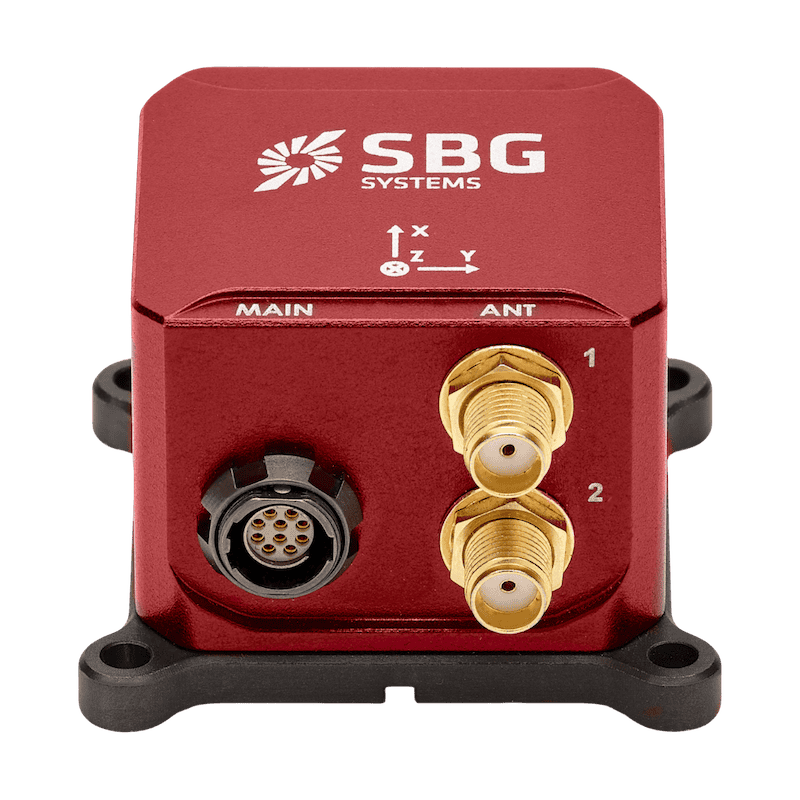
...Tactical Grade System, engineered for high-quality performance in demanding military applications.... ...ry Quartz MEMS Inertial Sensors ensure continued position and attitude accuracy even if GPS tracking...
Overview of Inertial Navigation Systems for Missile Guidance
Overview by
William Mackenzie
Updated:
Introduction to Inertial Guidance in Missile Systems
An Inertial Navigation System in missiles serves as the primary technical foundation for flight trajectory control. Unlike external positioning methods that depend on radio-frequency transmissions or ground-based infrastructure, an inertial guidance system calculates position, velocity, and orientation using internal sensors and onboard processing. By continuously tracking acceleration and angular velocity throughout the flight profile, the system evaluates the trajectory dynamically without needing external telemetry.
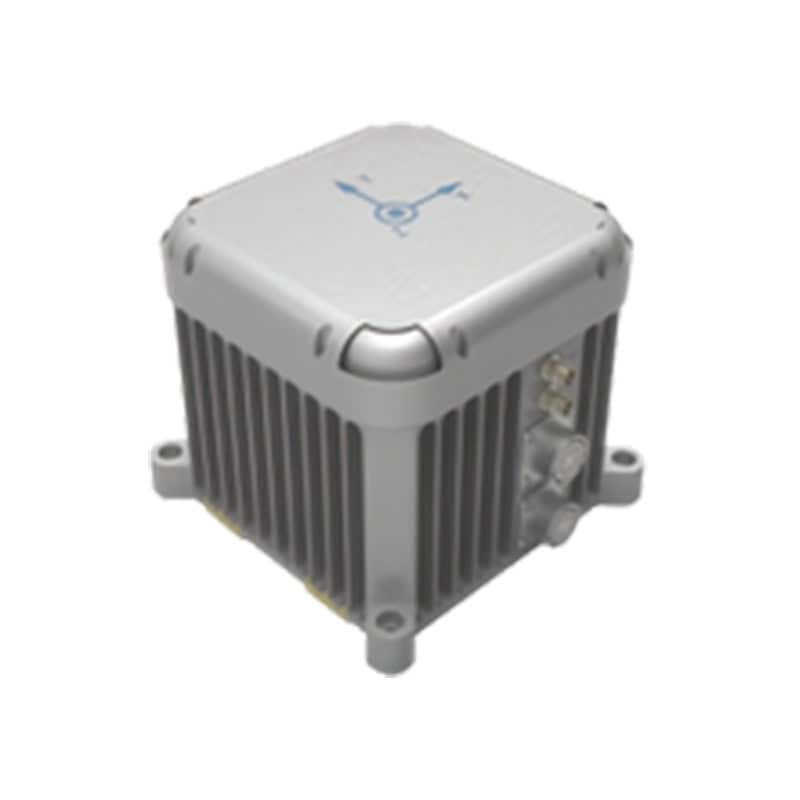
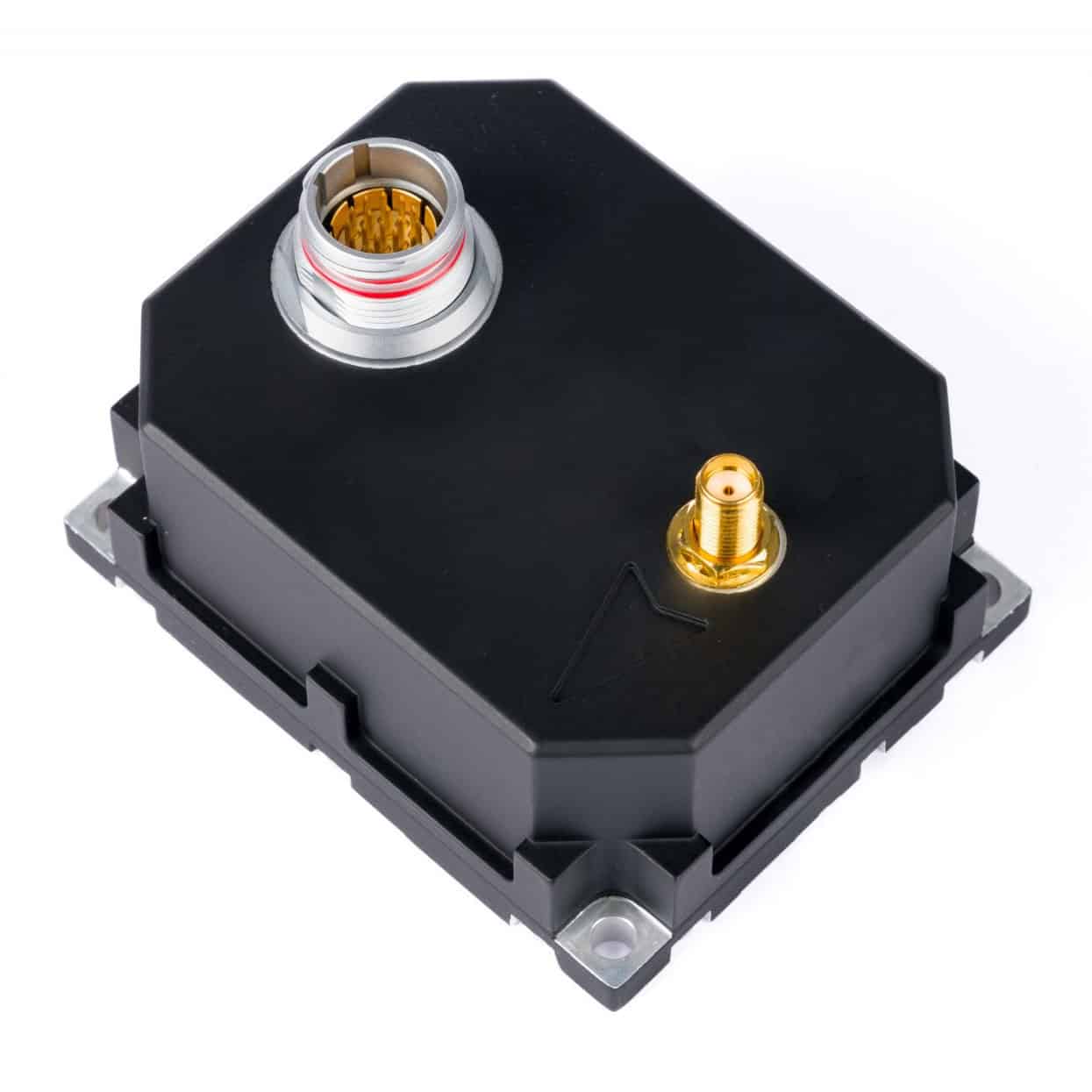
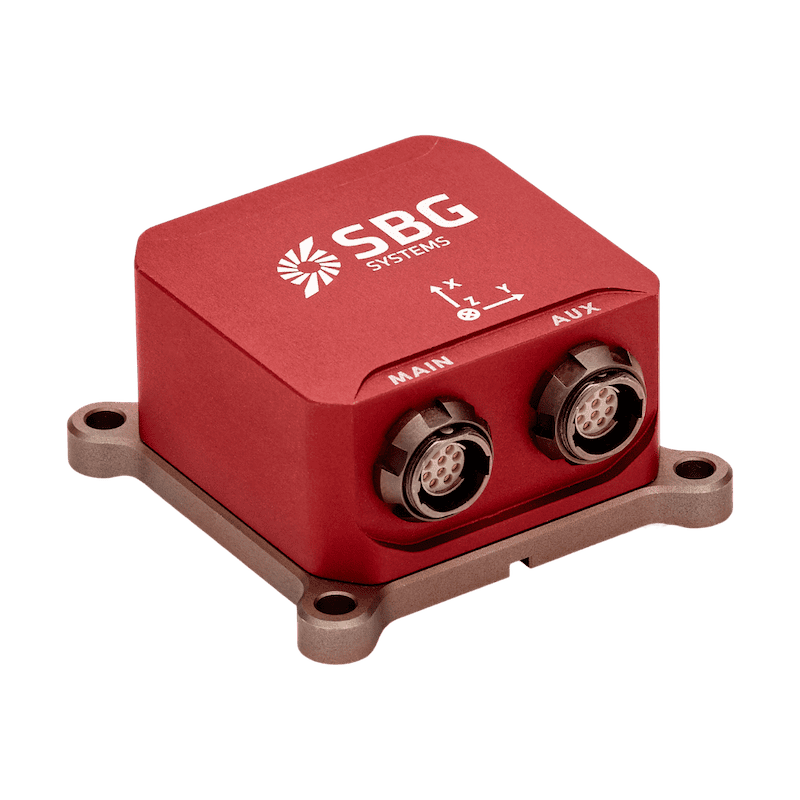
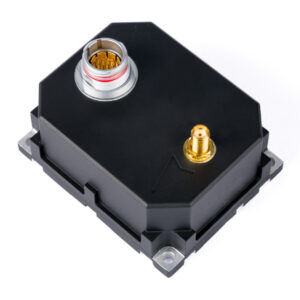
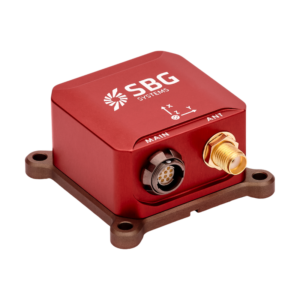
FOG-based GNSS-aided INS for critical positioning, orientation & navigation and missile guidance from Micro Magic.
Autonomous operation gives INS guidance a distinct advantage on the modern battlefield. Electronic warfare, intentional signal jamming, and contested electromagnetic environments frequently compromise external data links. Under these conditions, a missile can continue operating using self-contained navigation even when external aids become unavailable. While operators frequently pair this technology with satellite positioning or terrain matching, the inertial navigation system missile core remains the baseline layer upon which engineers build alternative guidance aids.
Functions of INS Across Different Missile Classes
Integrating a missile inertial navigation system requires balancing sensor drift rates against strict size, weight, power, and cost (SWaP-C) constraints.
Strategic and Tactical Ballistic Missiles
Ballistic trajectories dictate that errors introduced during the early, high-dynamic boost phase compound over time.
Strategic Systems: To maintain precision over intercontinental ranges without external updates, a strategic weapon requires extremely low drift rates achievable only with the highest-grade inertial technologies. INS for these missiles rely on premium Ring Laser Gyros (RLGs) or Interferometric Fiber Optic Gyros (FOGs) paired with highly stable precision accelerometers.
Tactical Systems: Shorter flight profiles allow a missile inertial guidance system to balance high-end MEMS or medium-grade FOG configurations. These platforms frequently utilize rapid in-flight initialization to cap drift before terminal engagement.
Cruise Missiles and Low-Altitude Profiles
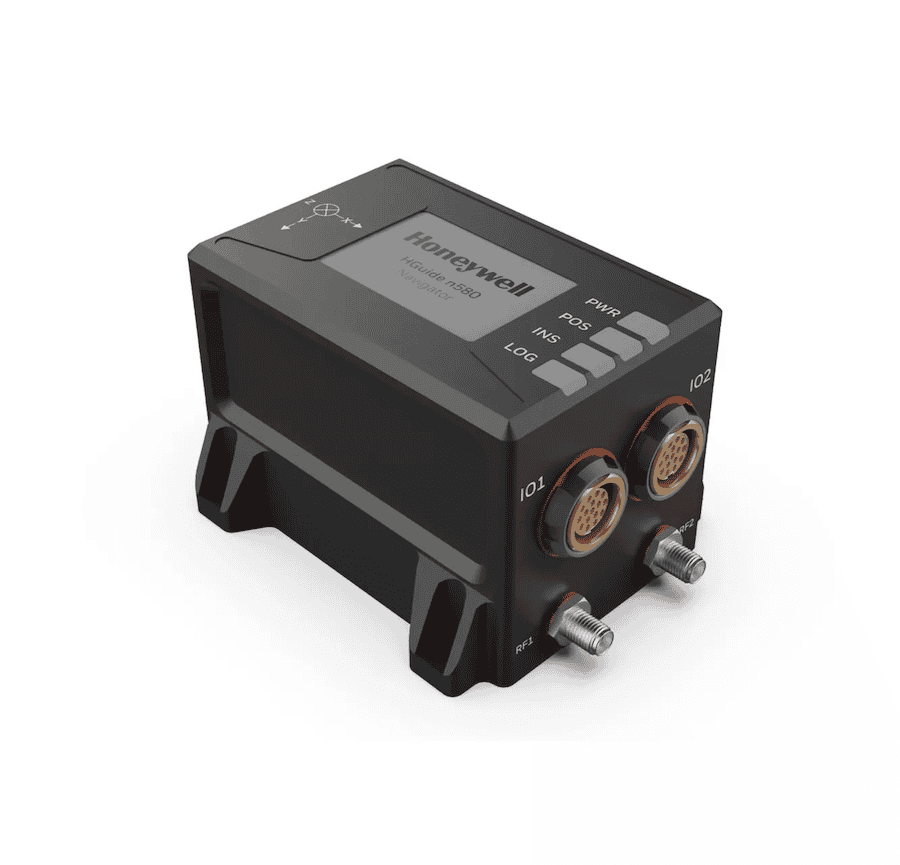
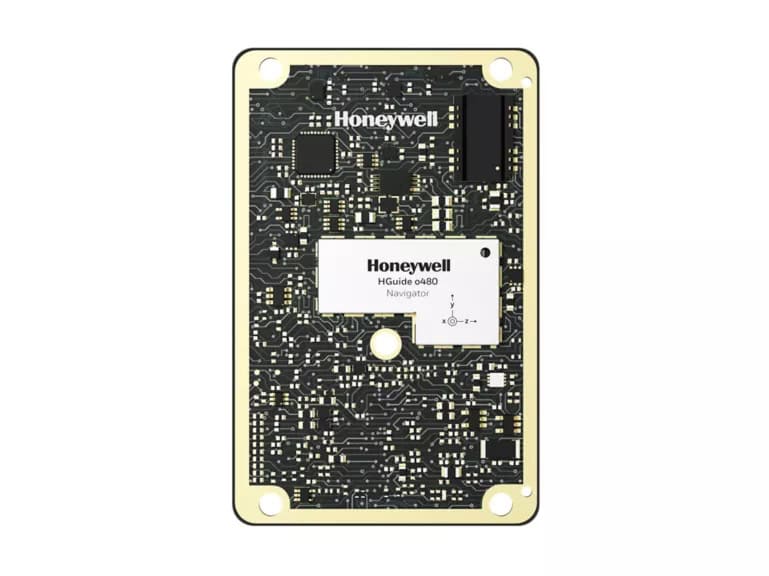
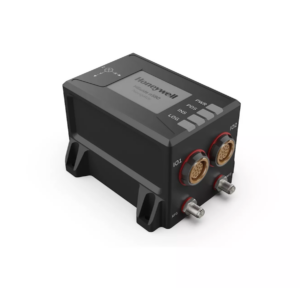
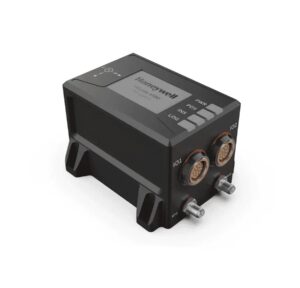
HGuide n580 GNSS-INS from Honeywell Aerospace
Flying low-altitude, long-endurance profiles requires a missile INS capable of maintaining attitude accuracy over extended flight times. The INS acts as the high-rate data source, smoothing out low-rate updates provided by alternative sensors during complex terrain-following maneuvers.
Tactical Strike Assets
Air-to-air and surface-to-air missiles experience rapid angular rates and severe structural vibrations. High-bandwidth inertial systems, often based on advanced MEMS technology, are commonly used for these platforms to capture rapid roll, pitch, and yaw changes, feeding vital tracking data to short-range terminal seekers.
Maritime and Hypersonic Challenges
Anti-Ship Operations: Maritime strike missions present unique challenges due to featureless ocean environments. Robust INS missile guidance ensures the weapon arrives within the terminal radar seeker’s narrow acquisition basket without exposing its position via radio-frequency emissions.
Hypersonic Platforms: Operating at extreme speeds creates thermal boundaries and plasma shields that cause radio-frequency blackout. The onboard inertial guidance system must endure severe thermo-mechanical stresses while serving as the primary navigation source during periods when external signals may be unavailable through the high-Mach cruise phase.
Loitering Munitions
As a hybrid between an uncrewed aerial vehicle and a missile, loitering munitions prioritize SWaP-C. Tactical-grade MEMS components provide the low-power, lightweight navigation baseline necessary for prolonged holding patterns and waypoint navigation.
Architecture of Missile Inertial Guidance Modules in GNC Networks
The Guidance, Navigation, and Control (GNC) system functions as a continuous closed-loop architecture, with the inertial guidance module operating as the high-rate state estimator.
Navigation: The INS core continuously measures linear acceleration and angular velocity to estimate the vehicle’s six-degree-of-freedom state, outputting position, velocity vectors, and attitude data.
Guidance: The flight control computer compares the INS state estimation against target coordinates or seeker tracking data, executing algorithms to calculate an optimal intercept trajectory.
Control: The flight computer translates guidance commands into physical surface deflections, thrust vectoring movements, or reaction control firings, utilizing high-rate sensor feedback to damp aerodynamic oscillations.
Multi-Sensor Data Fusion & GNSS Missile Guidance
To counteract the characteristic time-dependent drift inherent to any pure inertial guidance system, modern architectures utilize multi-sensor data fusion.
GNSS Missile Guidance Integration
Combining satellite positioning with inertial sensors creates a robust, complementary system. While GNSS missile guidance provides bounded absolute accuracy, the INS delivers high-rate, low-latency orientation data and acts as a flywheel during signal drops. Integrations typically fall into two topologies:
Mechanism
Primary Advantage
Loose Coupling
The GNSS receiver computes positions independently and feeds them into the INS Kalman filter as position fixes.
Simple to implement with a modular, decoupled architecture.
Tight Coupling
Raw GNSS pseudo-ranges and Doppler shifts are processed directly alongside inertial data inside a centralized Extended Kalman Filter.
Maintains aiding capabilities even when fewer than four satellites are visible, improving navigation robustness and maintaining aiding capability when satellite visibility is degraded.
Alternative Aiding Mechanisms
When operating in GNSS-denied environments, the missile INS dynamically shifts to alternative positioning inputs:
Terrain Reference Navigation: Utilizes radar altimeters and terrain-matching algorithms to profile the terrain below, matching it against an onboard digital elevation model to generate error-correction fixes.
Celestial Navigation: Employs specialized electro-optical sensors to track known stars above the weather layer, primarily in long-range strategic applications, providing absolute heading updates immune to electronic spoofing.
Vision-Based Navigation: Uses optical or infrared cameras paired with scene-matching algorithms to pinpoint landmarks, ensuring precision terminal guidance.
Electronic Warfare & Pure INS Missile Resilience
Adversarial electronic warfare frequently targets the radio-frequency spectrum through broadband jamming and sophisticated signal spoofing. Because an INS missile operates through internal inertial sensors and onboard processing, its core navigation measurements are inherently immune to GNSS jamming and spoofing. It serves as the primary fail-safe layer in contested airspace.
To extend the window of pure inertial accuracy during extended GNSS outages, navigation suites utilize specialized countermeasures:
Controlled Reception Pattern Antennas: Nullify jamming signals coming from the horizon while focusing beam sensitivity on valid satellite signals overhead.
Advanced Inertial Modeling: Incorporating software-defined error compensation algorithms that actively learn sensor biases during periods of valid GNSS availability, minimizing drift once an outage occurs.
Missile-grade hardware must maintain critical calibration standards while enduring severe operational profiles.
MIL-STD-810 Compliance
Systems must undergo rigorous qualification testing to survive extreme kinetic stresses:
High-G Launch Loads: Pyrotechnic releases and solid-rocket booster ignitions subject components to intense shock profiles often reaching hundreds of g depending on missile class and launch method.
Vibration Mitigation: High-frequency aerodynamic buffering requires robust mechanical isolation mounts to prevent sensor saturation or microphonic noise from corrupting gyro data.
Thermal Extremes: Rapid transitions from cold-soak carriage environments at high altitudes to aerodynamic friction heating require sophisticated internal thermal management and calibrated bias correction maps across extreme temperature sweeps.
MIL-STD-461 Electromagnetic Compatibility
Missile assemblies pack high-power telemetry, radar seekers, and actuators into close physical proximity. Compliance with MIL-STD-461 ensures that the high-sensitivity analog circuitry inside inertial sensors is adequately shielded against electromagnetic interference and radiated emissions from nearby components.
Radiation Hardening and Lifecycle Readiness
For strategic or exo-atmospheric systems, electronics must be hardened against transient and total ionizing dose radiation to prevent bit flips. Furthermore, because weapons are often deployed in canisters or silos for years at a time, sensor configurations must exhibit long-term calibration stability to guarantee instant operational readiness without requiring frequent field maintenance.
Regulatory and Export Controls
High-performance inertial units capable of achieving very low drift performance are tightly regulated under International Traffic in Arms Regulations (ITAR) and export control regimes. Designers and integrators must navigate strict structural isolation, secure software partitioning, and precise documentation tracking throughout the component procurement and packaging lifecycles.
LITEF, a leading developer of inertial sensing and navigation solutions for military land vehicles and ground forces, will unveil its latest technologies for missile stabilisation and precision navigation at the Paris Air Show 2025, Booth 318, Hall 2C
Defense Advancement showcases Micro-Magic's high-precision MEMS, Quartz and FOG inertial sensing systems for military, aerospace, and defense applications
The latest defense technology news, straight to your inbox.
Get our weekly roundup of technology developments, new products and industry news.
THANK YOU FOR SIGNING UP
Thanks for joining us. Check your inbox.
We've sent you an email. Click the confirmation link to complete your subscription to the weekly eBrief. In the meantime, explore the latest news, suppliers and technologies on DA.
Advancing Defense Capability Through Strategic Collaboration
Defense Advancement works with major OEMs to foster collaboration and increase engagement with SMEs, to accelerate innovation and drive defense capabilities forward.