
Showcase your capabilities
If you design, build or supply Military Drone Software, create a profile to showcase your capabilities and connect with visitors who have an active requirement for your solutions.




Military drone software supports high priority missions by coordinating flight control logic, sensor integration, data routing, and automated decision pathways. Modern systems unite onboard processing with secure datalinks to maintain operational stability in contested airspace while enabling payload coordination across ISR, targeting, and electronic support roles.
This guide outlines leading military drone software companies delivering platforms that manage navigation, contingency behaviors, threat avoidance routines, and separation logic across mixed fleet operations, ensuring dependable performance in demanding defense environments.
Read the Technology Overview
Mission-Critical Hardware & Software Technologies for Enhanced Command & Control in Challenging Battlefield Environments


Bespoke Drone & Robotics Software Solutions for the Defense & Security Industries

If you design, build or supply Military Drone Software, create a profile to showcase your capabilities and connect with visitors who have an active requirement for your solutions.


Prism Supervisor by Teledyne FLIR OEM
Military drone software is more than just flight code, governing the aircraft’s navigation, sophisticated intelligence-gathering, secure communications, and, crucially, its engagement processes. This software transforms massive amounts of raw sensor input into actionable, decisive mission data. In the contemporary battlespace, where critical decisions are often measured in milliseconds, robust and adaptive military drone software fundamentally defines both the capability and the survivability of the platform.
Unlike typical drone flight software used in civilian applications, military systems must operate with assured security and resilience in intensely contested environments. They must withstand jamming, sophisticated cyberattacks, and GPS-denied or degraded conditions. Every single layer, from deterministic autopilot logic to high-assurance encryption modules, is meticulously designed to contribute to guaranteed performance, mission resilience, and strict compliance with defense communication and safety standards.
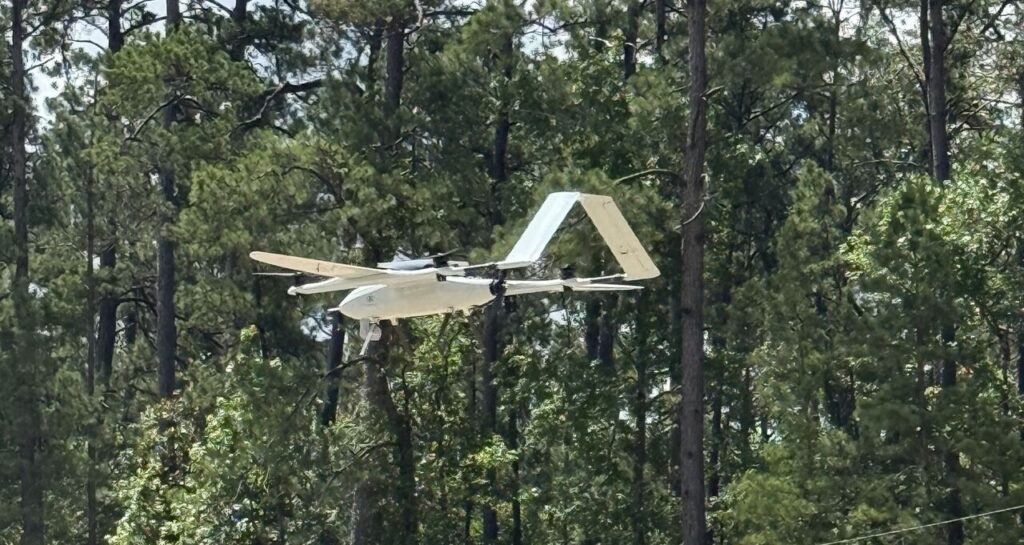
Different UAV classes require expertly tailored software architectures to match their mission profiles:
Each class carefully balances autonomy, communication range, and onboard processing capacity to meet highly specific operational objectives, forming the core of an effective fleet management strategy.

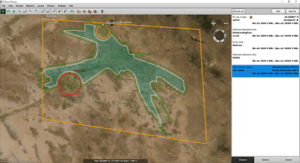
ISR Mission Planner by Kutta Technologies
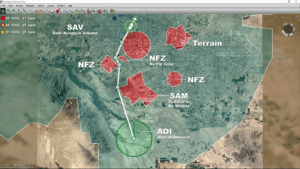
At the foundation of every military UAV is its flight control software, a deterministic system that ensures stability, trajectory, and immediate responsiveness. Mission planning tools define precise waypoints and flight envelopes, rigorously ensuring compliance with all operational airspace constraints. Advanced AI-based stabilization algorithms interpret diverse sensor feedback in real time, maintaining flight stability during severe turbulence or sudden evasive maneuvers.
Collision avoidance modules utilize fused radar, optical, or LIDAR inputs to instantly identify obstacles and execute precise avoidance routines autonomously. These same sophisticated frameworks govern formation flight, allowing multiple UAVs to seamlessly coordinate as a single, cohesive tactical element. Furthermore, autonomous takeoff and landing routines significantly reduce operator workload, using sensor fusion from barometric, inertial, and optical data to execute precision recoveries, even in degraded visual environments.
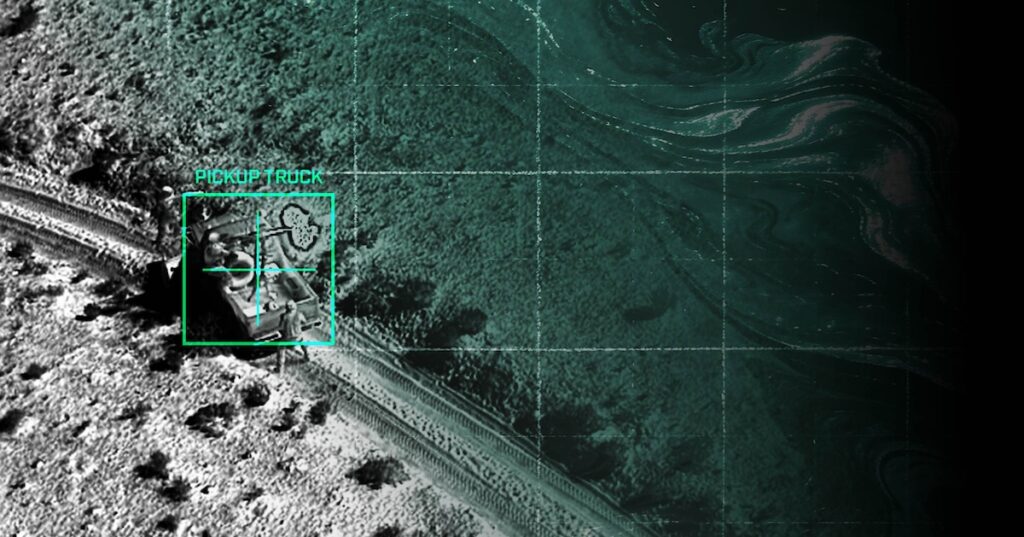
The mission management layer integrates the UAV’s diverse payloads and subsystems into a unified, actionable control structure. This orchestrates ISR sensors, Electronic Warfare (EW) payloads, or kinetic weapon systems, ensuring coordinated operation according to pre-defined mission profiles. Target recognition and prioritization are powered by AI-driven video analytics and complex radar data processing to accurately distinguish valid threats from background clutter.
Software for autonomous drones allows for immediate, real-time re-tasking, adjusting flight paths, sensor coverage, or engagement priorities as dynamic battlefield conditions evolve. Many of these systems are integrated with dedicated drone search and rescue software or drone surveillance architecture when performing those specific missions.
Sensor fusion algorithms are essential for constructing a coherent operational picture from inherently diverse inputs: EO/IR imagery, radar tracks, SIGINT intercepts, and LIDAR mapping data. Real-time processing is critical, ensuring that human operators or autonomous decision systems can instantly interpret and act upon complex environments.
Machine learning models enhance classification accuracy by correlating multi-domain inputs, substantially reducing false positives and sharpening the overall threat assessment. Seamless integration with C4ISR networks allows for vital data exchange between the UAV and command elements, ensuring synchronized situational awareness across the entire joint force.
Reliable, resilient communication links form the backbone of military UAV operations. The software manages secure command, telemetry, and high-bandwidth payload data using encrypted, authenticated channels. Systems are engineered to dynamically switch between Line of Sight (LOS) radio links and Beyond Line of Sight (BLOS) SATCOM as signal conditions or mission requirements change.
Integration with military standards such as STANAG 4586, Link 16 (via gateways), and high-bandwidth CDL (Common Data Link) ensures interoperability with manned platforms and command centers. Adaptive link management algorithms prioritize critical data streams when bandwidth is constrained or the system is under electronic attack.
Military drone navigation software is paramount, blending GNSS and INS data to maintain highly accurate position and attitude control. Anti-jamming and anti-spoofing measures are required to detect external interference, prompting the system to switch seamlessly to inertial, visual, or terrain-based navigation modes (TERNAV/TERCOM) as necessary. This forms the foundation of Assured Positioning, Navigation, and Timing (A-PNT).
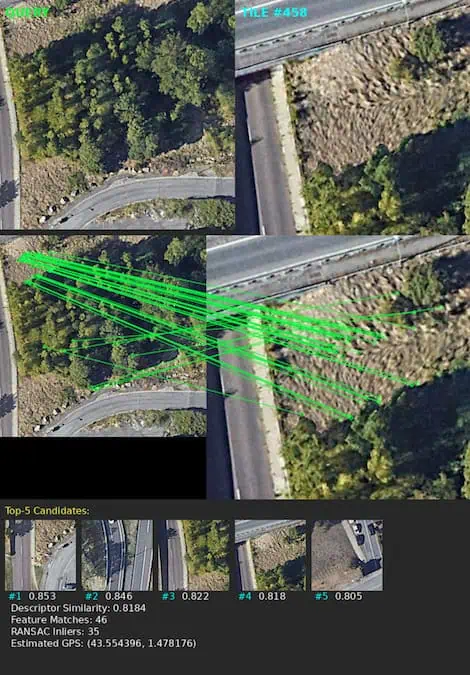
In GPS-denied environments, AI-assisted visual navigation utilizes onboard cameras and digital terrain maps to accurately localize the UAV. Terrain-following algorithms automatically maintain pre-defined altitude contours, ensuring low observability and safety in dynamic operating areas.
Artificial Intelligence (AI) is the central engine driving the evolution of autonomous military flight. Object detection algorithms process high-fidelity EO/IR feeds to classify vehicles, personnel, or threats in real time. Adaptive neural models enable UAVs to predict target movements, prioritize complex reconnaissance areas, and select optimal flight paths with minimal human input. Swarm intelligence extends these capabilities across multiple drones.
Distributed coordination software allows individual units to instantly share sensor data and autonomously divide tasks such as coordinating search patterns or synchronized EW coverage, without requiring direct human oversight. This collective behavior dramatically increases mission resilience.
Military UAVs rely on RTOS platforms for deterministic execution, guaranteeing predictable response times for critical flight control tasks. These systems isolate mission software, flight control software, and communications within secure partitions, preventing interference or catastrophic cascading failures. It is important to note that modern, tactical systems often leverage customized and hardened Linux distributions (like those based on PX4) for higher-level mission computing and AI workloads, while the core flight control loop remains highly deterministic.
Middleware frameworks like DDS and FACE provide standardized communication interfaces between diverse software modules and hardware components. STANAG 4586 defines mandatory UAV control interoperability across NATO forces. Critically, MOSA-compliant (Modular Open Systems Approach) architectures allow for rapid, plug-and-play integration of new sensors or AI modules without requiring a full system redesign, an essential capability for rapid defense capability upgrades and long-term sustainment.
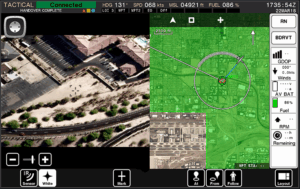
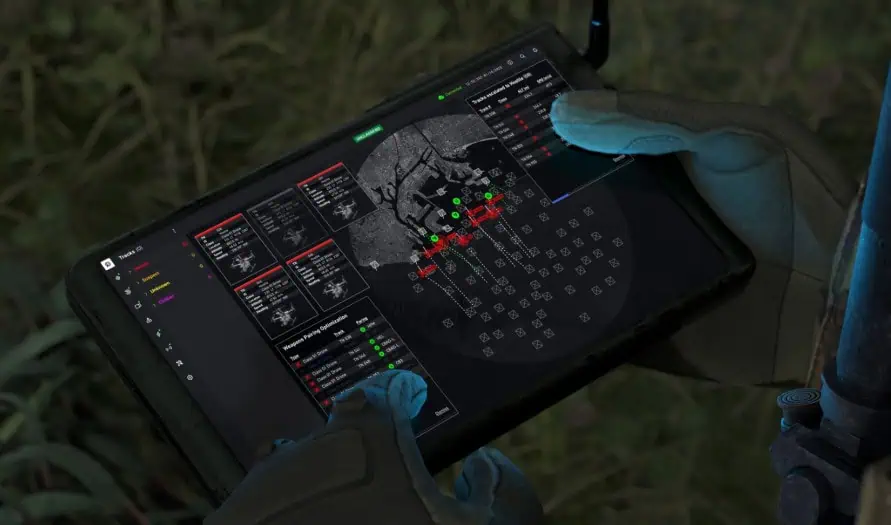
Drone GCS software serves as the sophisticated human interface to the drone’s powerful autonomous capabilities. Mission control software provides operators with real-time situational visualization, robust mission editing tools, and comprehensive health monitoring dashboards. Human–machine interfaces (HMIs) are meticulously optimized for clarity and rapid decision-making under stress, prioritizing immediately actionable data while minimizing cognitive load. The most advanced systems can manage multiple UAVs simultaneously through a unified control interface, supporting complex, coordinated surveillance or strike operations across expansive theaters.
Edge computing is fundamentally redefining UAV autonomy, enabling vast amounts of data processing to occur directly on the platform rather than relying solely on ground analysis. This critically reduces latency and allows for faster, more effective threat response. Cognitive EW software represents the next vital frontier. Drones equipped with adaptive EW modules can dynamically analyze the electromagnetic spectrum in real time and automatically modify their countermeasure tactics without waiting for human intervention.
As defense networks transition toward cloud-integrated architectures, UAVs are increasingly being designed as fully integrated, intelligent nodes within distributed C4ISR systems. Software-defined communication and AI-driven mission coordination will enable future UAV fleets to operate as a self-aware, interconnected, and data-centric defense ecosystem.


 Searching Companies & Products


 Subscribe to the Weekly eBrief
The latest engineering and technical developments straight to your inbox - join thousands of engineers who receive it.
Subscribe to the Weekly eBrief
The latest engineering and technical developments straight to your inbox - join thousands of engineers who receive it.