
WOLF Advanced Technology have released a whitepaper comparing GDDR7 and GDDR6 memory architectures, detailing the key advancements and their influence on bandwidth, performance, and reliability for embedded computing.
GDDR7 introduces major improvements, including doubled per-pin data rates and integrated on-die Error Correcting Code (ECC) with enhanced error reporting. These updates allow narrower buses to achieve equal or greater bandwidth than wider GDDR6 designs while improving resilience in demanding operating environments.
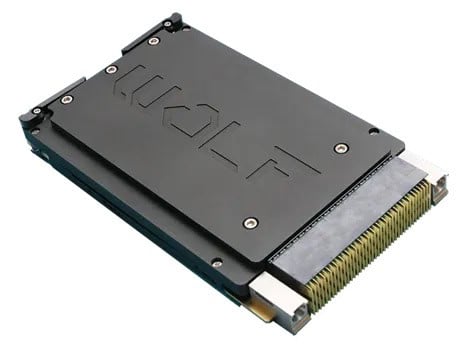
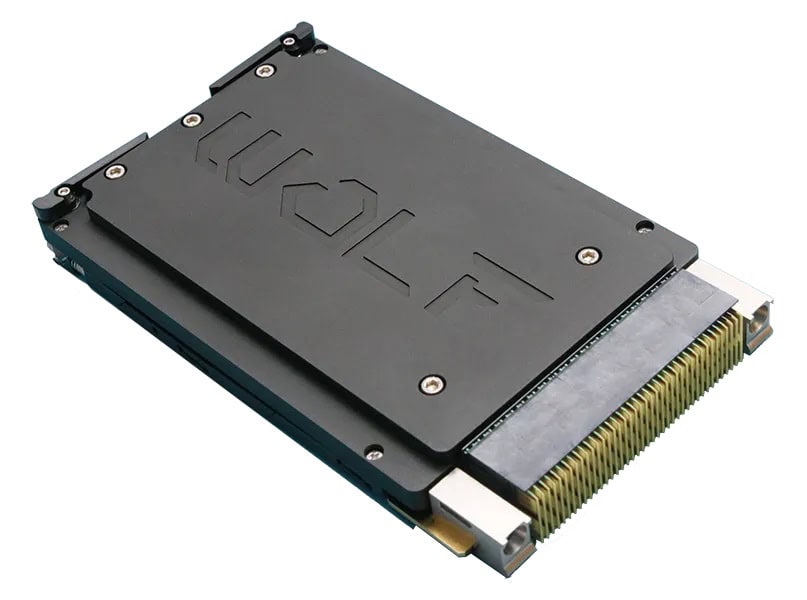
The whitepaper provides detailed guidance on memory sizing and configuration, using WOLF’s 134S, 167S, 166S, and 163S modules as examples. It explains how to align bus width and pin rate with practical bandwidth requirements, and how to match memory capacity, 8GB, 16GB, or higher, to the application’s working set. This helps system designers balance throughput, capacity, and reliability across diverse mission workloads.
Findings show that many workloads can shift from 16GB GDDR6 to 8GB GDDR7 without loss of performance, while unpartitionable or data-heavy applications benefit from 16GB or 24GB GDDR7 configurations. The paper emphasizes that understanding both memory footprints and reliability needs is key to selecting an optimal configuration for efficiency and mission durability.