
Showcase your capabilities
If you design, build or supply Visual Drone Detection, create a profile to showcase your capabilities and connect with visitors who have an active requirement for your solutions.




Visual drone detection is at the forefront of modern defense technology, employing advanced drone detection cameras to identify and track unauthorized UAVs. As a crucial component of counter UAS strategies, these systems integrate seamlessly with anti-drone technology to provide comprehensive protection. Utilizing cutting-edge optics and AI-driven analysis, visual drone detection systems ensure rapid and accurate identification, fortifying security against potential aerial threats. This page delves into the intricacies of drone detection systems, highlighting the capabilities of leading anti-drone systems and the pivotal role of drone detection cameras.
Read the Technology Overview
If you design, build or supply Visual Drone Detection, create a profile to showcase your capabilities and connect with visitors who have an active requirement for your solutions.

In the evolving theater of modern defense and security, the unmanned aerial system (UAS) represents a persistent and rapidly changing threat. While radar and radio frequency (RF) sensors have long formed the bedrock of counter-UAS (C-UAS) defense, they often falter against small, quiet, or non-emitting threats. This is precisely where visual drone detection systems step in. Leveraging the power of advanced electro-optical (EO) and infrared (IR) sensors, these systems provide the essential layer of visual verification and positive identification required to secure critical assets in complex operational environments.
In the evolving theater of modern defense and security, the unmanned aerial system (UAS) represents a persistent and rapidly changing threat. While radar and radio frequency (RF) sensors have long formed the bedrock of counter-UAS (C-UAS) defense, they often falter against small, quiet, or non-emitting threats. This is precisely where visual drone detection systems step in. Leveraging the power of advanced electro-optical (EO) and infrared (IR) sensors, these systems provide the essential layer of visual verification and positive identification required to secure critical assets in complex operational environments.
A comprehensive C-UAS strategy demands a layered defense. In this model, optical drone detection technology acts as the crucial confirmation and classification layer. It bridges the gaps left by other modalities, ensuring a higher confidence level for threat engagement.
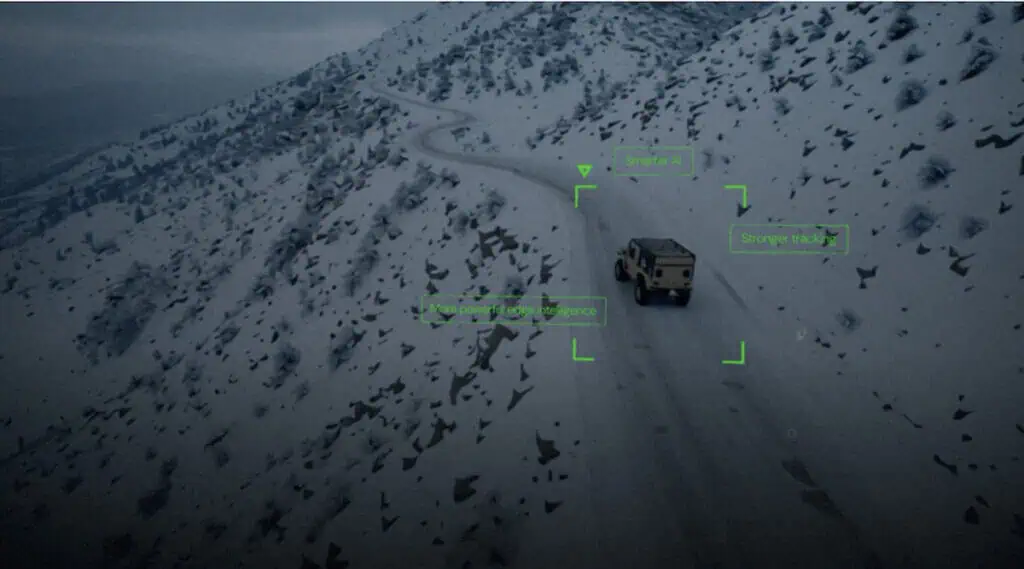
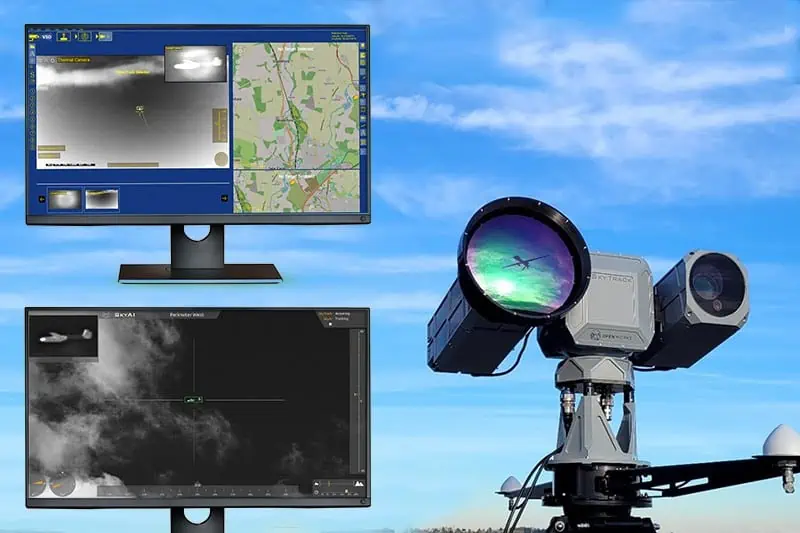
Visual systems utilize sophisticated imaging technology, both visible light (EO) and thermal (IR), to capture a drone’s physical signature. These sensors enable the system to identify, track, and classify a target in real time based on its shape, texture, and movement. This capability is paramount in cluttered urban or maritime settings where traditional radar clutter makes low-observable targets exceptionally difficult to pinpoint.
Only visual drone detection provides the indisputable, evidentiary visual confirmation necessary for positive identification: a requirement for many rules of engagement.
When assessing a drone detection camera, operators prioritize several critical performance metrics:
The core technology hinges on advanced optics and real-time computational power. The integration of high-precision hardware and cutting-edge software is what makes an effective visual drone defense platform.
Detection begins with sophisticated motion-based target acquisition, isolating moving objects from a static background using techniques like optical flow analysis. Once isolated, the target is handed off to the classification engine. Here, modern deep learning models, such as cutting-edge Convolutional Neural Networks (CNNs) and Transformer architectures, compare the object’s shape, movement patterns, and texture against vast databases of known drone profiles. This rapid analysis provides a confidence score, enabling operators to confirm the threat in milliseconds.
The seamless operation of a PTZ camera drone detection system relies on precision gimbals and sophisticated tracking algorithms (like Kalman filters and SORT) that predict target movement, ensuring persistent lock even during brief visual obstructions.
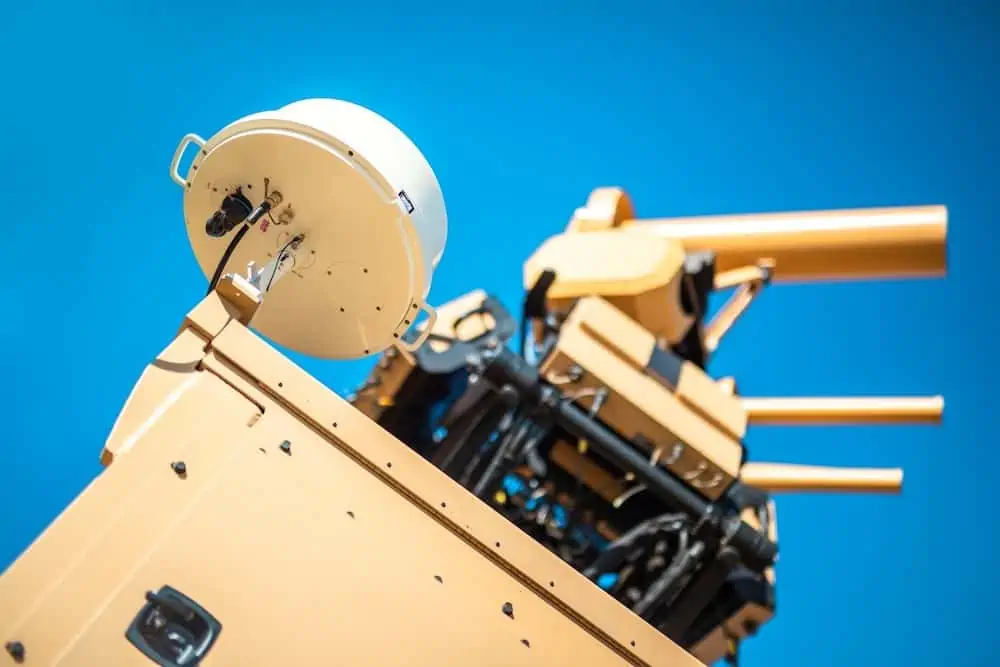
Effective C-UAS requires robust, specialized hardware engineered for the unique challenge of aerial surveillance. The hardware suite is dominated by specialized camera mounts.
The continuous cycle is: Image Capture $\rightarrow$ Object Detection $\rightarrow$ Classification $\rightarrow$ Tracking. This pipeline ensures that once a potential threat is sensed, the system maintains continuous surveillance while generating data for threat assessment (speed, size, trajectory).
The true power of modern drone detection technology lies in its software architecture and integration capabilities.
To ensure speed, many systems utilize Edge AI, processing imagery directly at the sensor node. This dramatically reduces network bandwidth and response time. The machine learning models driving this are trained on vast, varied datasets, ensuring they can adapt to new types of camouflage and rapidly evolving drone designs.
Visual systems are designed to be part of a larger defense ecosystem. They seamlessly integrate with other sensor modalities:
Crucially, while integration trends point towards highly automated responses, any engagement often adheres to a human-in-the-loop protocol for final validation, ensuring legal and ethical compliance in the use of force.
Camera drone detection is now considered a mandatory capability across diverse operational contexts:
The field continues to advance at a rapid pace, driven by computational power and sensor miniaturization:
As the threat landscape shifts with every new generation of UAS, visual drone detection systems have cemented their role not just as a complementary asset, but as an indispensable cornerstone of any robust and reliable counter-UAS defense architecture.


 Searching Companies & Products