Military Grade Laptops & Rugged Mil-Spec Notebook Computers
Category Presented by
Find and compare leading global manufacturers of military-grade laptops and rugged notebooks engineered for defense. Use this guide to assess suppliers of rugged laptops, tactical workstations, and field-deployable mobile computing platforms optimized for command and control (C2), ISR, and tactical edge operations.
The verified supplier listings below are followed by a Technical Sourcing Guide covering the standards, specifications, and design considerations that underpin reliable rugged military computing, including MIL-STD-810H, MIL-STD-461, and IP ratings.
If you design, build or supply Rugged Military Laptops and Notebooks, create a profile to showcase your capabilities and connect with visitors who have an active requirement for your solutions.
The military-grade laptop functions as the “last mile” compute and control node in the modern defense technology stack. Unlike standard commercial procurement, specifying these platforms requires a deep look at how a device behaves as a component within a larger ecosystem involving tactical radios, vehicle power, and secure networks.
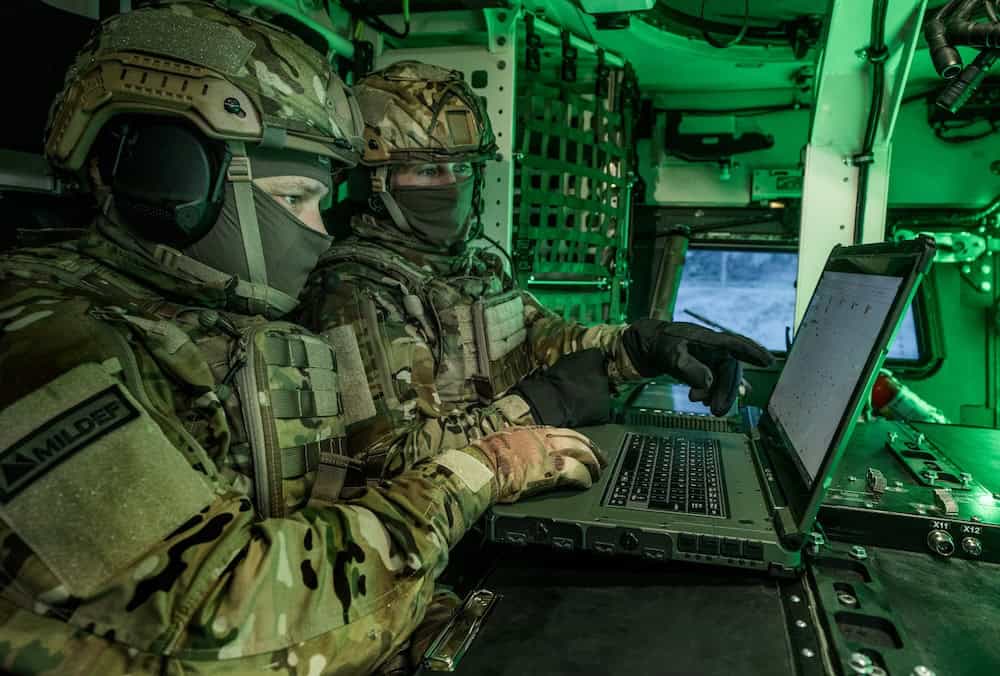
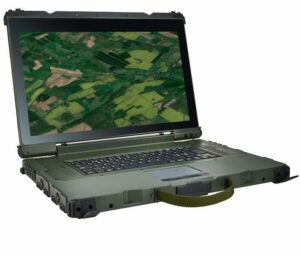
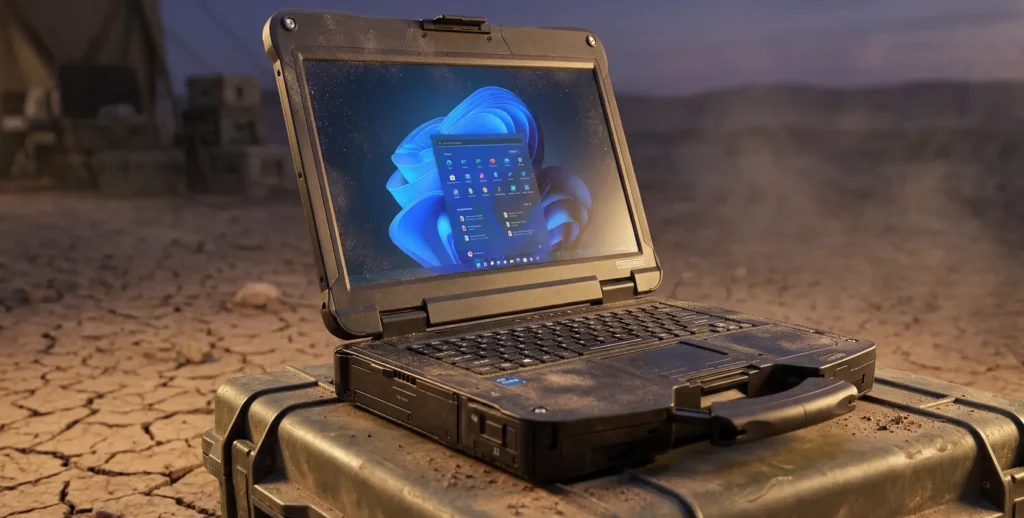
Tactical laptop in the field. Image: MilDef
Military Laptops: Global Market Landscape
The rugged computing market is effectively split between high-volume global OEMs and specialized defense integrators. To navigate this landscape, hardware is typically categorized into three distinct tiers:
Tier 1: Global Rugged OEM Platforms
Established rugged computing manufacturers offering standardized, field-proven laptop families at scale. Their systems are typically suited to broad defense, public safety, logistics, maintenance, and vehicle-mounted computing applications where repeatable configuration, support, and supply continuity matter.
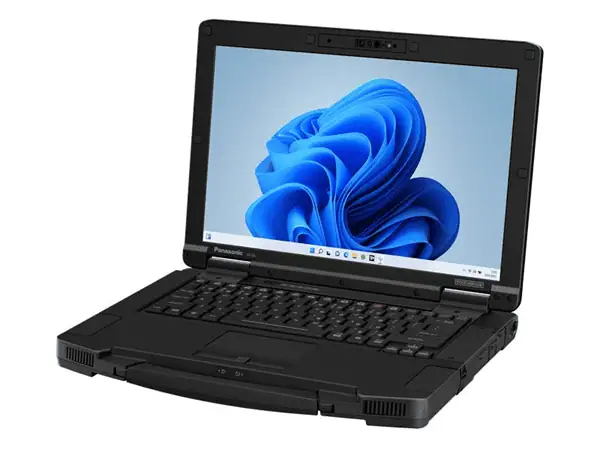
TOUGHBOOK 56 rugged laptop. Image: Panasonic
Panasonic (TOUGHBOOK)
Panasonic TOUGHBOOK is a widely recognized rugged laptop family known for field reliability and modular configuration.
The TOUGHBOOK 40 remains Panasonic’s fully rugged 14-inch platform, while the newer TOUGHBOOK 56 extends the modular TOUGHBOOK 55 concept, using Panasonic’s “xPAK” expansion modules, allowing users to swap I/O, optical drives, or specialized sensors in the field. These systems are widely adopted across defense, public safety, field service, and vehicle-mounted computing applications.
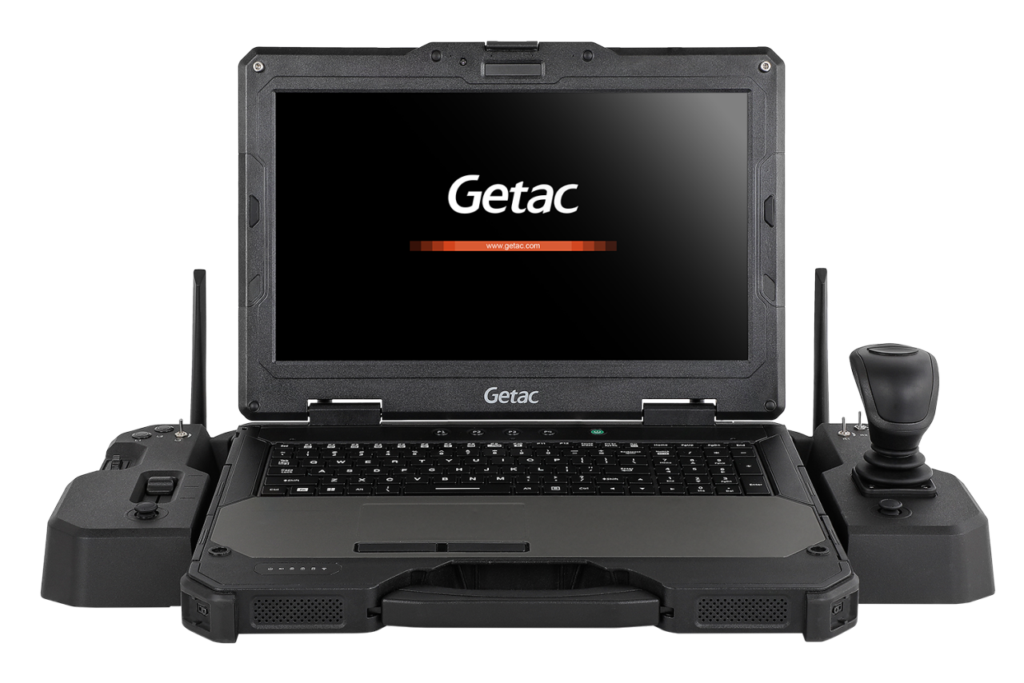
Getac
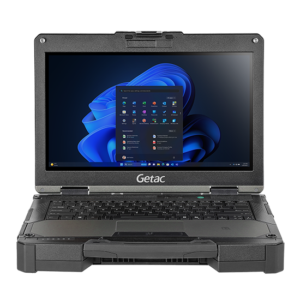
Recognized for high-brightness display technology, offering sunlight-readability up to 1400 nits. Current B360/B360 Plus configurations offer 1,400-nit LumiBond displays, gloved and wet touch operation, and Intel AI Boost NPU capability on Core Ultra variants.
Durabook
A primary competitor in the fully-rugged sector, known for balancing high performance with sophisticated thermal management. The Durabook Z14I uses Durabook’s Coolfinity™ fanless thermal design, enabling fanless operation even with high-performance Intel Core Ultra processors. This may be advantageous where reduced acoustic signature, dust ingress control, or mechanical reliability are important.
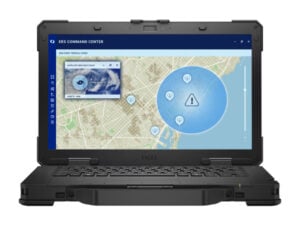
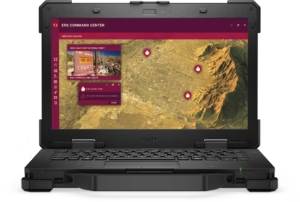
Dell Pro Rugged 13 Laptop. Image: Dell
Dell
Dell remains a staple for defense programs prioritizing software commonality with existing commercial Dell infrastructure.
The Dell Pro Rugged 13 Laptop is a fully rugged 13-inch platform, while the Dell Pro Rugged 14 Laptop is a semi-rugged 14-inch platform; both are MIL-STD-810H certified and are available with Intel Core Ultra processors, with integrated NPUs for AI-assisted workloads in the field.
These suppliers focus on defense-specific rugged computing, custom integration, and mission-tailored hardware configurations. They are typically selected where programs require bespoke I/O, controlled lifecycle support, secure integration, or adaptation to vehicle, unmanned, C2, or tactical communications systems.
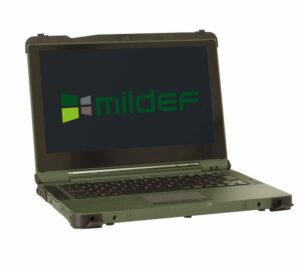
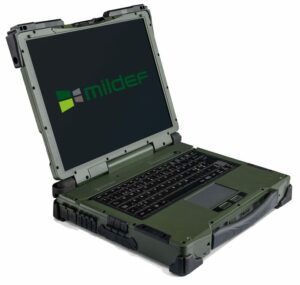
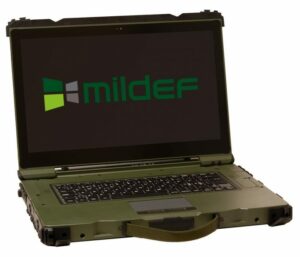
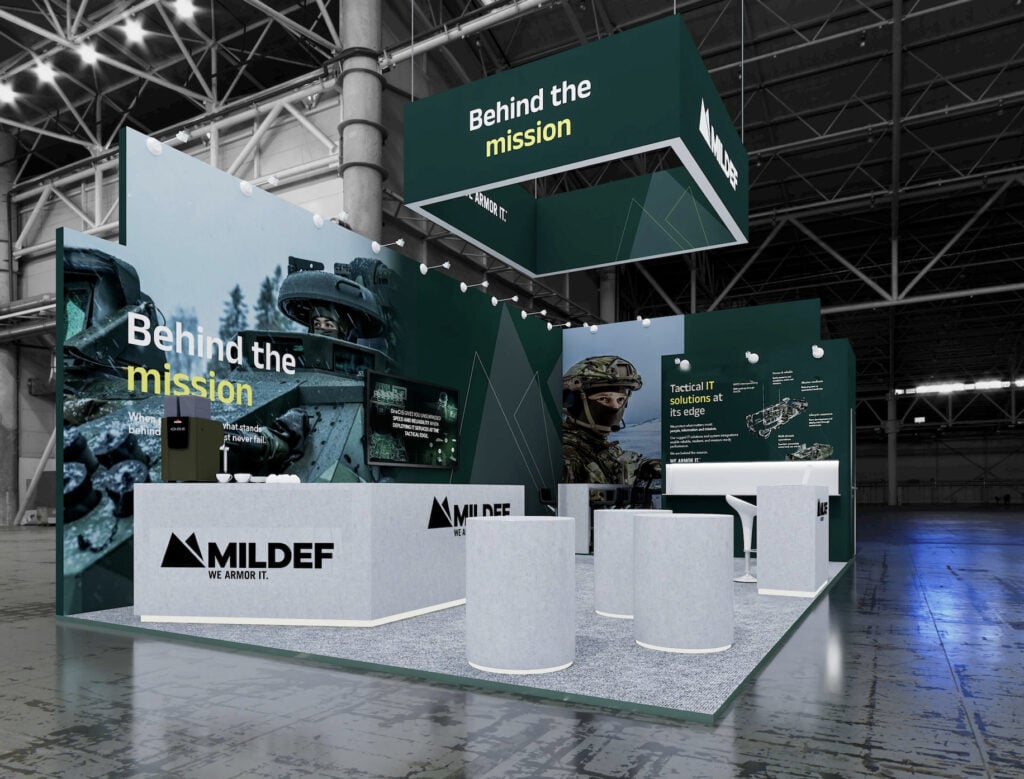
A specialist in high-density rugged electronics for the most demanding tactical environments. Their MilDef RS13 rugged laptop and RW14 rugged mobile workstation are engineered for the tactical edge, offering small-form-factor designs and bespoke modifications with project-specific I/O, connector, storage and lifecycle configuration options.
MilDef is known for lifecycle sustainment, configuration continuity, spare parts availability and long-term support for multi-year defense programs.
Focuses on rugged, mission-critical computing solutions for defense, security, and industrial operations.
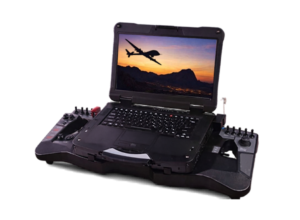
Their Ares 40 ground control station for unmanned systems is built around the Panasonic TOUGHBOOK 40 / FZ-40 rugged laptop platform to deliver substantial processing capability to support complex operational workflows, enabling operators to manage multiple assets with speed and accuracy.
A UK specialist known for ultra-portable, high-security computing designed for the dismounted soldier. The GRiDCASE range, including the GRiDCASE 1590 15-inch rugged laptop, provides fully ruggedized systems with sealed chassis designs and fully customizable rear connector panels that allow configuration to suit individual project requirements.
Steatite
Provides custom-integrated rugged solutions and specialized mobile workstations for UK and international defense. They combine COTS rugged platforms with custom integration, lifecycle support and defense-sector experience, including support for projects requiring environmental qualification against military or defense standards. Their Steatite Embedded range is suitable for custom mission computing, C2, ISR data capture and specialist embedded computing applications.
These are commercial or enterprise-grade laptops and mobile workstations tested against selected durability standards but not designed as fully rugged tactical systems. They are best suited to command posts, engineering, GIS, simulation, planning, maintenance, and administrative roles where performance and durability are needed, but extreme environmental protection is not the primary requirement.
Lenovo
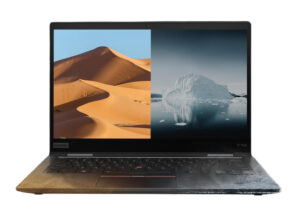
While not tactical devices, selected mobile workstation models within the ThinkPad P-series are MIL-STD-810-tested and are commonly suitable for command-post, engineering, GIS, simulation and planning environments where workstation performance matters more than ingress protection.
Asus
The ASUS ExpertBook range includes durable business laptops such as the ExpertBook P5 G1, announced in March 2026, with a lightweight chassis designed to meet MIL-STD-810H standards. These systems are better treated as durable commercial laptops for enterprise, engineering, maintenance or administrative roles, rather than as fully rugged tactical systems. ASUS itself notes that MIL-STD-810 testing on selected products does not demonstrate fitness for military use or adherence to US Department of Defense contract requirements.
Ruggedness Requirements & Engineering Challenges
The Multi-Dimensional Nature of Ruggedization
In defense programs, survivability is more than just a marketing term. A military-grade notebook must maintain operational continuity after severe shock, sustain performance within sealed thermal envelopes, and tolerate the ingress of sand, salt-fog, and moisture. Beyond physical hardening, reliability is tied to firmware integrity and controlled manufacturing. Unlike commercial hardware that refreshes annually, these platforms require multi-year support with a BOM (Bill of Materials) lock to ensure consistent configurations for program accreditation.
Physical Durability and Environmental Sealing
Construction must account for aggressive handling in the field. Unlike office hardware, these systems feature durable, ruggedized enclosures designed to protect internal components from extreme vibration and impact. When specifying a device, verify the high probability of drops and ensure the chassis maintains structural integrity under the specific shock profiles of your deployment environment.
Sunlight-Viewable Displays and Touch Screens
Tactical computers are frequently deployed in high-ambient-light environments. High-nit, sunlight-readable displays are a baseline requirement for legibility. These screens should incorporate glove-friendly, multi-touch functionality to ensure usability during movement or in adverse tactical situations where traditional input peripherals are impractical.
Processing Power, RAM, and Connectivity
Modern defense tasks—including mapping, ISR data analysis, and signal processing—require specialized, memory-intensive software. A tactical laptop must incorporate powerful processors and high-capacity RAM to prevent latency during mission-critical operations. Connectivity must be robust, integrating with vehicle systems and base infrastructure via Wi-Fi 6E/7, Bluetooth, and Ethernet while maintaining strict electromagnetic discipline.
Critical Standards for Mobile Computing
Environmental Survivability: MIL-STD-810
Ruggedization is only meaningful when tied to a Lifecycle Environmental Profile (LEP). MIL-STD-810 is a toolbox of methods; ensure your supplier provides clarity on what was specifically tested.
Tactical Edge: Requires data on Method 514 (vibration) and Method 516 (shock) for vehicle and handling profiles; where ballistic shock is relevant, ask for Method 522 test evidence.
Dismounted Ops: Focus on SWaP-C (Size, Weight, Power, and Cost). Weight and battery chemistry are the limiting factors here.
EMI/EMC and RF Coexistence: MIL-STD-461
Military laptops often sit inches from high-power transmitters. Under MIL-STD-461, the system must be tested to ensure it neither emits interference that degrades tactical communications nor succumbs to external RF fields.
Vehicle Power Quality: MIL-STD-1275
Vehicle power is inherently “dirty.” Cranking dips and starting transients can crash standard hardware. For vehicle-mounted use, verify that the laptop, dock, power adapter or DC/DC power subsystem has been tested against the applicable MIL-STD-1275 revision and vehicle power profile.
Security and Data-at-Rest
Protecting sensitive data is a primary requirement. Look for hardware-based security beyond standard software passwords:
TPM 2.0 & Secure Boot: Ensures only authenticated firmware executes.
Tamper-Evident Seals: Physical indicators of unauthorized hardware access.
FIPS 140-3: validated cryptographic modules, or documented support for legacy FIPS 140-2 validated modules where required by an existing program.
Selecting a Supplier
The technical benchmarks detailed in this guide serve as a framework for evaluating military laptops against specific mission requirements. The Verified Supplier Index at the top of this page should be used to assess manufacturers and explore solutions. Selecting the right partner involves verifying their ability to support the full program lifecycle, from initial accreditation through long-term sustainment and component EOL cycles.
The latest evolution in rugged computing integrates neural processing units and modular design to support mission-critical AI workflows at the tactical edge.
When purchasing ruggedized electronics for mission-critical use, initial cost savings can lead to costly operational risks, General Digital explains why true value lies in proven engineering, specification compliance, and long-term reliability
General Digital details how to evaluate and specify NVIS-compatible displays for defense applications, addressing environmental durability, optical performance, and integration requirements in mission-critical systems
General Digital explains the main considerations that influence the design and selection of ruggedized displays for demanding military applications, including resolution, size, and environmental requirements
General Digital details its process for developing ruggedized computer systems, balancing specialized requirements, cost efficiency, and risk management
Sep 04, 2025
Advancing Defense Capability Through Strategic Collaboration
Defense Advancement works with major OEMs to foster collaboration and increase engagement with SMEs, to accelerate innovation and drive defense capabilities forward.