


Rugged Displays
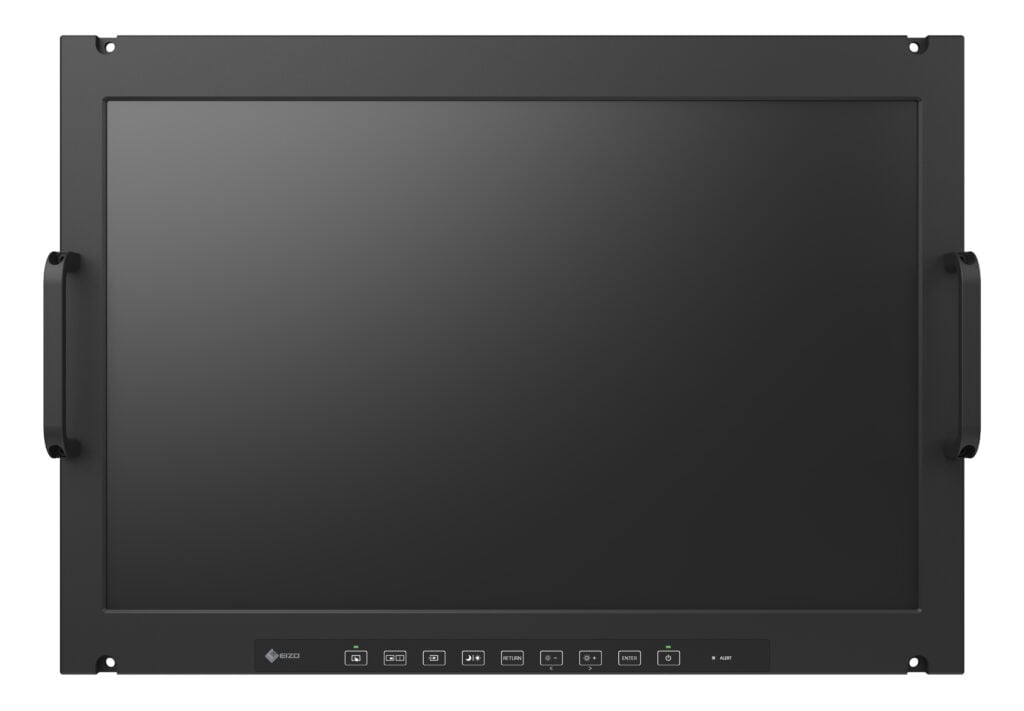
Discover cutting-edge solutions from leading global suppliersGeneral Digital’s NVIS Display Selection Guide explores the technical factors to consider when specifying Night Vision Imaging System (NVIS)-compatible displays for defense and mission-critical applications.
It outlines the key environmental, optical, and mechanical parameters that determine display performance in field operations where light control and reliability are essential.
Understanding NVIS Technology
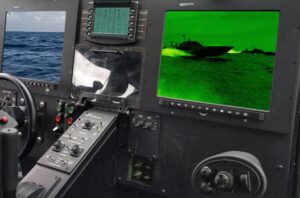 Night Vision Imaging Systems (NVIS) enable operators to view mission displays and tactical information in darkened environments without revealing their position. These infrared-based technologies are commonly integrated into land vehicles, naval control stations, and field command posts. NVIS displays also see use in aviation, marine, medical, and industrial systems where light discipline and visual clarity are critical.
At the core of every NVIS-enabled solution is its display module. Modern LCDs typically employ LED backlighting that produces a controlled light frequency, allowing clear viewing without disrupting the operator’s dark adaptation. Selecting the correct NVIS display involves analyzing a combination of optical, environmental, and integration criteria to ensure mission readiness.
Primary Selection Factors
Ruggedization Requirements
Each operating environment imposes unique design demands. Displays used in desert, marine, or tropical climates may require sealed housings, strengthened glass, or specialized materials to ensure performance under stress.
Platforms such as ship bridges or flight decks can be prone to EMI exposure. This can be minimized by integrating optically bonded vandal shields that both reinforce the display and reduce electromagnetic emissions.
Screen Size and Resolution
 Resolution contributes to image clarity but has limited impact on overall system cost. Physical size is dictated by the intended platform, compact units for handheld or portable systems, and larger formats for command or workstation environments.
Mounting and Enclosure Design
Mounting requirements depend on system configuration. Displays may be ceiling-mounted, rack- or panel-integrated, or designed as standalone modules. Proper enclosure specification ensures stability, protection, and accessibility.
Connector Interfaces
Selecting compatible connectors is essential to maintaining system efficiency. Aligning the display’s outputs with the platform’s input architecture helps avoid unnecessary adapters or converters, preserving space and signal integrity.
Additional Design Options
To enhance adaptability across mission types, several additional NVIS display features can be incorporated:
- Blackout Switch: Instantly deactivates illumination to preserve concealment in dark conditions.
- NVIS/Daylight Mode Shifting: Dual LED backlight rails enable rapid switching between day and night operation, allowing controlled brightness and color balance.
- Antireflective and Antiglare Coatings: Improve readability in high-light or reflective environments by reducing glare and surface reflection.
Matching Display Performance to Mission Demands
Environmental and mission profiles dictate which NVIS display attributes are essential. Proper specification ensures dependable performance under variable field conditions.
General Digital provides the expertise necessary to configure NVIS display systems that meet the demands of defense and aerospace applications, where visual reliability directly influences mission effectiveness.
Read the full NVIS Display Selection guide.