Showcase your capabilities
If you design, build or supply RF Attenuators, create a profile to showcase your capabilities and connect with visitors who have an active requirement for your solutions.



RF attenuators are passive or active components used to reduce radio-frequency signal amplitude by a controlled amount while preserving signal integrity in defense electronics. They support applications including radar, electronic warfare, secure communications, satellite links, RF testing, calibration, and unmanned systems.
This page showcases leading MIL-SPEC attenuator suppliers and manufacturers offering fixed, variable, programmable, solid-state, coaxial, waveguide, and step attenuators.
Read the Technology Overview
If you design, build or supply RF Attenuators, create a profile to showcase your capabilities and connect with visitors who have an active requirement for your solutions.

A MIL-SPEC RF attenuator is a passive or active component designed to reduce the amplitude of RF signals without significantly distorting them. By introducing a controlled level of resistance, attenuation is achieved, minimizing unwanted signal interference and preventing damage to sensitive equipment.
Key parameters in RF attenuator design include:
Military and defense applications require a range of attenuators tailored for specific operational needs. Below are the primary types typically offered by RF attenuator manufacturers:

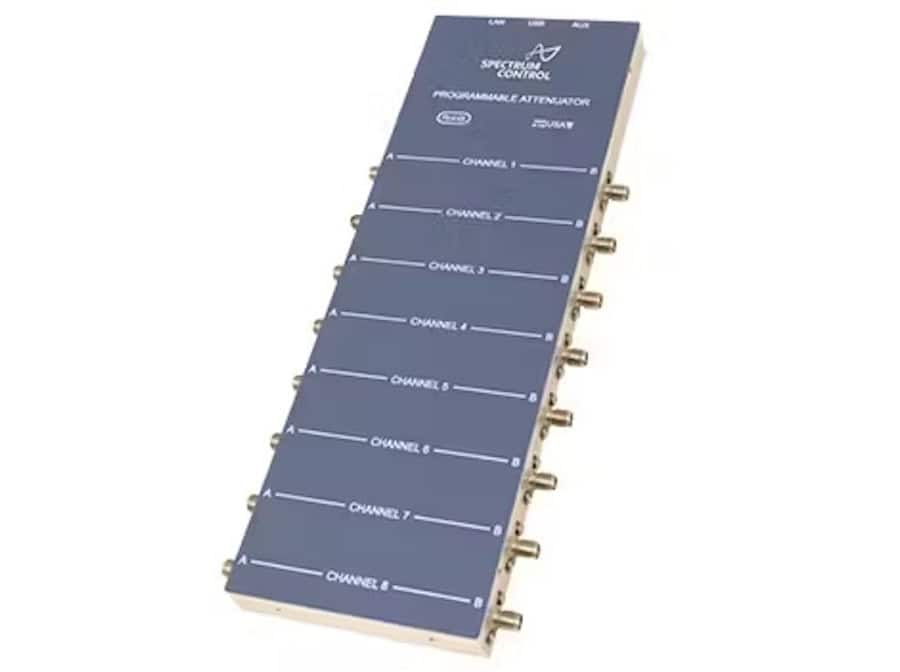
Programmable RF Attenuators by Spectrum Control
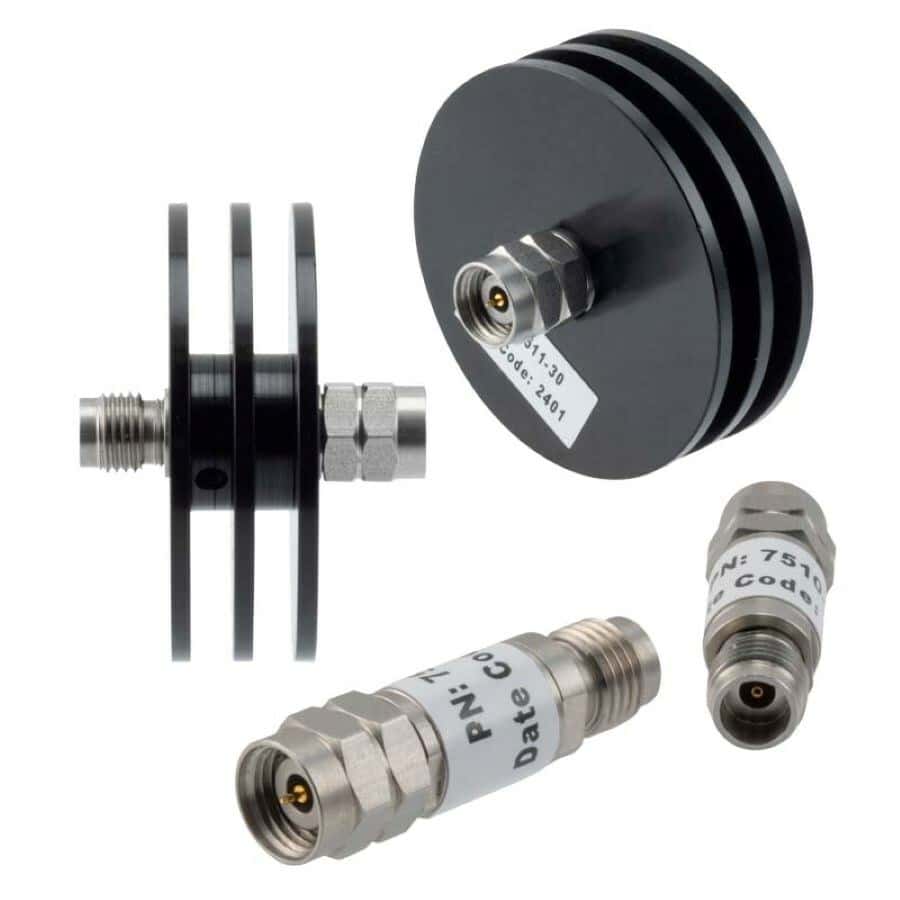
These attenuators provide a constant level of attenuation and are commonly used in RF signal chains to maintain power levels or protect sensitive components.
Adjustable attenuators allow for manual or electronic control of attenuation levels, providing flexibility for field operations, testing, and calibration.
Essential for automated military RF systems, programmable attenuators enable remote or software-controlled adjustments, making them ideal for dynamic signal management in radar and EW (electronic warfare) applications.
Using semiconductor technology such as PIN diodes or MEMS (micro-electro-mechanical systems), solid-state attenuators offer fast switching speeds and high reliability, making them well-suited for modern defense communications.
Designed for use in coaxial transmission lines, these attenuators ensure impedance matching and minimal signal distortion.
Used in high-power radar and microwave applications, waveguide attenuators provide precise attenuation with low insertion loss.
Step attenuators allow for discrete changes in attenuation, typically in predefined increments, and are commonly used in RF testing and military calibration setups.
RF attenuators are integral to various defense and military systems, ensuring controlled signal levels, secure communication, and optimal radar performance.
In radar applications, attenuators manage power levels to optimize signal detection while minimizing interference. In electronic warfare systems, they help control jamming signals and protect sensitive receivers from overload.
RF attenuators regulate signal strength in military radio and satellite communications, ensuring secure, interference-free transmissions.
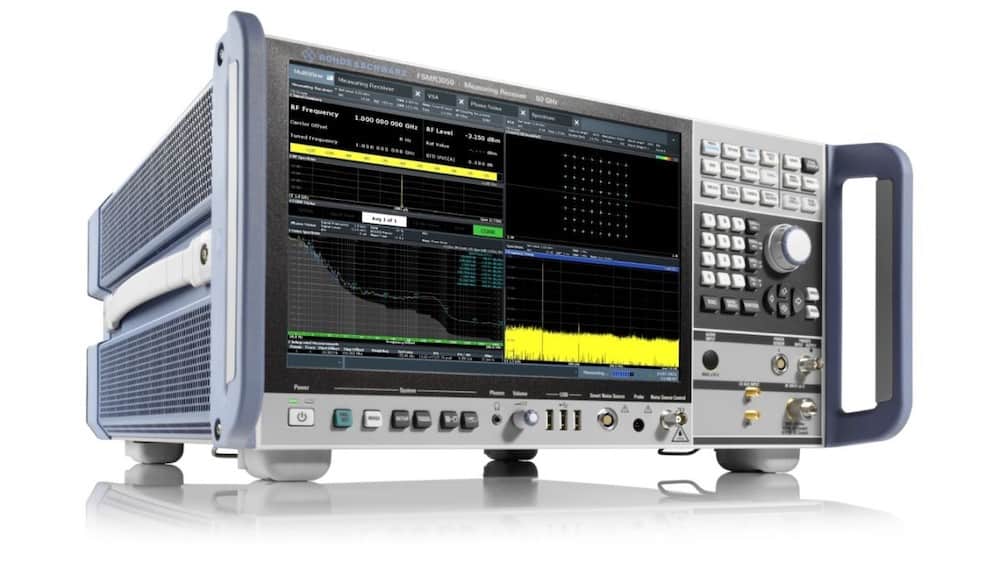
Military RF systems require precise calibration for optimal performance. Attenuators are used in testing equipment such as spectrum analyzers and network analyzers to simulate signal conditions.
Attenuators play a role in electronic countermeasures by controlling RF signals to disrupt enemy communications and radar systems without compromising friendly transmissions.
Military drones and other unmanned systems rely on RF attenuators to manage signal transmission and reception, ensuring reliable data links and navigation.
Attenuators regulate RF signals in satellite uplinks and downlinks, ensuring stable connections in space-based defense systems.
When choosing an RF attenuator for military and defense applications, several factors must be considered:
RF attenuators used in military and defense applications must meet strict industry standards to ensure reliability, durability, and performance in challenging environments. Compliance with these standards guarantees that attenuators can withstand extreme temperatures, vibration, shock, and electromagnetic interference (EMI) while maintaining signal integrity.
When selecting RF attenuators for military use, verifying compliance with these standards helps ensure long-term performance and reliability in mission-critical environments.
Advancements in RF technology are driving innovation in attenuator design, improving performance, adaptability, and integration with modern defense systems. As military and defense applications demand more precise and reliable RF components, several emerging trends are shaping the future of RF attenuators.
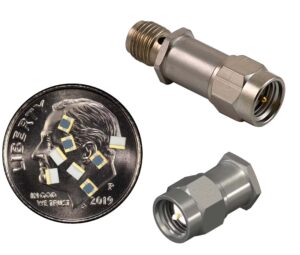
Cryogenic RF Attenuators by Spectrum Control
Micro-electro-mechanical systems (MEMS) technology is enabling the development of highly compact, low-power, and fast-switching RF attenuators. MEMS attenuators offer improved durability and performance, particularly in aerospace and unmanned systems where size, weight, and power (SWaP) considerations are critical.
Artificial intelligence (AI) and machine learning (ML) are being integrated into RF systems to enable real-time signal optimization. AI-driven attenuators can dynamically adjust attenuation levels based on environmental conditions, interference, and operational requirements, enhancing the efficiency of military communication and electronic warfare systems.
Solid-state RF attenuators using PIN diodes and FET-based designs offer rapid switching speeds and high reliability. Digital programmable attenuators allow for precise attenuation control via software or remote operation, making them essential for automated military RF systems, including electronic warfare (EW) and radar signal processing.
As military RF systems expand into millimeter-wave (mmWave) frequencies for applications like 5G-based battlefield communications and advanced radar systems, broadband attenuators capable of handling ultra-high frequencies are becoming essential. These attenuators provide consistent performance across wide frequency ranges, reducing signal distortion in high-frequency defense applications.
To enhance secure military communications, new attenuators are designed with ultra-low intermodulation distortion (IMD). This reduces unwanted signal interference and improves transmission clarity in complex RF environments, such as battlefield networks and encrypted satellite links.
By integrating these advanced attenuator technologies, defense organizations can enhance the performance, adaptability, and resilience of their RF systems, ensuring superior signal management in modern warfare and secure communications.
RF attenuators are vital components in military and defense applications, ensuring precise signal control, minimizing interference, and optimizing performance in critical RF systems. With various types available—including programmable, solid-state, and waveguide attenuators—these devices support essential technologies such as radar, secure communications, and electronic warfare.
When selecting an attenuator, factors such as attenuation level, power handling, and frequency range must be carefully evaluated to meet the rigorous demands of defense operations.
By integrating high-performance RF attenuators, military forces can enhance system reliability, improve signal integrity, and maintain superior operational effectiveness in complex RF environments.


 Searching Companies & Products



 Subscribe to the Weekly eBrief
The latest engineering and technical developments straight to your inbox - join thousands of engineers who receive it.
Subscribe to the Weekly eBrief
The latest engineering and technical developments straight to your inbox - join thousands of engineers who receive it.