
DTC, a Codan Company, has entered a strategic cooperation with FLANQ to integrate advanced marine tactical radios into autonomous maritime platforms for defense and security applications across Europe.
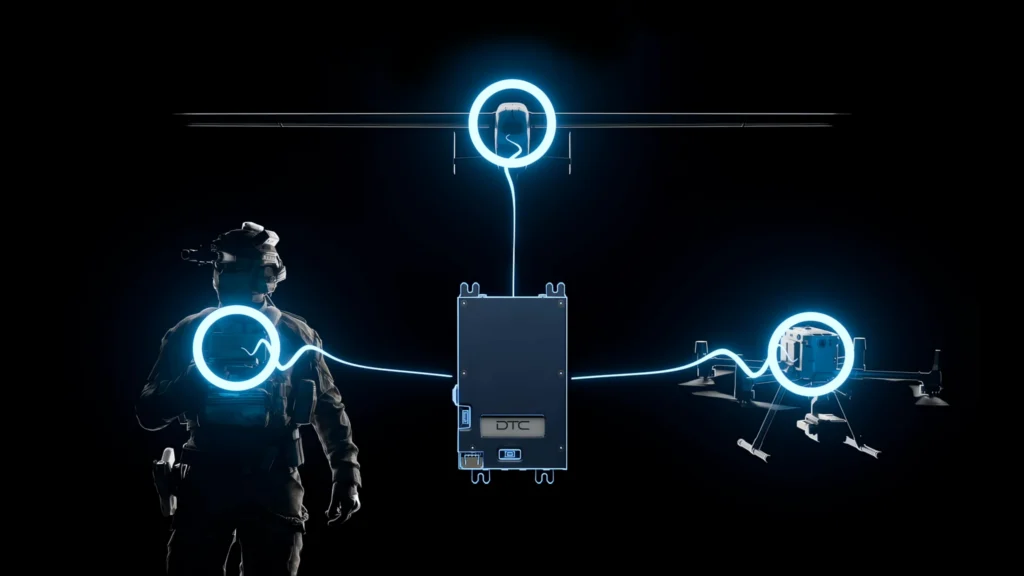
The partnership focuses on embedding DTC’s low-Size, Weight, and Power (SWaP) communications technology into the fleet of Uncrewed Surface Vessels (USVs) by FLANQ. This integration is designed to provide resilient, encrypted Command-and-Control (C2) links, allowing operators to task and monitor platforms in real-time.
The combined solution aims to support a variety of naval operations, including Intelligence, Surveillance, and Reconnaissance (ISR), the protection of Critical National Infrastructure (CNI), patrol and interdiction, and joint force interoperability.
By utilizing high-bandwidth and low-latency communications for sensor and video feeds, the systems are engineered to remain effective even in environments where electromagnetic signals are contested or denied. These capabilities are intended to extend the operational range of both fully autonomous and remotely controlled missions while providing resilience against jamming and interception in hostile environments.
Jannik Sauer, Chief Technical Officer at FLANQ, commented, “Reliable command and control is fundamental to any uncrewed platform in the modern battlespace – whether that’s in the air, land or sea surface. With DTC Communications, we are integrating a robust, secure communications backbone into our USV fleet, ensuring that our users can maintain control, share intelligence, and execute missions with confidence.”
The technical collaboration ensures that the integrated hardware maintains interoperability with NATO and partner nation command systems. This is particularly relevant for littoral and surface operations.
Chris Fulthorpe, Strategic Account Manager at DTC Communications, added, “Our tactical communications solutions have been field-proven in some of the most challenging operational environments. Partnering with FLANQ allows us to extend those capabilities to the maritime domain, ensuring that unmanned surface platforms remain securely connected and mission-effective in any scenario.”