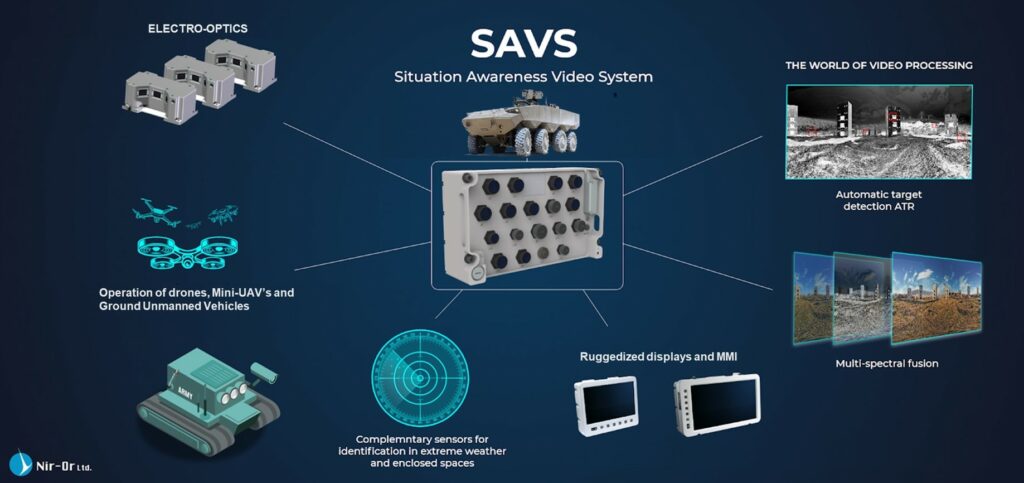
Video Management System (VMS) technology enables the acquisition, transport, processing, storage, and distribution of mission-critical video across defense and security operations. Unlike commercial surveillance platforms, a military VMS is designed for contested, bandwidth-constrained environments and supports EO/IR sensors, unmanned systems, vehicles, fixed installations, and maritime assets.
This category outlines suppliers of VMS software and hardware solutions, designed for integration with C2 and ISR systems, secure networking, and compliance with military standards.
If you design, build or supply Video Management Systems, create a profile to showcase your capabilities and connect with visitors who have an active requirement for your solutions.
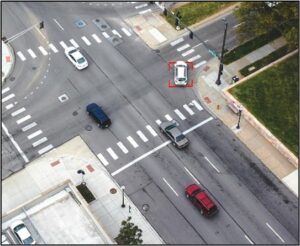
Ultra-Low Bandwidth Live Video Streaming for Contested and Denied Communications Environments
Ultra-Low Bandwidth Live Video Streaming for Contested and Denied Communications Environments
... adjusting the video stream to sustain reliable video delivery even under severely constrained... ...idth-optimised video streaming software solution designed to deliver reliable, real-time visual data...
Hardware-agnostic Remote Video Terminal software solution
Hardware-agnostic Remote Video Terminal software solution
...#8217; Unified Video Terminal (UVT) is an advanced Remote Video Terminal software solution that is... ......ware provides UAS operators with a variety of essential video payload control features,...
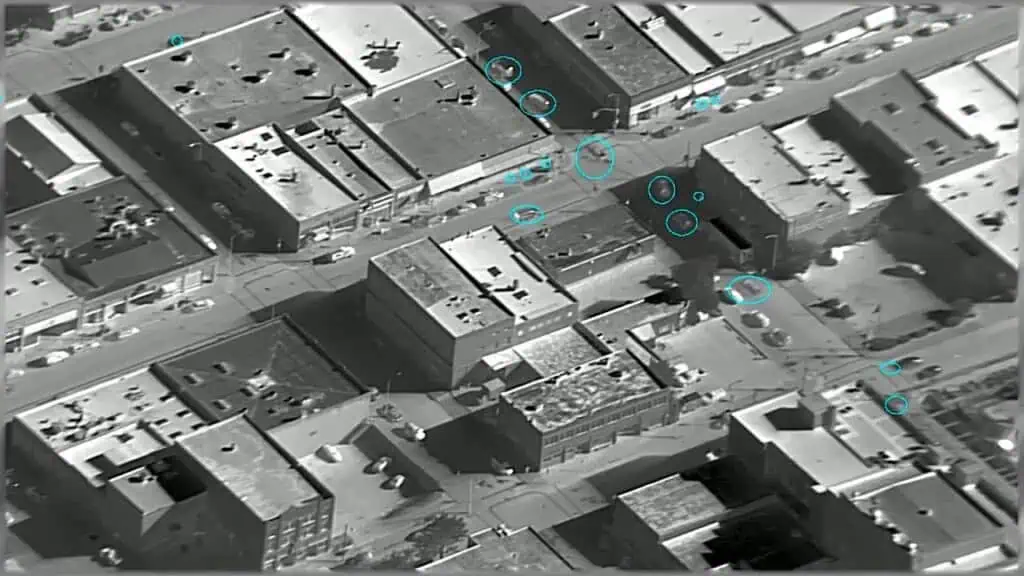
Real-time video enhancement, tracking and optimization software suite
Real-time video enhancement, tracking and optimization software suite
...htline’s Video Processing Software provides a powerful and constantly growing suite of... ...; Encoding: HD video capabilities include 1080p/30 and 720p/30 processing and encoding. Ethernet...
Video Management Systems (VMS) leverage software and hardware to acquire, transport, process, store, and distribute mission-critical video data across complex defense and security environments. Unlike standard commercial or enterprise surveillance systems, a military VMS is engineered to operate reliably in contested, bandwidth-constrained, and high-stakes scenarios, often spanning multiple domains and classification levels. These platforms bring together ruggedized sensors, high-performance encoders, compute infrastructure, and specialized video management software into a single, coherent ecosystem.
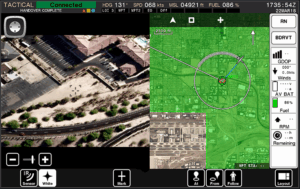
Unified Video Terminal Software by Kutta Technologies
Video is now a dominant data source in modern operations. Electro-Optical and Infrared (EO/IR) sensors underpin ISR missions, force protection, and unmanned operations. Without a robust video management platform, critical data remains fragmented or unavailable at the point of decision.
Key Components of a Video Management System
Video Sources and Specialized Sensors
Military VMS technology must support a wide range of sensors operating across multiple spectral bands. This includes visible EO cameras and infrared sensors spanning SWIR, MWIR, and LWIR, each selected to meet specific detection and identification requirements. The system must handle varying resolutions, frame rates, and dynamic ranges without degrading performance.
Beyond fixed surveillance, modern systems ingest video from:
Body-worn cameras for dismounted soldiers.
Vehicle-mounted situational awareness arrays.
UAS payloads and unmanned systems.
Non-traditional sources: In some applications, the “video” managed may originate from radar, sonar, or fused sensor outputs rendered as video streams to contribute to a unified operational picture.
Video Encoders and Signal Interfaces
Encoders form the bridge between raw sensor outputs and IP video networks. Defense environments frequently involve a mix of legacy and modern interfaces, requiring support for analog inputs as well as digital standards such as SDI, HD-SDI, HDMI, CVBS, and relevant STANAG-defined interfaces.
Compression is a critical design factor. Standards such as H.264 and H.265/HEVC dominate due to their balance between bandwidth efficiency and computational load. However, MJPEG remains relevant in low-latency or forensic capture scenarios. The VMS software must manage these formats intelligently, ensuring compatibility with downstream analytics and storage systems.
Video Management Software and Metadata Logic
The VMS software layer provides the control logic for the entire system. Its core functions include stream discovery, routing, and orchestration. In defense systems, metadata handling is just as important as the video itself. Time stamps, geolocation data, platform identifiers, and sensor parameters must be captured and indexed.
Robust user access control and audit logging are essential, particularly where VMS systems support multiple units or coalition partners.
Storage and Archiving Infrastructure
Video storage architectures must balance immediacy against endurance. Local and edge storage enable continued recording when connectivity is lost, while centralized repositories support long-term analysis. Many deployments adopt hybrid models, synchronizing edge storage with fixed data centers when bandwidth permits.
VMS software for CCTV and ISR across military bases must be resilient by design. Redundancy and integrity checking are mandatory to ensure that critical data is not lost due to hardware failure or hostile action.
VMS Deployment Models & Operational Use Cases
Fixed Installations and Perimeter Security
At permanent infrastructure like military bases, airfields, and ports, intelligent video management systems underpin layered security. Operators rely on centralized views to detect incursions and coordinate responses. These installations benefit from high-capacity fiber networks, enabling advanced features and high-resolution analytics to run centrally.
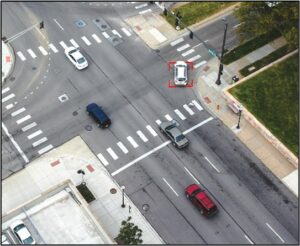
Real-Time Video Processing Software Suite by Sightline Intelligence
Mobile, Vehicle, and Tactical Overwatch
Vehicle-mounted VMS support both navigation and survivability. In these environments characterized by shock, vibration, and constrained power, the system combines driver vision, blind-spot monitoring, and external surveillance. In convoy operations, shared video feeds enhance coordination across multiple platforms.
Airborne and Tactical UAS
Unmanned platforms generate vast quantities of video that must be managed from sensor to analyst. A specialized VMS handles downlink management, onboard recording, and distribution, often in accordance with NATO interoperability frameworks such as STANAG 4586.
Maritime and Port Security
In maritime environments, systems integrate EO/IR sensors with deck cameras and radar-derived video. These systems must operate in harsh, corrosive conditions and integrate seamlessly with shipboard combat systems to support navigation and threat detection.
Cybersecurity, Standards & Compliance in VMS
Secure Transport and Data Protection
Video data must be protected both in transit and at rest. Encryption and secure networking protocols are essential, particularly where video traverses exposed or shared networks. Role-based access control ensures that users only access video appropriate to their clearance.
System Hardening and Standards
Defense systems are hardened through secure boot mechanisms and trusted hardware. They must comply with environmental and EMC standards such as MIL-STD requirements, as well as NATO STANAGs governing video formats.
Integration with C2 and ISR
A VMS is rarely a standalone tool. It integrates tightly with Command and Control (C2), ISR, and Remote Video Terminal (RVT) systems, contributing video as a core element of the decision-making process. In many operations, video must cross classification boundaries, requiring integration with cross-domain solutions to enforce policy and information assurance.
Emerging Trends in Video Management Technology
The role of the video management systems continues to expand as video volumes grow, with a shift toward:
AI Video Management Software: AI-driven situational awareness is reshaping how video is exploited, moving from passive storage to active threat detection.
Cloud-Based Video Management Systems: While tactical systems remain local, cloud video management system architectures are being explored for rear-echelon intelligence sharing and long-term data exploitation.
VMS Server Software Optimization: Next-generation server software is becoming more distributed, allowing for high-speed processing at the edge to reduce the burden on tactical radio links.
As these technologies mature, VMS are evolving from a simple surveillance tool into the foundational digital infrastructure for modern, data-driven defense operations.
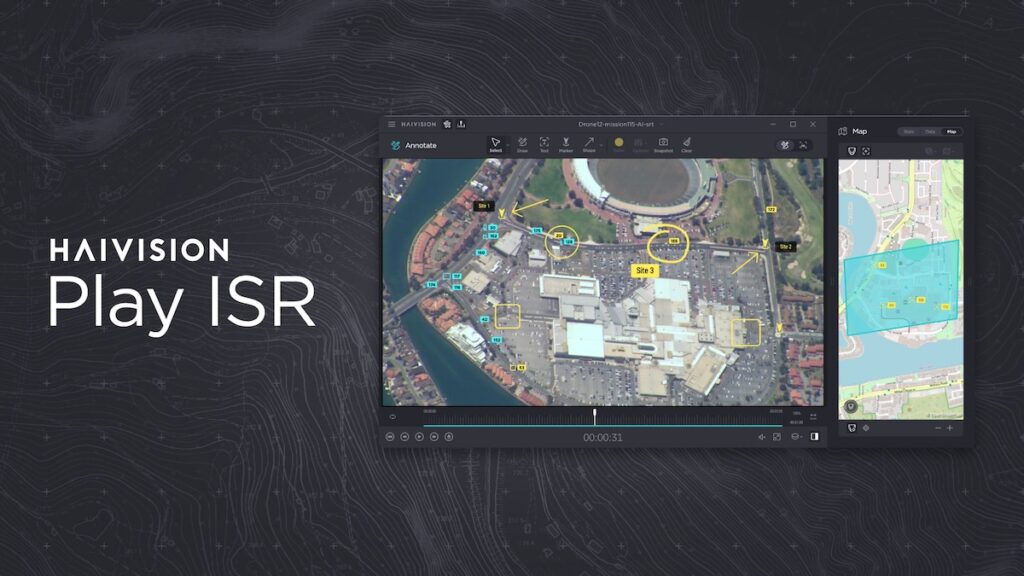
A newly released software video player from Haivision delivers advanced intelligence analysis, interactive mapping, and real time metadata tools designed to help tactical defense and public safety teams accelerate critical operational decisions
Defense Advancement showcases Kutta Technologies hardware and software technologies, including mission computers and ground stations, for enhanced Command and Control
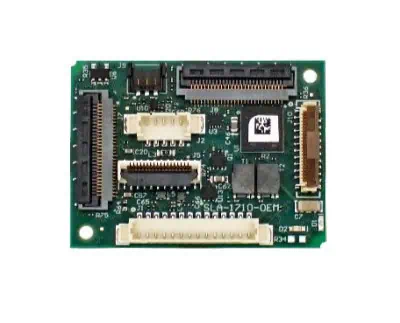
SightLine’s latest updates, including the 3.9.2 software and hardware advancements, enhance ISR and defense operations with improved tracking, situational awareness, and SWaP optimization
Version 3.7.2 of SightLine Applications’ video processing software adds dual channel processing to the 1750-OEM, improves tracking and detection, and marks the release of the 4100-OEM dual processor
Nir-Or will be at IDEX 2023 in Abu Dhabi to showcase its Video Management System, which incorporates AI capabilities, ATR, and auto-tracking to enhance situational awareness
The latest defense technology news, straight to your inbox.
Get our weekly roundup of technology developments, new products and industry news.
THANK YOU FOR SIGNING UP
Thanks for joining us. Check your inbox.
We've sent you an email. Click the confirmation link to complete your subscription to the weekly eBrief. In the meantime, explore the latest news, suppliers and technologies on DA.
Advancing Defense Capability Through Strategic Collaboration
Defense Advancement works with major OEMs to foster collaboration and increase engagement with SMEs, to accelerate innovation and drive defense capabilities forward.