Showcase your capabilities
If you design, build or supply Proximity Alarms, create a profile to showcase your capabilities and connect with visitors who have an active requirement for your solutions.




Find proximity alarms for military programs from leading manufacturers and suppliers, supporting equipment protection, border security, and threat detection across defense operations.
Read the Technology Overview
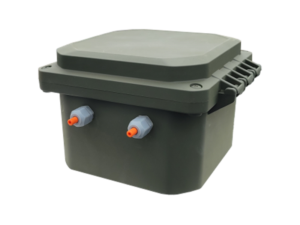
Marine & Ground-Based Tracking Beacons: Track, Monitor, & Safeguard Critical Naval & Defense Assets

If you design, build or supply Proximity Alarms, create a profile to showcase your capabilities and connect with visitors who have an active requirement for your solutions.

Military proximity alarms provide early threat detection and enhanced operational awareness across land, air, and maritime environments. They support intrusion detection, perimeter monitoring, and asset protection, helping defense personnel reduce reaction time and improve survivability. Systems range from compact sensors for vehicles and unmanned platforms to integrated proximity-warning solutions for fixed installations and forward-operating bases.
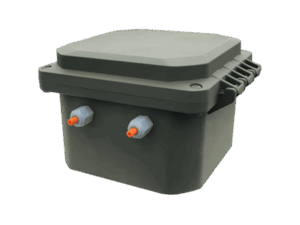
RAM-200, proximity alarm system for detection of ground vehicle movement, from Xeos by Satlink
These systems detect the presence or movement of personnel, vehicles, or objects within a defined zone using radar, infrared sensing, acoustic and vibration detection, magnetic sensing, or low-power RF. Generated alerts can trigger local warnings or integrate into broader situational awareness networks to support rapid decision-making. By augmenting surveillance architectures and filling detection gaps around borders, checkpoints, and convoy routes, proximity alarms strengthen layered defense and provide persistent monitoring in low-visibility or contested environments.
Military proximity alarms support a wide range of mission sets, including:
In border security roles, proximity alarm systems detect movement across designated boundaries and integrate with surveillance system infrastructure to enable automated alerting. For equipment security, alarms prevent tampering, unauthorized handling, or covert placement of devices on vehicles or mission-critical assets.
Military and defense procurement programs typically evaluate several categories of proximity alarm technologies:
Short-range radar units generate detection zones around equipment or fixed sites. These systems operate effectively in adverse weather, smoke, and low visibility, and are suited to ground vehicles, unmanned platforms, and stationary security posts.
Passive and active IR detectors identify heat signatures and movement patterns. Their low-profile form factors and low power demands make them suitable for perimeter monitoring and concealed surveillance applications.
These systems detect magnetic disturbances from metal objects or equipment and are commonly used for asset protection, access control, and monitoring equipment placement or removal.
Microphone arrays and seismic sensors, known as unattended ground sensors, recognize footsteps, vehicle movement, or mechanical activity, supporting border monitoring and remote detection in rugged terrain.
Integrated platforms combine radar, IR, thermal, seismic, and RF sensing into a unified threat detection system. These systems increase reliability, reduce false alarms, and provide coverage across a range of environmental conditions.
Procurement teams typically assess proximity alarm systems based on several performance attributes:
Radar-based systems offer robust all-weather capability but may require higher power. IR-based systems provide low signature operation but may be affected by environmental thermal variation. Multi-sensor systems offer the greatest reliability for border security and high-threat environments, but typically involve higher procurement and integration costs.
Modern proximity alarms are part of broader defense architectures that include surveillance, communications, and automated decision-support systems. Systems often interface with:
This level of integration supports faster dissemination of threat alerts, improved protection of convoy operations, and enhanced detection coverage across distributed security zones.
Proximity alarms used in military environments may reference or comply with defense standards such as:
Solutions developed for border security or perimeter monitoring may also align with multi-domain protection frameworks, ensuring compatibility with allied surveillance and defense alert systems.
Military procurement teams typically evaluate proximity alarms based on mission requirements, deployment environment, and integration needs. Key considerations include scalability across large perimeters, ability to function in contested electromagnetic environments, and long-term maintainability. Portable systems may be prioritized for expeditionary operations, while fixed installations require higher endurance and sustained reliability.


 Searching Companies & Products