Showcase your capabilities
If you design, build or supply GPS Asset Trackers, create a profile to showcase your capabilities and connect with visitors who have an active requirement for your solutions.



Source military GPS asset trackers from trusted suppliers and manufacturers. Solutions support secure positioning, monitoring, and accountability for mission-critical equipment, vehicles, and deployed personnel.
Read the Technology Overview


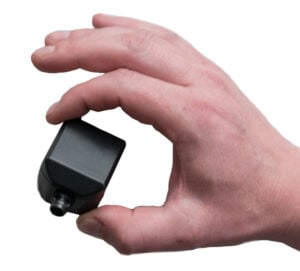
Marine & Ground-Based Tracking Beacons: Track, Monitor, & Safeguard Critical Naval & Defense Assets

If you design, build or supply GPS Asset Trackers, create a profile to showcase your capabilities and connect with visitors who have an active requirement for your solutions.

Military GPS asset trackers are designed to deliver the accuracy, resilience, and security required across modern defense operations. These systems provide continuous positional awareness for tactical vehicles, heavy equipment, containers, weapons, and personnel, using GNSS, inertial sensors, and satellite communication links to maintain visibility across dispersed and contested theaters. Their ruggedized construction ensures reliable performance under vibration, shock, extreme temperatures, and electromagnetic interference.

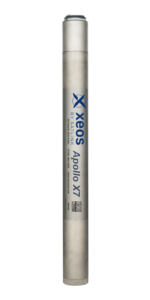
Apollo X7 from XEOS by Satlink.
Trackers typically combine multi-constellation GNSS receivers, IMUs, accelerometers, gyroscopes, and magnetometers to maintain navigation even when signals are degraded or denied. Satellite, cellular, and RF communication interfaces enable real-time reporting during field missions, transport operations, maritime deployment, and aviation support tasks. These capabilities strengthen force protection, logistics assurance, and operational planning by providing persistent asset visibility and movement data across land, air, and maritime environments.
GPS and GNSS asset trackers support a wide range of military applications, including:
These applications require high reliability, secure communication channels, and rugged form factors suitable for austere operational conditions.
Military GPS asset trackers combine location, sensing, communication, and processing technologies to deliver mission-ready performance. Common components include:
Together, these components deliver resilient performance under continuous motion, harsh weather, and high-intensity operational profiles.
GPS asset tracking solutions for defense environments are available in several form factors:
Compact designs support personnel accountability, emergency response, and location sharing during field operations. Integrated sensor suites monitor motion, environmental conditions, and security events.
Installed on tactical and support vehicles, these systems provide real-time fleet visibility, location history, and maintenance data. They integrate with navigation, power management, and command platforms.
Rugged trackers support weapon systems, containers, crates, and mission equipment. Features include long battery life, solar charging, and internal data logging to support intermittent connectivity.
Used in surveillance, reconnaissance, and counter-proliferation missions, these devices feature compact antennas, minimal emissions, and secure communication paths.
For global coverage, satellite trackers connect to Iridium and other SATCOM networks, ensuring reach over remote theaters, maritime routes, and air corridors.
Different tracking architectures offer unique strengths:
Integration decisions depend on the operational range, security requirements, network availability, and the criticality of the monitored asset.
GPS asset tracking systems in defense often adhere to strict military standards governing environmental resistance, electromagnetic compatibility, data security, and interoperability. Relevant standards include:
Trackers may also require compliance with export regulations, security accreditation processes, and platform-specific certification standards across land, air, and maritime systems.
GPS asset trackers integrate with command-and-control platforms, logistics management systems, and situational awareness tools to provide unified operational visibility. Data may be transmitted to enterprise asset management systems, fleet tracking software, or Blue Force tracking networks. Communication compatibility with tactical radios, satellite terminals, and secure IP networks ensures that real-time tracking data supports mission decision-making without compromising operational security.
Tracking devices can be integrated with sensor suites, enabling advanced features such as tamper detection, shock alerts, temperature monitoring, and positional event triggers. These features support weapons tracking, depot-level maintenance programs, and field-level readiness assurance.


 Searching Companies & Products


 Subscribe to the Weekly eBrief
The latest engineering and technical developments straight to your inbox - join thousands of engineers who receive it.
Subscribe to the Weekly eBrief
The latest engineering and technical developments straight to your inbox - join thousands of engineers who receive it.