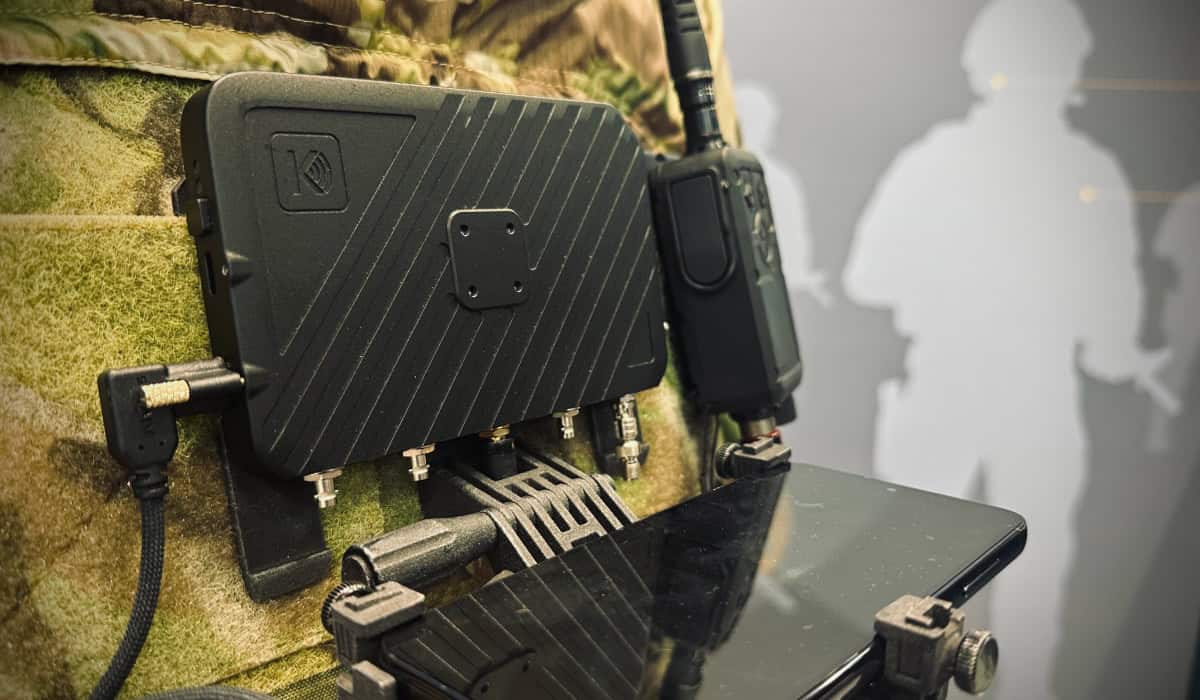




Beechat Network Systems outlines how the Reticulum networking protocol is designed to maintain resilient communications in contested, degraded, and infrastructure-denied environments where conventional networking assumptions no longer apply. Read more >>
Traditional network architectures rely on stable infrastructure, continuous connectivity, and predictable topology, conditions that often fail during disaster response operations, remote industrial deployments, unmanned systems missions, and other operational environments. Reticulum was developed specifically to address these challenges through a decentralized, cryptography-native architecture engineered to support communications across fragmented or intermittently connected networks.
Reticulum functions as an identity-based networking stack that operates independently of traditional IP infrastructure while remaining capable of interoperating with IP networks when required. Rather than using static network addresses, communications are tied to cryptographic identities, allowing endpoints to remain reachable even as connectivity changes.
The protocol supports multiple transport mediums including LoRa, packet radio, serial links, WiFi, Ethernet, and TCP or UDP over IP, while also enabling hybrid mesh architectures that bridge several transport layers simultaneously. Reticulum is designed for constrained operational conditions and can function over links as slow as five bits per second, prioritising survivability and reliable delivery rather than maximum throughput or low-latency performance.
Reticulum Architecture for Resilient Networking
Reticulum uses cryptographic destinations, transport nodes, announce propagation, and on-demand path discovery to maintain routing across sparse or intermittently connected mesh networks. Routing information is maintained locally through next-hop state instead of global topology awareness, reducing routing overhead while supporting scalability across large distributed environments.
Additional capabilities include compact packet structures, interface authentication through Interface Access Codes (IFAC), built-in encryption using Ed25519 and X25519 cryptography, and store-and-forward functionality that allows communication to continue through temporary network partitions. The protocol also supports larger encrypted resource transfers across constrained multi-hop networks through segmented and verified data transmission mechanisms.
Beechat states that Reticulum’s decentralized and resilience-focused architecture aligns with the company’s emphasis on operational sovereignty and communications survivability in constrained or contested environments. Unlike traditional MANET protocols such as OLSR and BATMAN, Reticulum prioritizes decentralization, delay tolerance, and continued operation under fragmented network conditions rather than IP routing efficiency under stable connectivity. Beechat also notes that it uses Reticulum-rs, a Rust implementation optimized for low size, weight, and power hardware platforms, while focusing its development efforts on secure radio design, hardware robustness, and operational integration.
Read ‘Reticulum: Identity-Based Networking for Resilient Mesh Communications’ to find out more information.