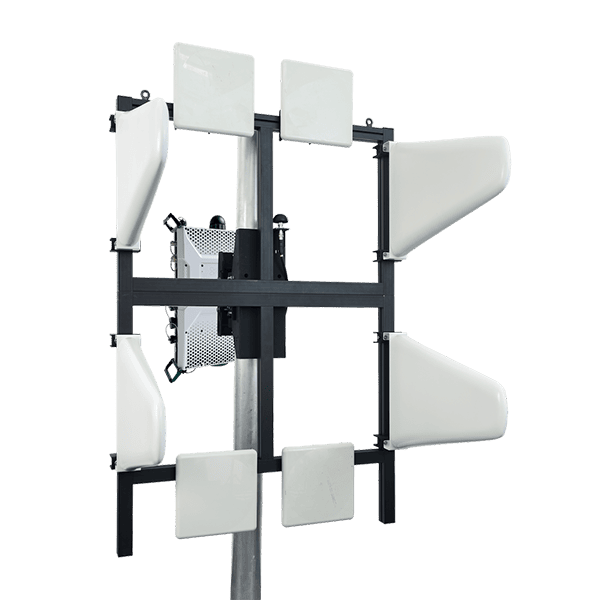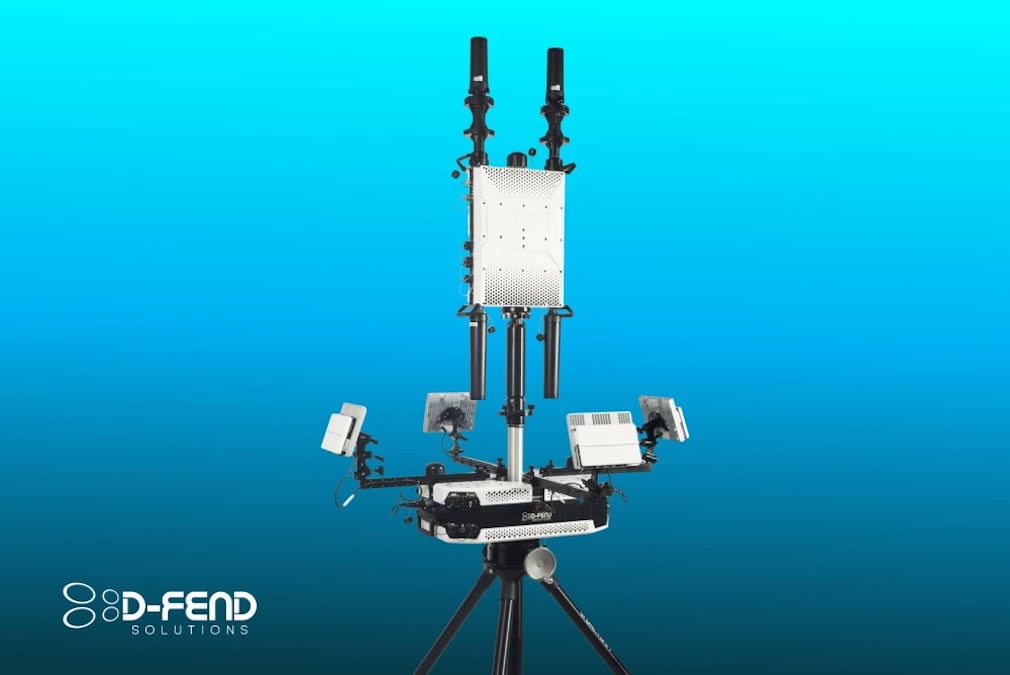

D-Fend Solutions, a specialist in Counter-Unmanned Aircraft System (C-UAS) technologies, has provided a comprehensive evaluation examining the advantages and limitations of existing and emerging detection technologies used in C-UAS operations.
Access the full whitepaper here > >
Unauthorized drones are emerging as one of the fastest-growing challenges to airspace security. In an environment where C-UAS technologies are evolving rapidly, selecting the most appropriate detection method for each operational scenario is essential.
The analysis reviews five principal drone detection approaches, radar, Electro-Optical/Infrared (EO/IR) sensors, RF directional finders, acoustic systems, and RF-based cyber solutions, outlining their respective capabilities and challenges in practical deployment scenarios.
Radars for Drone Detection
Radar systems have long been central to aerial threat detection, offering extensive range and broad situational coverage. Legacy radar systems, originally developed for military and aviation applications, perform effectively against larger aircraft but often struggle with small Uncrewed Aerial systems (sUASs) due to their limited radar cross-section.
Modern radar technologies now incorporate Electronically Scanned Array (ESA) and Micro-Doppler capabilities to enhance detection sensitivity for smaller drones. Despite these advances, distinguishing drones from birds or other small airborne objects remains difficult, resulting in frequent false positives. Performance is further influenced by environmental and structural conditions, as rain, fog, and urban signal reflections can distort radar readings and complicate target tracking.
EO/IR Sensors
EO/IR sensors are typically employed alongside radar to visually verify and classify detected aerial objects. Using infrared thermal imaging and visual recognition, these systems confirm whether a detected object is indeed a drone.
However, EO/IR sensors depend on a direct line-of-sight, which limits effectiveness in dense or obstructed environments. Poor weather, low light, and atmospheric interference can reduce image clarity. Additionally, human review is often required for real-time image validation, increasing operational staffing demands.
RF Directional Finders
RF directional finders detect and track drones by monitoring common control frequencies and comparing them with known signal profiles. Data from multiple sensors can approximate the drone’s direction and assist with tracking during the transition to mitigation.
While useful for initial detection, directional finders provide limited positional precision and typically cannot identify drone models or transmit exact location data. Urban reflections and terrain interference can degrade accuracy, requiring multiple sensors and complex deployment to achieve consistent results.
Acoustic Detection
Acoustic systems detect drones by identifying the sound signatures of their propellers and motors and comparing them to a reference database. Although mobile and easy to deploy, these systems face significant limitations in noisy environments such as airports, stadiums, or city centers.
Modern drones are increasingly designed to operate quietly, further reducing acoustic detectability. As a result, these systems are not well suited for reliable location tracking or drone identification in environments with substantial background noise.
RF-Based Cyber Solutions
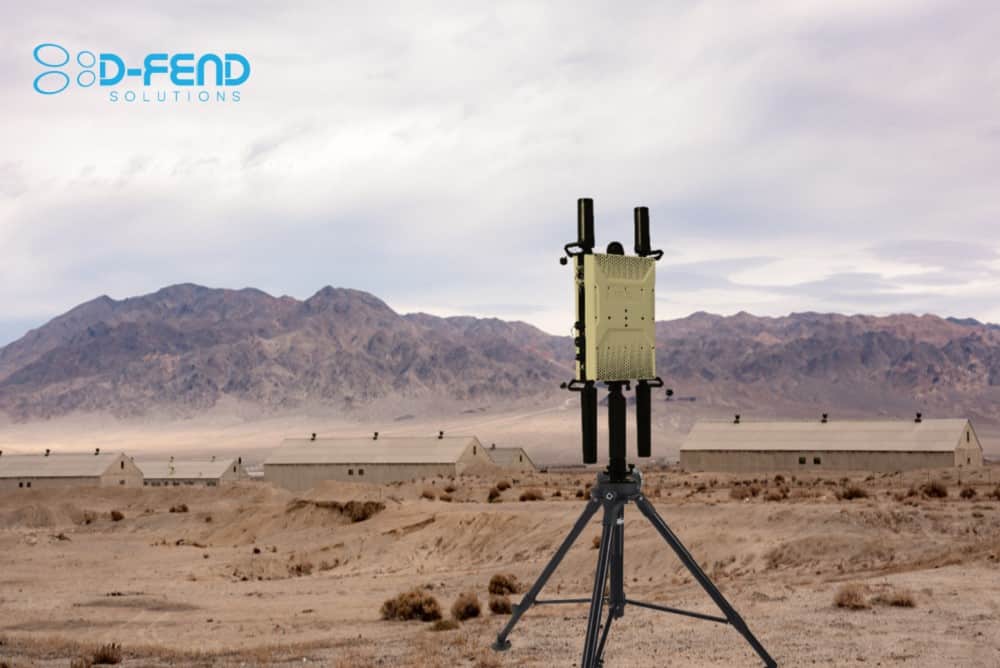
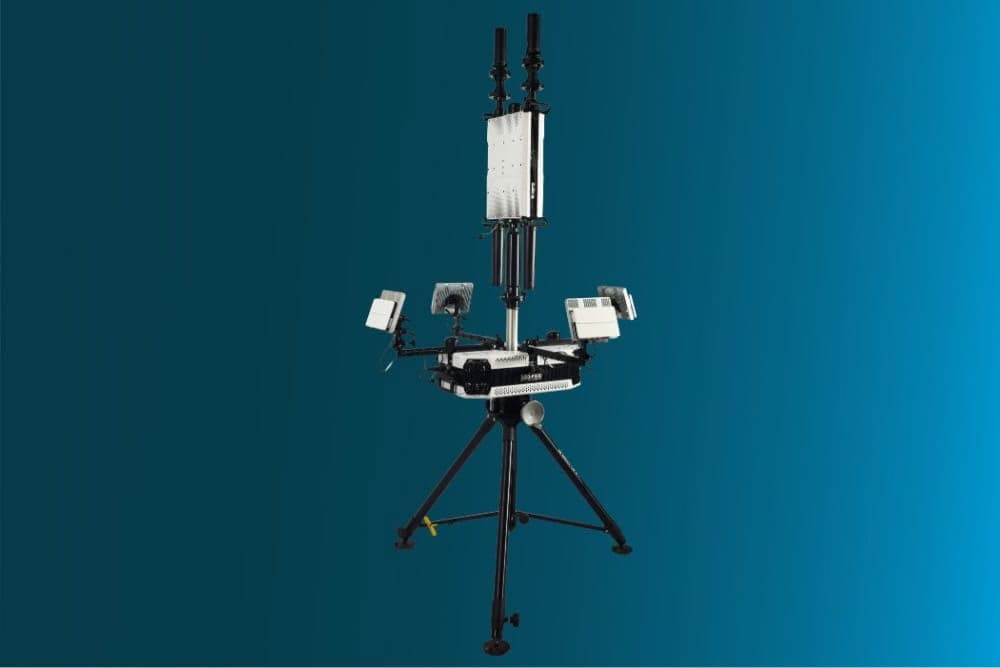
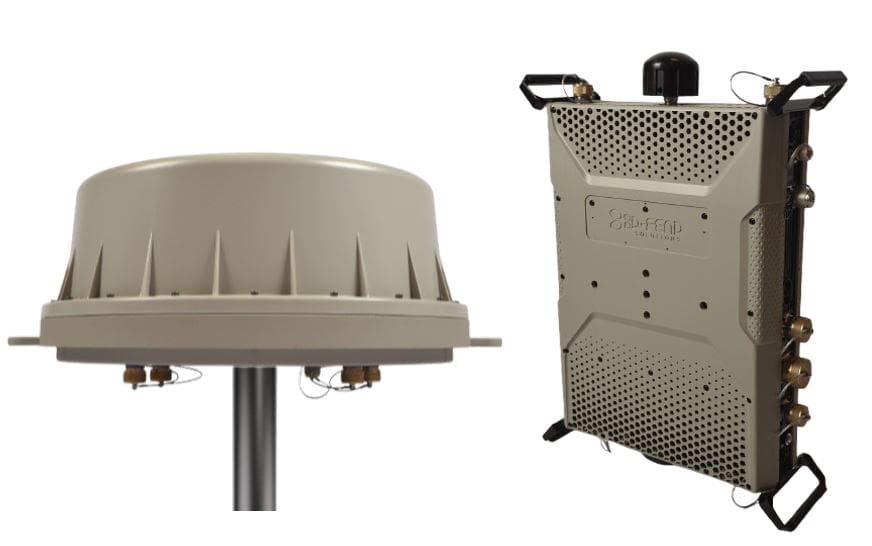
RF-based cyber detection technologies, such as D-Fend Solutions’ EnforceAir2, use passive, continuous signal analysis to identify and classify drone communications without false positives, distinguishing authorized from unauthorized activity.
By interpreting communication protocols, these systems determine the drone’s model, location, take-off point, and often the pilot’s position. Unaffected by weather, visibility, or environmental noise, RF-cyber solutions provide integrated detection and mitigation, enabling automated threat recognition and response with minimal human intervention.
Operational Considerations
Organizations authorized to deploy C-UAS solutions must account for environmental variables such as line-of-sight limitations, radio frequency noise, and signal propagation. Integrating multiple detection layers, including RF-based cyber technologies, enhances the probability of identifying and mitigating potential threats.
By combining traditional detection tools with advanced RF-cyber capabilities, operators can establish a comprehensive, adaptable, and reliable framework for securing airspace against unauthorized drone activity.