Fuel Injection Systems and Fuel Injection Kits for UAV Engines
Select UAV fuel injection systems from verified suppliers and manufacturers supporting defense and military drone engine programs where precision fuel control, reliability, and mission assurance are critical.
If you design, build or supply Fuel Injection Systems/Kits, create a profile to showcase your capabilities and connect with visitors who have an active requirement for your solutions.
Fuel Injection Systems and Fuel Injection Kits for UAV Engines
Overview by
Olivia Hannam
Updated:
Fuel injection systems deliver accurate, repeatable fuel metering across wide operating envelopes. In defense applications, fuel injection kits for UAV engines are selected to support demanding mission profiles, including extended endurance, high-altitude operation, rapid throttle response, and integration with advanced engine control architectures. Compared to carbureted or mechanically metered alternatives, fuel injection enables tighter control of air-fuel ratios, improved cold-start behavior, and greater adaptability to varying environmental conditions.
Types of Fuel Injection Systems for UAV Engines
Several fuel injection architectures are used in UAV propulsion, each suited to different mission and engine requirements.
Electronic Fuel Injection (EFI)
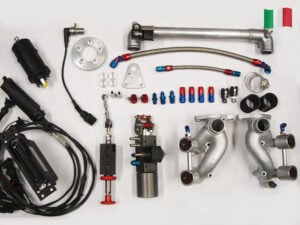
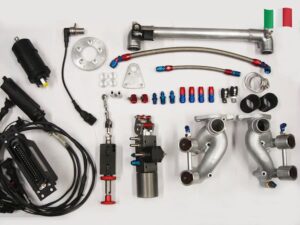
Electronic Fuel Injection System by Flygas
Electronic fuel injection systems are the most common configuration in modern defense UAVs. These systems use sensors and ECUs to calculate fuel delivery in real time based on engine speed, throttle position, intake pressure, and temperature. EFI systems support adaptive control, diagnostics, and integration with higher-level vehicle management systems.
Direct Fuel Injection
Direct fuel injection systems, also known as gasoline direct injection (GDI) systems, deliver fuel directly into the combustion chamber rather than into the intake tract. While more complex, direct injection can improve combustion efficiency and power density, making it suitable for high-performance UAV engine applications where efficiency and responsiveness are priorities.
Port Fuel Injection
Port fuel (multi-point) injection systems inject fuel upstream of the intake valve and are widely used for their balance of simplicity, reliability, and performance. Port injection remains common in small aircraft engines and military drone engines, where proven architectures are preferred.
Throttle Body Injection
Throttle body injection systems represent a simpler approach in which fuel is introduced at the throttle body. TBI systems may be used in smaller UAV engines or retrofit applications where cost, simplicity, or legacy compatibility are key considerations.
Mechanical Fuel Injection
Mechanical fuel injection systems are used in UAV engine applications where deterministic fuel delivery, mechanical simplicity, and independence from complex electronics are operational priorities. These systems rely on mechanically governed fuel metering to deliver consistent performance across defined operating regimes. They are well-suited to UAV propulsion programs that emphasize robustness, predictability, and ease of integration. Mechanical fuel injection architectures can be advantageous in environments where electronic complexity, power availability, or electromagnetic considerations must be tightly controlled.
Key Components and Integration Considerations
Selecting a fuel injection kit for a UAV engine involves evaluating component-level performance and system integration. Fuel injectors and injector drivers must provide consistent flow rates and fast response times. Fuel pumps and fuel filters must maintain stable pressure while resisting contamination. Throttle bodies and intake manifolds influence airflow characteristics and engine responsiveness.
Electronic control units and engine control units serve as the core of electronic fuel injection systems. These ECUs interface with sensors, wiring harnesses, and engine management software to execute fuel maps and safety logic. In defense UAV propulsion systems, redundancy, electromagnetic compatibility, and fault tolerance are often critical selection criteria.
Integration with FADEC systems enables unified control of fuel delivery, ignition timing, and engine protection functions. This level of integration enables autonomous operation and simplifies coordination of higher-level flight control systems.
Fuel Injection Applications in Defense UAV Platforms
Defense UAV programs rely on fuel injection systems to meet operational requirements that exceed those of commercial or hobby platforms. Military drone engines must perform consistently under temperature extremes, vibration, and sustained load while maintaining predictable fuel consumption. Fuel injection supports these requirements by enabling precise fuel delivery during loiter, climb, dash, and descent phases.
Fuel injection kits are deployed across a wide range of UAV classes, from small tactical drones to medium endurance platforms and larger unmanned aircraft supporting ISR, communications relay, or electronic warfare missions. In gasoline-powered UAV engines, electronic fuel injection systems improve fuel efficiency and reduce variability across engines, simplifying fleet-level maintenance and logistics planning.
In addition, fuel injection systems support hybrid propulsion concepts and advanced combustion strategies by providing flexible fuel metering profiles. This capability is increasingly relevant as defense organizations pursue reduced fuel burn, extended range, and compatibility with alternative fuels.
Standards and Defense Alignment
Fuel injection systems deployed in defense UAV propulsion programs are typically evaluated against military and aerospace standards governing environmental durability, electrical performance, and system integration. Qualification focuses on ensuring reliable fuel delivery across temperature extremes, vibration profiles, and altitude ranges common to unmanned military operations.
Commonly referenced standards and frameworks:
MIL-STD-810 environmental engineering and test methods
MIL-STD-461 electromagnetic interference and compatibility
MIL-STD-704 aircraft electrical power characteristics
SAE AS5374 aerospace fuel system component requirements
SAE AIR1667 aircraft fuel system design practices
NATO STANAG standards supporting unmanned system interoperability and environmental compliance
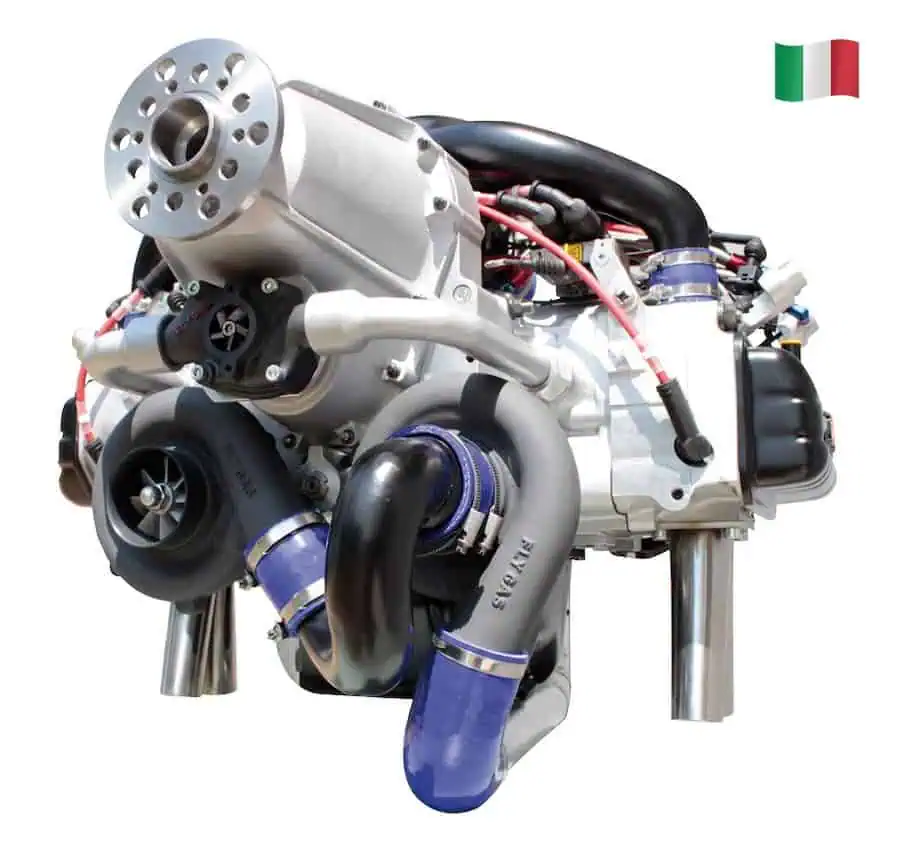
Defense Advancement showcases Flygas' UAV engines and propulsion solutions for military and defense applications, from four-stroke gasoline, ULS, and centrifugal superchargers
The latest defense technology news, straight to your inbox.
Get our weekly roundup of technology developments, new products and industry news.
THANK YOU FOR SIGNING UP
Thanks for joining us. Check your inbox.
We've sent you an email. Click the confirmation link to complete your subscription to the weekly eBrief. In the meantime, explore the latest news, suppliers and technologies on DA.
Advancing Defense Capability Through Strategic Collaboration
Defense Advancement works with major OEMs to foster collaboration and increase engagement with SMEs, to accelerate innovation and drive defense capabilities forward.