Electronic Speed Controllers (ESC) for Military Drones & Unmanned Systems
Electronic Speed Controllers (ESCs) enable precise control of electric motors used across defense unmanned platforms, including UAVs, UGVs, USVs, and UUVs. In military environments, ESCs are engineered to deliver deterministic, real-time motor control under high duty cycles, thermal stress, vibration, and electromagnetic interference.
This category highlights suppliers of defense-grade and NDAA-compliant ESCs for drones and unmanned systems, designed to manage torque, direction, and braking while interfacing reliably with flight computers, vehicle controllers, and power distribution systems.
If you design, build or supply Electronic Speed Controllers (ESC), create a profile to showcase your capabilities and connect with visitors who have an active requirement for your solutions.
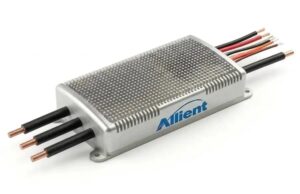
Gallium nitride-powered electronic speed controller for military UAV motor control
Gallium nitride-powered electronic speed controller for military UAV motor control
...yxalon™ Apex Drone Drive is an ElectronicSpeedController(ESC) designed for professional defense... ...ics can reduce controller size by up to 50%, while the lightweight aluminum enclosure incorporates...
Electronic Speed Controllers (ESC) for Military Drones & Unmanned Systems
Overview by
William Mackenzie
Updated:
Introduction to Electronic Speed Controllers in Defense Platforms
Electronic Speed Controllers (ESCs) are integral to the propulsion and mobility of unmanned platforms in defense and aerospace sectors, including UAVs, UGVs, USVs, and UUVs. These components regulate electric motor performance in complex, multi-system environments where thermal load, EMI resilience, and real-time responsiveness are critical. Defense-grade and NDAA-compliant ESCs must meet stringent standards for environmental durability, command responsiveness, and compatibility with flight control and power distribution systems.
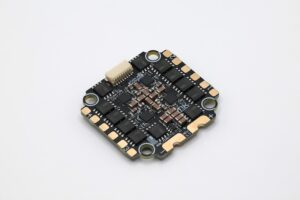
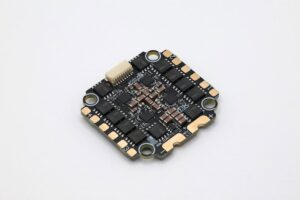
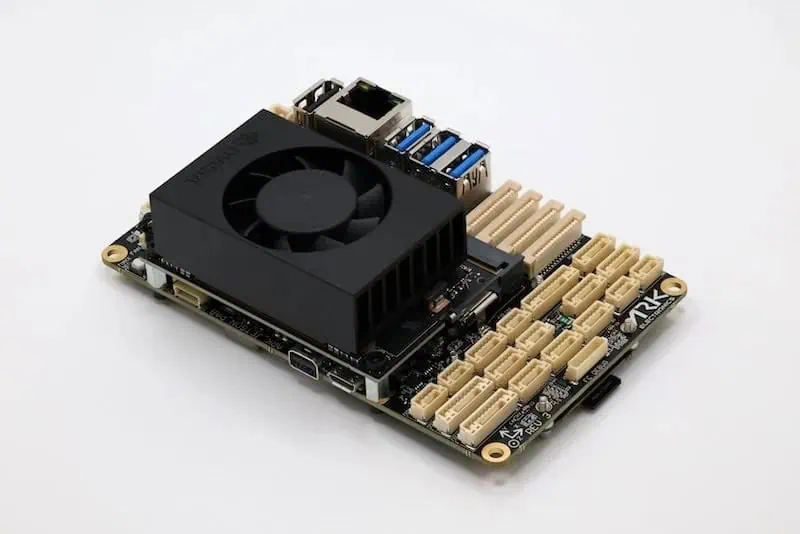
ARK 4-in-1 NDAA-Compliant ESC by ARK Electronics
Unlike commercial platforms, military unmanned systems are required to operate for extended durations, often at high duty cycles, while exposed to extreme temperatures, vibration, electromagnetic interference (EMI), and degraded or contested communications. Rugged ESCs must deliver deterministic performance while maintaining electrical integrity and predictable thermal behavior.
While commercial-grade and industrial ESCs prioritize cost, size, and peak performance, military ESCs are engineered for predictability, resilience, and lifecycle support. This includes conservative electrical margins, hardened interfaces, controlled firmware behavior, and compatibility with certified flight and vehicle control architectures.
Key Functions of Military Electronic Speed Controllers
Power Conversion and Motor Commutation
At its most fundamental level, an electronic speed controller converts DC electrical power from a battery, generator, or hybrid power system into the controlled, multi-phase AC waveforms required to drive electric motors. In brushless motor systems, this involves high-frequency switching of power transistors to energize motor windings in a precisely timed sequence.
Modern ESCs use sophisticated commutation strategies to balance efficiency, torque smoothness, and thermal load. Field-Oriented Control (FOC) and advanced trapezoidal commutation methods are increasingly employed to reduce torque ripple and acoustic noise while maximizing usable thrust. FOC is particularly favored in defense applications (like robotic manipulators and UGVs) for its superior precision at low RPM and reduced electromagnetic signature, offering a significant advantage over simple trapezoidal control. These techniques demand accurate current measurement and fast control loops, particularly in defense platforms where operating envelopes are pushed close to system limits.
High-frequency switching improves motor responsiveness and reduces audible noise but introduces efficiency trade-offs through switching losses and increased electromagnetic emissions. Defense ESC design therefore involves careful optimization of switching frequency, gate drive behavior, and power semiconductor selection to achieve predictable performance under sustained load.
Command Interpretation and Real-Time Control
Electronic speed controllers act as real-time interpreters of commands issued by flight computers, vehicle controllers, or mission processors. These commands may represent desired thrust, torque, speed, or acceleration rather than simple motor speed requests. The ESC must translate these inputs into precise electrical outputs with deterministic latency.
In military unmanned systems, control timing is critical. ESC response delays or jitter directly affect flight stability, navigation accuracy, and autonomous decision-making. As a result, defense ESCs are designed around tightly bounded control loops that deliver repeatable response times, even under thermal stress or electrical noise. The ESC also forms part of the closed-loop control system used by autonomy stacks. Feedback from the ESC, such as current draw, rotational speed, or fault status, feeds directly into control laws governing vehicle dynamics, making deterministic behavior a non-negotiable requirement.
Torque, Speed, and Direction Management
Military unmanned platforms demand far more than simple speed control. In UAVs, electronic speed controllers must manage thrust precisely to maintain attitude and compensate for disturbances such as gusts or payload shifts. In UGVs and robotic systems, torque control is often more important than speed, particularly when operating on uneven terrain or manipulating heavy loads. Bidirectional operation is a common requirement in ground and maritime systems, enabling reversing, braking, and fine positioning. Precision control under variable load conditions is a defining characteristic of defense ESCs, ensuring stable control across a wide operating envelope without oscillation or instability.
ESC Applications Across Tactical Unmanned Systems
UAV Propulsion and Flight Control
In military unmanned aerial platforms, military drone electronic speed controllers and those in fixed-wing vehicles directly influence flight safety and performance. Fixed-wing UAVs rely on electronic speed controllers to manage propulsion efficiency across climb, cruise, and loiter phases, often prioritizing endurance. Quadcopter, multirotor, and VTOL platforms place even greater demands on ESC responsiveness, as continuous thrust balancing is required to maintain stability. High-dynamic maneuvering depends on drone ESCs that can deliver fast, predictable changes in motor output. Redundancy is particularly important, as ESC failure in a multirotor aircraft can lead to loss of control unless mitigated through rapid control reallocation.
UGV and Robotic Ground Platforms
In ground vehicles, ESCs control traction motors that must deliver high torque at low speeds while coping with shock loads and rapid changes in resistance. Skid-steer and articulated drive architectures require closely coordinated motor control to ensure predictable vehicle behavior and minimize drivetrain stress. Beyond propulsion, ESCs are widely used in robotic manipulators, weapon turrets, and sensor positioning systems. In these applications, smooth torque delivery and positional repeatability are often more critical than speed, placing a premium on sensored control and low-speed stability.
USV and UUV Propulsion Systems
Maritime platforms impose unique demands on ESCs. For USVs, maritime propulsion systems must minimize acoustic and thermal signatures to reduce detectability while maintaining efficiency over long missions. UUVs introduce additional constraints related to pressure, corrosion, and thermal dissipation in sealed environments. Reliability is paramount in long-duration autonomous missions, often requiring ESCs to be derated electrically and thermally to maximize lifespan.
Types of ESC Architectures & Design Variants
Brushless ESCs
Brushless electronic speed controllers dominate modern defense unmanned propulsion due to their efficiency, reliability, and reduced maintenance requirements. The absence of mechanical commutation improves lifespan and makes them better suited to continuous operation in harsh environments. For military use, brushless ESCs are designed with conservative electrical margins and robust protection mechanisms, trading peak performance for predictable, repeatable operation.
Sensorless vs Sensored ESCs
The choice between sensorless and sensored architectures dictates low-speed performance and complexity.
Feature
Sensorless ESC (Back-EMF)
Sensored ESC (Hall-Effect/Encoder)
Military Use Case
Rotor Position
Inferred via Back-EMF
Direct feedback (Hall-effect, Encoder)
Mission-Critical Precision
Low-Speed Control
Degraded, prone to instability at start-up
Excellent, precise control at 0 RPM
UGVs, Manipulators, Gimbals
Hardware/Complexity
Simpler, lower weight
More complex, requires additional sensors
Complexity vs. Performance
Reliability
Robust, fewer components to fail
Potential sensor points of failure
General UAV Propulsion
Sensored architectures are highly preferred for UGVs, robotic actuators, and applications requiring smooth start-up under load and precise low-speed torque delivery.
Bidirectional and Regenerative ESCs
Bidirectional ESCs support reversible motor operation and controlled braking. In some architectures, regenerative braking allows energy to be returned to the power system, improving overall efficiency and reducing thermal load. While regeneration benefits are often limited in aerial platforms, they can be significant in ground vehicles and robotic systems where frequent braking or load reversal occurs.
High-Voltage and High-Power ESCs
Large UAVs and heavy UGVs increasingly operate at system voltages above 60 V to reduce current levels and improve efficiency. High-voltage ESCs must address insulation integrity, creepage and clearance distances, and fault containment to maintain safety. These designs typically employ advanced power semiconductors and robust isolation strategies to manage higher electrical stress without compromising reliability.
Integration Within Unmanned System Architectures
Interface with Flight Control Computers and Vehicle Controllers
Electronic speed controllers interface with higher-level controllers through various command protocols, including PWM, DShot, CAN, UART, and, increasingly, deterministic Ethernet-based schemes. Defense platforms favor deterministic, fault-tolerant interfaces, such as CAN-FD or real-time Ethernet, that support command validation and status reporting. Robust fault reporting allows flight and vehicle controllers to respond intelligently to degraded performance or impending failure, rather than treating the ESC as a black box.
Power Distribution and Energy Management
ESCs operate as part of a wider power architecture. Integration with Power Distribution Units (PDUs) enables coordinated current limiting, voltage monitoring, and load shedding under abnormal conditions. Battery Eliminator Circuits (BEC) and auxiliary power outputs are often used to supply sensors or control electronics, making ESC power integrity a system-level concern rather than a local one.
Telemetry, Feedback, and Diagnostics
Modern defense ESCs provide rich telemetry, including current, voltage, temperature, and rotational speed. This data supports health monitoring, performance optimization, and post-mission analysis. Remote tuning and configuration capabilities allow parameters to be adjusted during integration or even in the field, provided appropriate security controls are in place.
Emerging Technology Trends in Defense Drone ESCs
SWaP Optimization and Advanced Power Semiconductors
Advances in power electronics and packaging continue to increase power density, allowing electronic speed controllers to deliver higher performance in smaller, lighter form factors, which is a critical requirement for payload capacity and platform agility. This is driven by the increasing adoption of wide-bandgap semiconductors such as silicon carbide (SiC) and gallium nitride (GaN). These devices offer lower switching losses, higher temperature operation, and improved efficiency, particularly in high-voltage applications.
Secure and Autonomy-Ready ESCs
As networked components, electronic speed controllers represent potential cyber-physical attack surfaces. Secure command authentication, protected configuration interfaces, and firmware integrity checks (via secure boot mechanisms and cryptographic validation) are increasingly required to prevent unauthorized modification. Future-oriented ESCs are designed to operate as intelligent nodes within autonomous control architectures, compatible with AI-driven control loops and capable of autonomous fault response strategies. By embedding greater intelligence at the edge, ESCs can offload processing and improve overall system resilience.
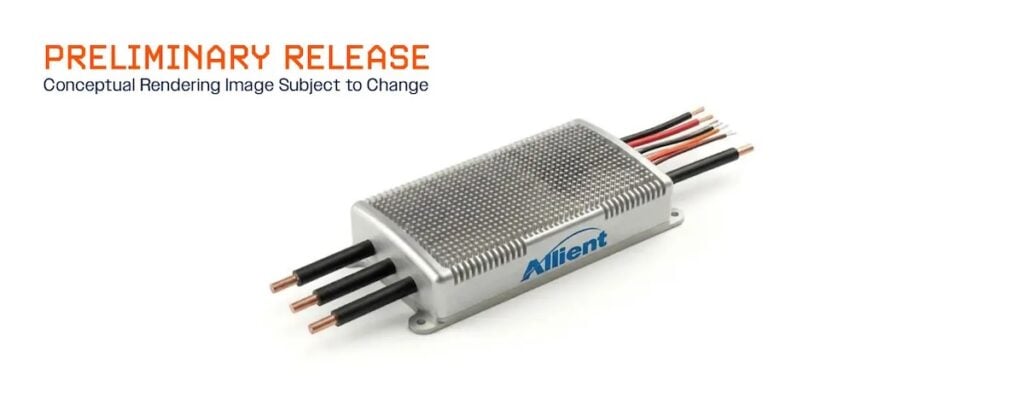
Allient has unveiled the Vyxalon Apex Drone Drive, an electronic speed controller featuring advanced Gallium Nitride technology designed to boost flight range, efficiency, and reliability across defense and industrial platforms
The latest defense technology news, straight to your inbox.
Get our weekly roundup of technology developments, new products and industry news.
THANK YOU FOR SIGNING UP
Thanks for joining us. Check your inbox.
We've sent you an email. Click the confirmation link to complete your subscription to the weekly eBrief. In the meantime, explore the latest news, suppliers and technologies on DA.
Advancing Defense Capability Through Strategic Collaboration
Defense Advancement works with major OEMs to foster collaboration and increase engagement with SMEs, to accelerate innovation and drive defense capabilities forward.