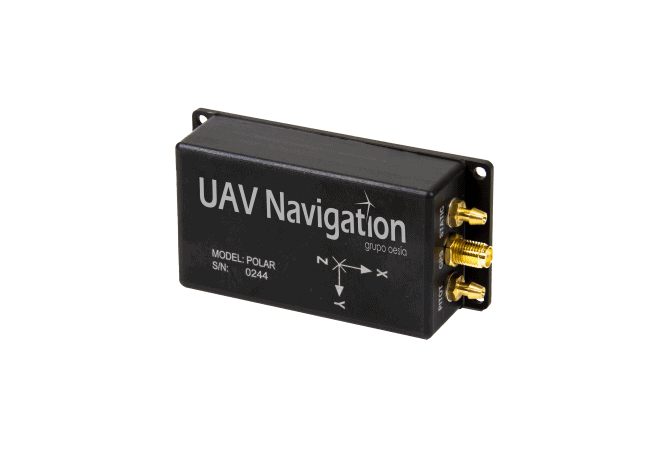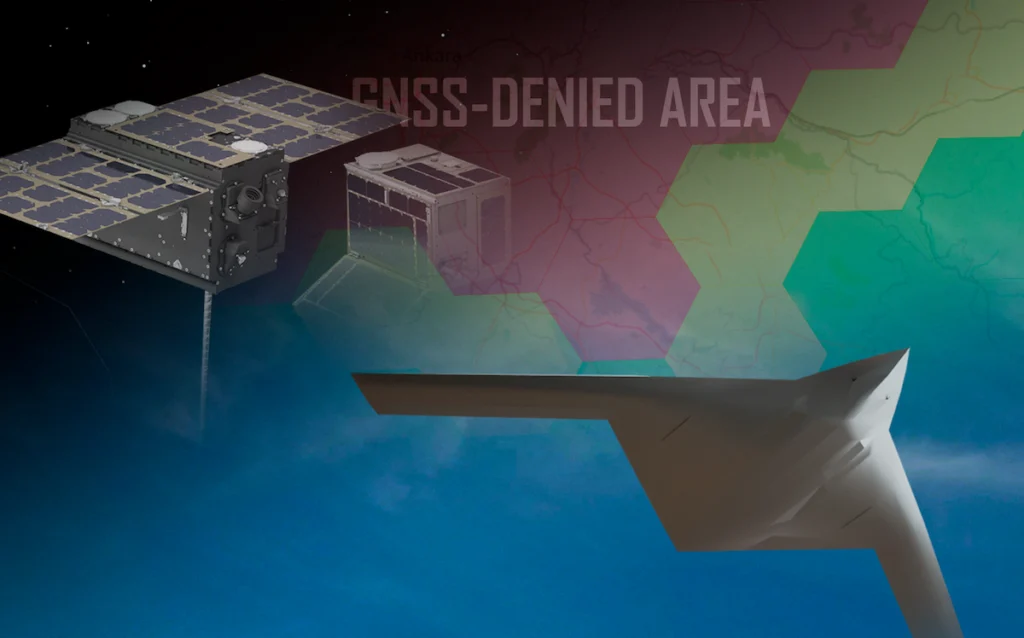
UAV Navigation–Grupo Oesía is collaborating with Septentrio, part of Hexagon, to enhance resilient navigation in their Guidance, Navigation, and Control (GNC) systems for Unmanned Aircraft Systems (UAS).
This partnership ensures compatibility with advanced GNSS receivers from Septentrio, which feature high-precision Real Time Kinematic (RTK) capabilities combined with AIM+ anti-jamming and anti-spoofing technology. The anti-spoofing resilience is specifically enabled through the Galileo Open Service Navigation Message Authentication (OSNMA) service, working alongside Septentrio’s proprietary algorithms.
The UAV Navigation-Grupo Oesía GNC system has been updated to automatically detect when a Septentrio OSNMA-enabled receiver is connected, seamlessly prioritizing its data within the navigation logic. According to UAV Navigation–Grupo Oesía, this demonstrates a high level of interoperability for the flight control system, ensuring optimal performance. The company has a strong track record in contested environment navigation, which includes the development of an AI-based visual navigation system.
Miguel Ángel de Frutos, Director and CTO at UAV Navigation–Grupo Oesía, commented, “Achieving interoperability with Septentrio’s advanced GNSS modules, equipped with Galileo OSNMA and RTK capabilities, significantly enhances the resilience and precision of our navigation systems.This collaboration underscores our commitment to delivering robust solutions capable of operating reliably in contested and GNSS-denied environments. Septentrio’s expertise in multi-constellation GNSS technology and anti-spoofing measures complements our focus on developing autonomous navigation systems that meet the stringent demands of modern aerial operations.”
For his part, Gustavo López, Market Portfolio Manager at Septentrio, noted, “Working alongside UAV Navigation–Grupo Oesía demonstrates the effectiveness of our AsteRx-m3 Pro GNSS board and the AntaRx-S3 smart antenna in enhancing UAV navigation systems. Our GNSS receivers, featuring advanced anti-jamming and anti-spoofing technologies, provide resilient and accurate positioning even in challenging environments, ensuring mission success in both civilian and defense applications.”
This interoperability milestone is presented as a step toward delivering secure, reliable, and high-precision navigation solutions for unmanned systems that operate in GNSS-denied and challenged environments.