




Honeywell Aerospace has launched Kestrel, a compact embedded navigation solution designed to maintain reliable positioning for uncrewed aerial systems operating in GPS-jammed and spoofed environments.
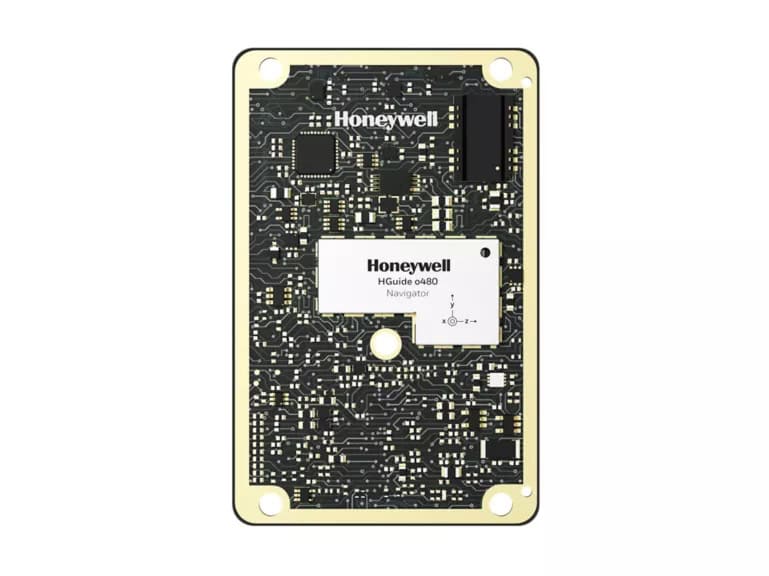
Built to support the growing demand for smaller, more affordable, and highly efficient platforms, Kestrel combines Honeywell Aerospace’s HG3900 MEMS Inertial Measurement Unit with an M-code receiver and a multi-GNSS receiver. The platform is engineered to meet the specific needs of Group 2 and 3 collaborative combat aircraft and loitering munitions platforms. It is also suitable for crewed aircraft where size, weight, power, and cost are critical considerations.
Matt Picchetti, Vice President and General Manager of Navigation & Sensors at Honeywell Aerospace, commented, “Kestrel reflects the evolving needs of today’s uncrewed operations, where operators are looking for resilient navigation technology that is smaller, lighter and more cost-effective. This system helps operators maintain mission objectives in environments where legacy GPS systems are lagging behind.”
The system is 40 percent smaller and lighter than similar navigation products available today, while delivering up to an 80 percent improvement in navigation accuracy for uncrewed platforms. It reduces costs by as much as 50 percent, helping operators efficiently scale deployment across high-volume drone operations. Furthermore, the system’s resiliency reduces uncrewed aerial system attrition by 60 percent while more than doubling the capacity for mission distances.
The ability to operate without assured GNSS access provides a distinct advantage for military aircraft operating in contested or GNSS-denied environments by providing continuous, self-contained position, velocity, and attitude estimates independent of external signals.
Honeywell Aerospace, which pioneered embedded GNSS/INS technology and has produced more than 60,000 units since the mid-1990s, designed the system to support a broad range of defense and commercial applications. The platform will be available in configurations that support international and non-ITAR deployments.