
Elistair explains how tethered military drones are becoming essential for modern soldiers and first responders in combat, providing long-lasting, mobile communication and surveillance capabilities to improve flexibility and effectiveness on the battlefield. Read more >>
As tactical communications continue to advance, militaries worldwide are adopting defense UAV technology. Tethered drones provide several advantages, making them valuable tools for warfighters and first responders.
Soldiers are becoming nodes within larger networks of information collection and dissemination, with miniature drones, augmented-reality headsets, and advanced communications equipment forming part of modern combat load.
Tethered Drones in Modern Operations
Tethered defense drones act as force multipliers, supporting mobile networks and enabling the decentralized decision-making needed for effective operations.
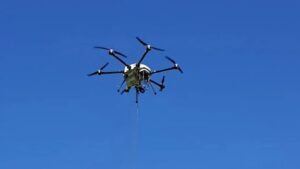
Tethered drones support Intelligence, Surveillance, and Reconnaissance (ISR) operations and can expand mobile network coverage without limiting the warfighter’s mobility.
Many advantages exist for using drones for tactical communications. UAV technology is easy and quick to set up, enabling rapid deployment. ISR aircraft can extend the range of a mobile network while keeping soldiers safe from dangerous RF exposure.
Untethered drones are limited by lithium polymer batteries, which provide short flight durations of 20-30 minutes on average.
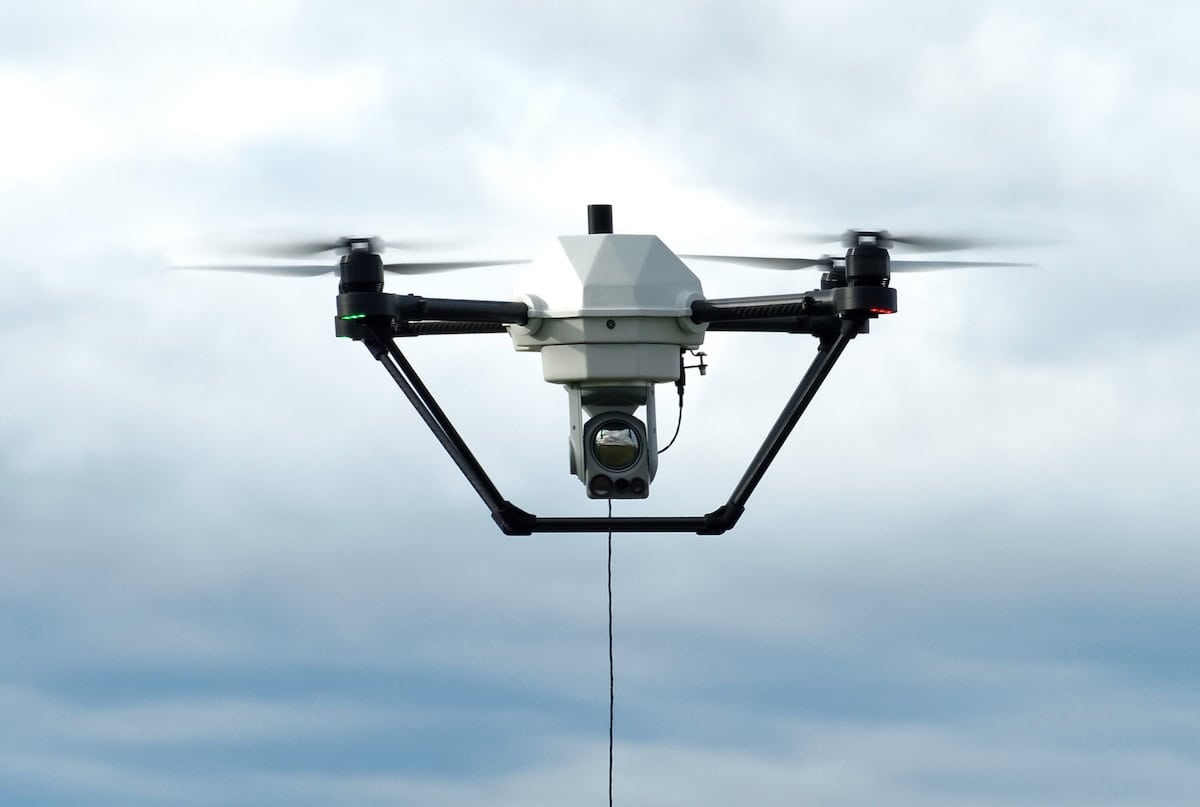
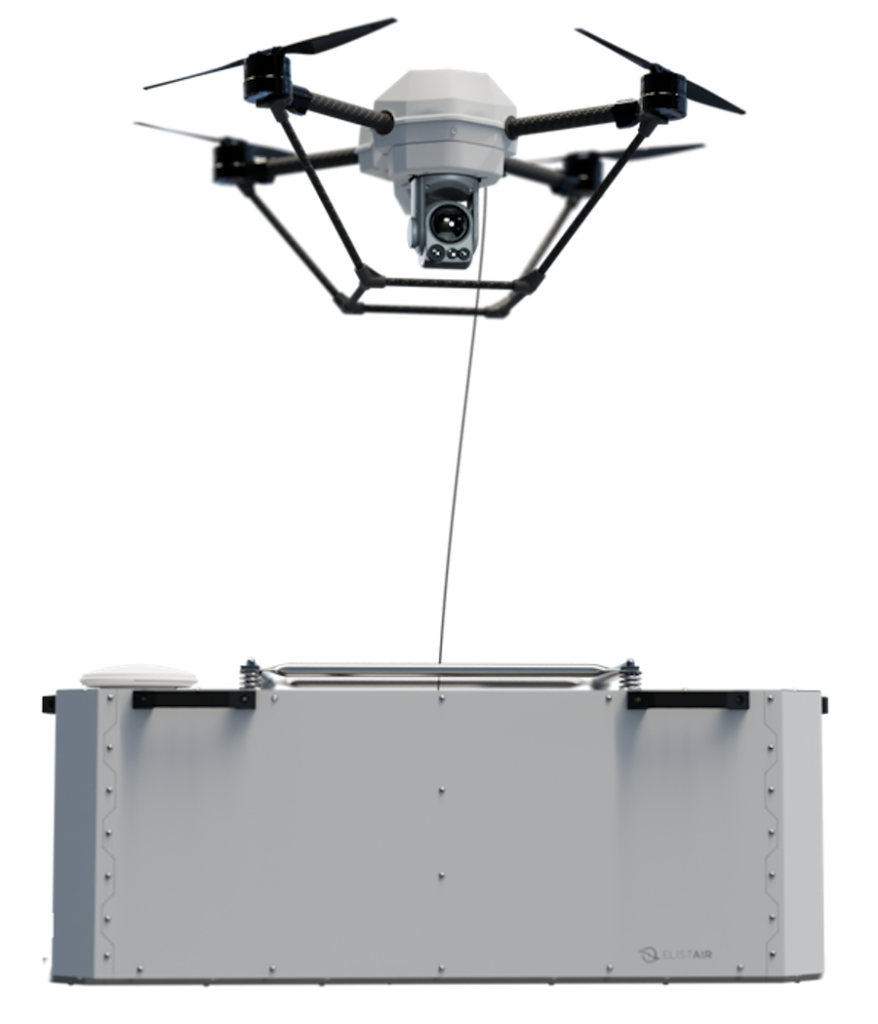
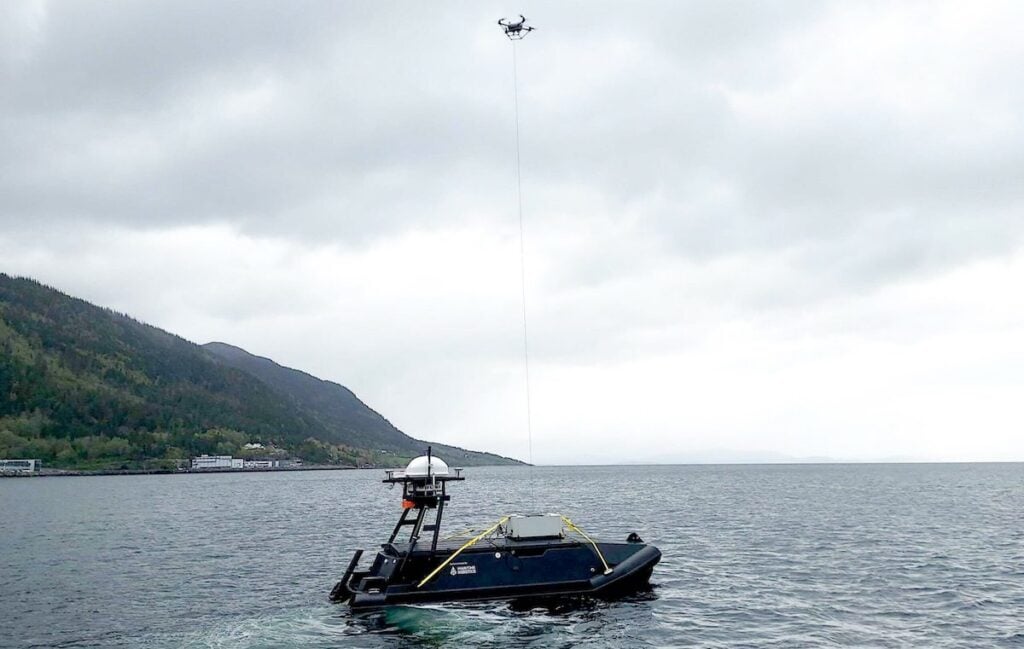
Tethered drones, in contrast, have near-unlimited power and can remain airborne for long periods, supporting continuous ISR coverage and mobile networks.
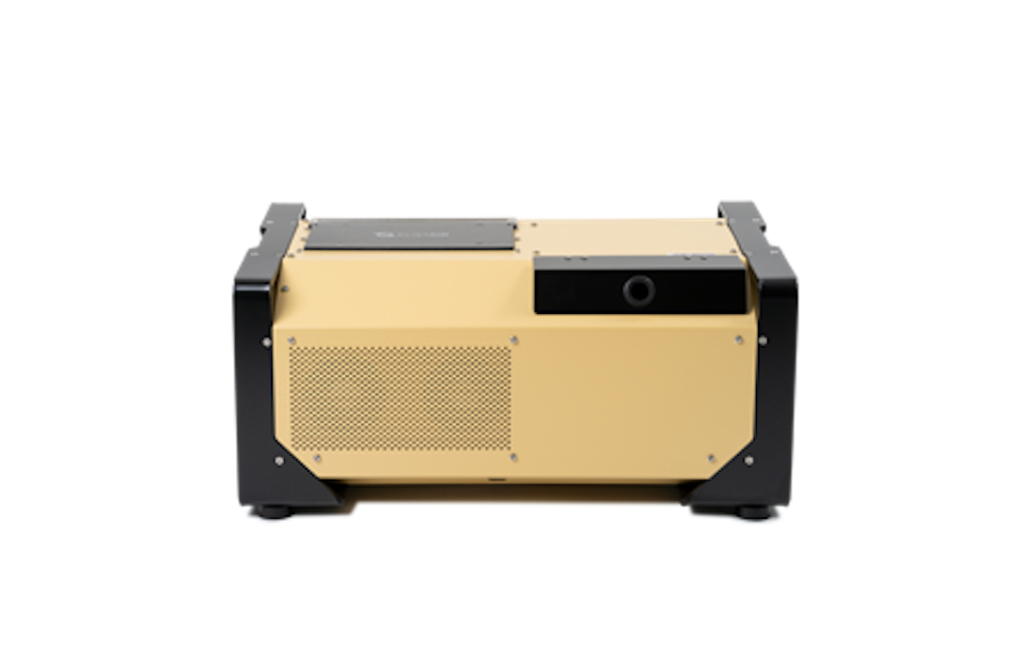
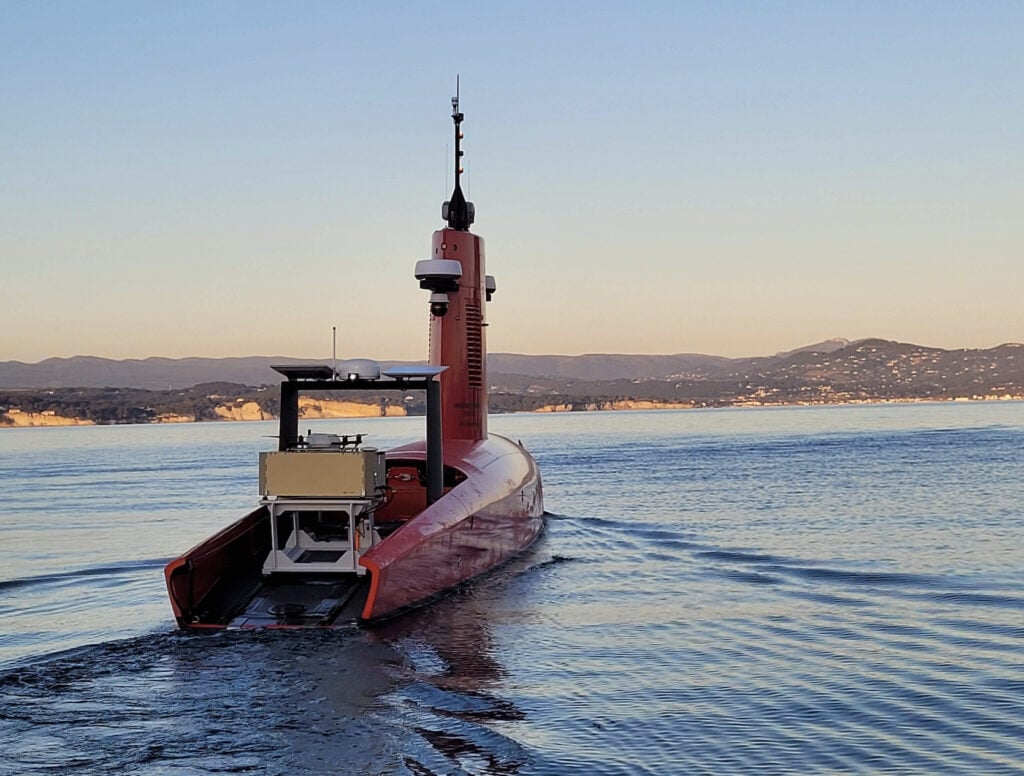
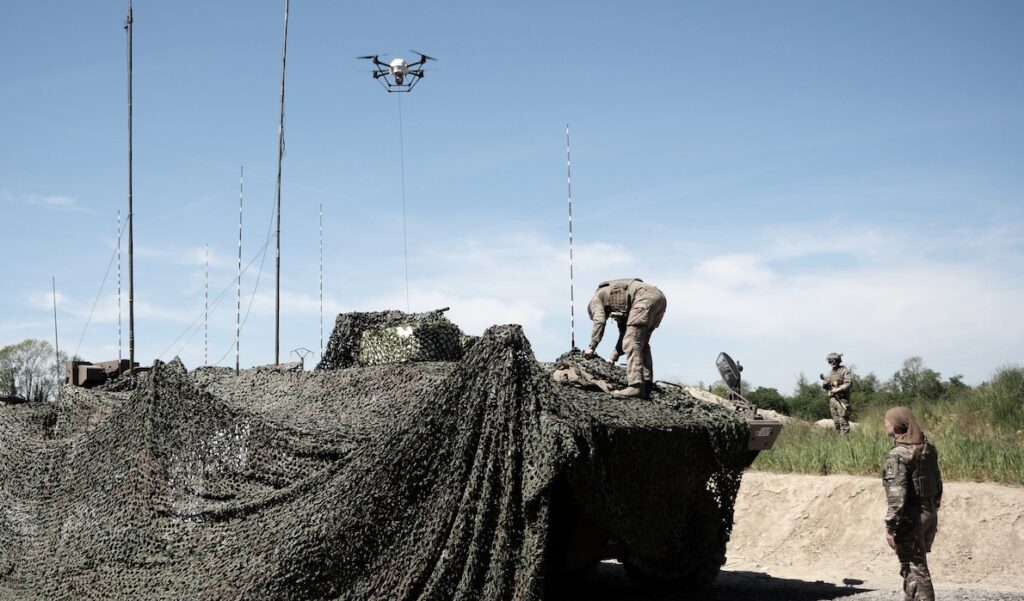
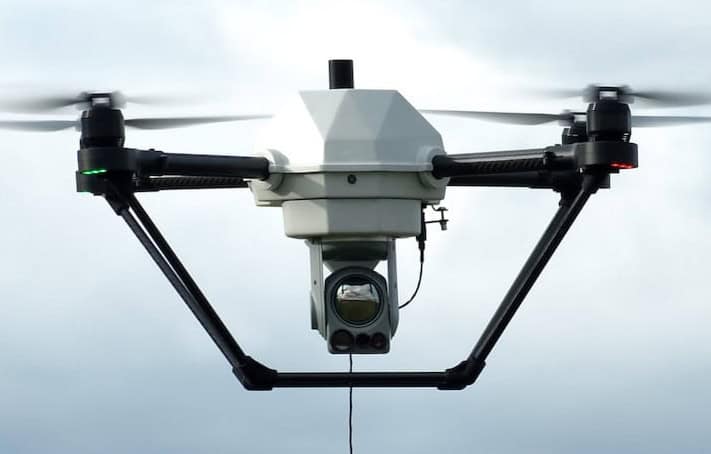
Elistair’s Orion 2 drone, paired with the SAFE-T 2 tethered drone station, can stay airborne for 50 hours, acting as a variable-height antenna. The SAFE-T 2’s compact, modular design allows easy integration into military and law enforcement vehicles, and the system can be deployed in 15 minutes.
Unlike untethered drones, which require extensive flight training, tethered drones, such as Khronos, also allow users to maintain situational awareness without advanced piloting skills.
Modernizing Tactical Communications
Ground-based communication systems, including radios paired with OE-254 mobile antennas, require multiple soldiers and significant setup time. Rough terrain can create challenges, and interruptions in line-of-sight between antennas and radio systems can reduce performance. Tethered drones offer an alternative, expanding network nodes while supporting soldier mobility.
Legacy military communications typically only transmit voice over FM, AM, and MSK and cannot meet the bandwidth and data needs of modern operations. By comparison, commercial units can transmit voice, data, location, and SMS over QAM, QPSK, and DSS, and are better suited to support IoT devices and decentralized network models.
Satellite communications provide beyond-line-of-sight coverage but rely on third-party satellites, can be disrupted by electronic warfare or cyber-attacks, and have limited bandwidth, struggling to support the growing number of nodes on the battlefield.
To be effective, soldiers must operate as part of a mobile network, which relies on software-defined radios and assets like tethered drones to extend network range and maintain operational mobility.
Mobile Networks for Modern Combat
Modern combat requires mobile networks. Militaries, including the U.S. Army, emphasize mobile command posts, secure wireless communications, cybersecurity, and edge computing. Traditional setups, like command tents, consume resources, limit flexibility, and reduce situational awareness.
Small, encrypted wireless systems allow soldiers to send and receive information over WiFi, LTE, and MIMO.
Soldiers can also use MN-MIMO, enabling high-bandwidth, reliable mesh communications in restrictive combat environments. MN-MIMO combines multiple antennas and digital signal processing, improving the performance of wireless mesh networks (MANET).
MN-MIMO can integrate with tethered drones like the Orion 2, creating aerial relays that extend network range, allow rapid deployment, and maintain continuous situational awareness. Mobile networks also reduce digital footprints, making them more resilient to cyber-attacks than large, fixed bases.
To find out more information, read ‘Tactical Communications: The Role of Tethered Drones’ here >>