



UAV Navigation-Grupo Oesía develops flight control and autopilot technologies for demanding defense applications, including missions where one Unmanned Aerial System (UAS) is deployed to intercept another.
This article examines how these capabilities support UAS-on-UAS operations as an effective method for addressing emerging aerial threats, with a focus on precision guidance, navigation, and control.
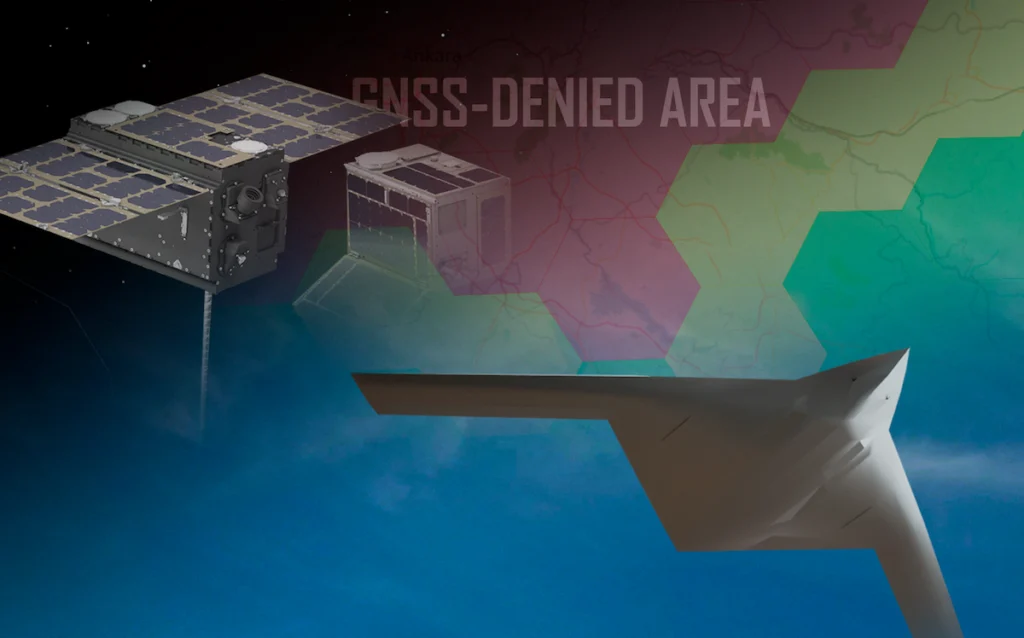
The increasing use of unmanned aerial systems in modern defense environments has introduced both operational advantages and new vulnerabilities. As hostile or unauthorized drones become more prevalent, the need for reliable countermeasures continues to grow. While established approaches such as GNSS jamming and spoofing remain in use, deploying interceptor UAS offers a flexible and cost-effective alternative. These systems are designed to detect, pursue, and neutralize airborne threats.
Flight Control Requirements for Interceptor UAS
Intercepting a moving aerial target requires advanced guidance and control capabilities. High navigation accuracy is essential to ensure that the interceptor can continuously track and reach its objective. This is achieved through a combination of technologies, including navigation referenced to moving targets, camera-based navigation providing coordinates to the autopilot, and coordinated multi-platform operation.
Referenced Navigation
Flight control systems must continuously update the position of the target during flight. By recalculating trajectories in real time, the autopilot maintains an accurate pursuit path, allowing effective interception even when the target maneuvers.
Camera-Based Navigation
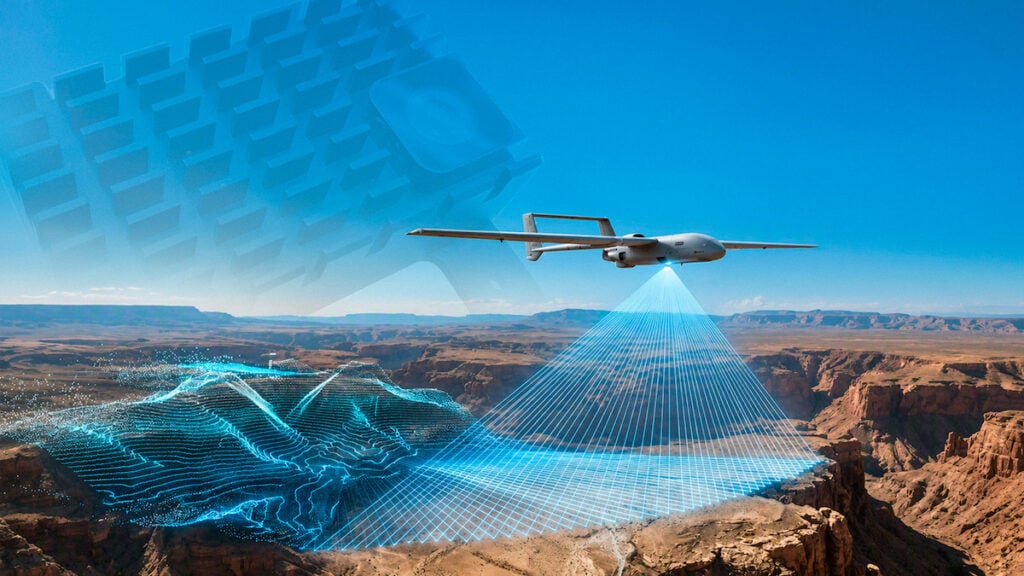
The integration of onboard imaging systems with the flight control system enhances situational awareness and targeting precision. The onboard camera provides target coordinates directly to the autopilot, enabling the system to guide the aircraft using real-time positional data.
Swarm Coordination
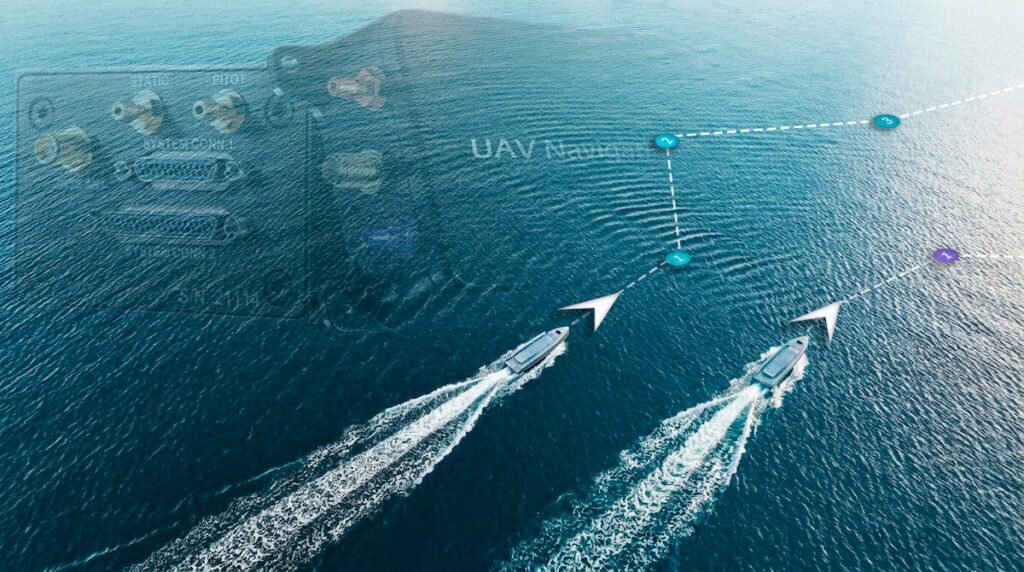
The use of multiple interceptor UAS provides advantages when addressing complex or simultaneous threats. Swarm capability enables platforms to share data in real time and adjust their actions collectively. This requires advanced flight control systems capable of maintaining communication and coordination across multiple units.
Flight Control Solutions from UAV Navigation-Grupo Oesía
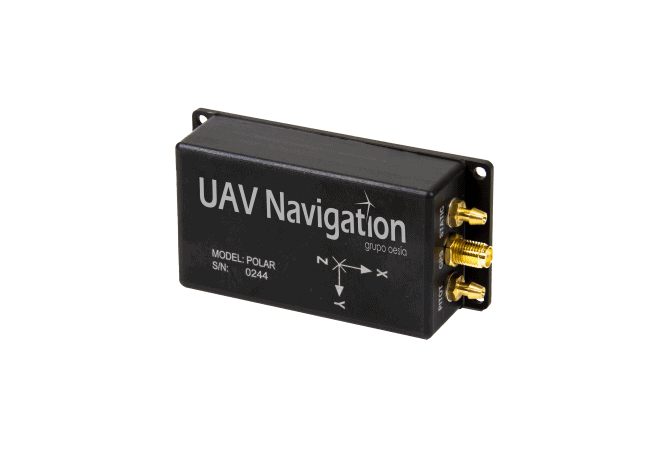
Autopilots from UAV Navigation-Grupo Oesía incorporate the capabilities required for UAS-on-UAS operations. These include swarm flight, navigation referenced to moving targets, and camera-based guidance providing positional data to the autopilot. Together, these features enable unmanned platforms to carry out interception missions with a high level of precision and operational reliability.
Future Developments in Counter-UAS Systems
The evolution of counter-UAS technologies is expected to drive continued advancements in interception capabilities. Improvements in detection, tracking, and response systems are contributing to more effective and adaptable solutions.
The integration of artificial intelligence will enable interceptor UAS to adapt in real time to changing threats, improving accuracy and responsiveness in complex operational environments. At the same time, further development of swarm flight capabilities will enhance coordination between multiple platforms, increasing the likelihood of mission success.
Advanced flight control systems remain a key enabler in this domain, supporting the accurate and efficient neutralization of aerial threats in modern defense scenarios.