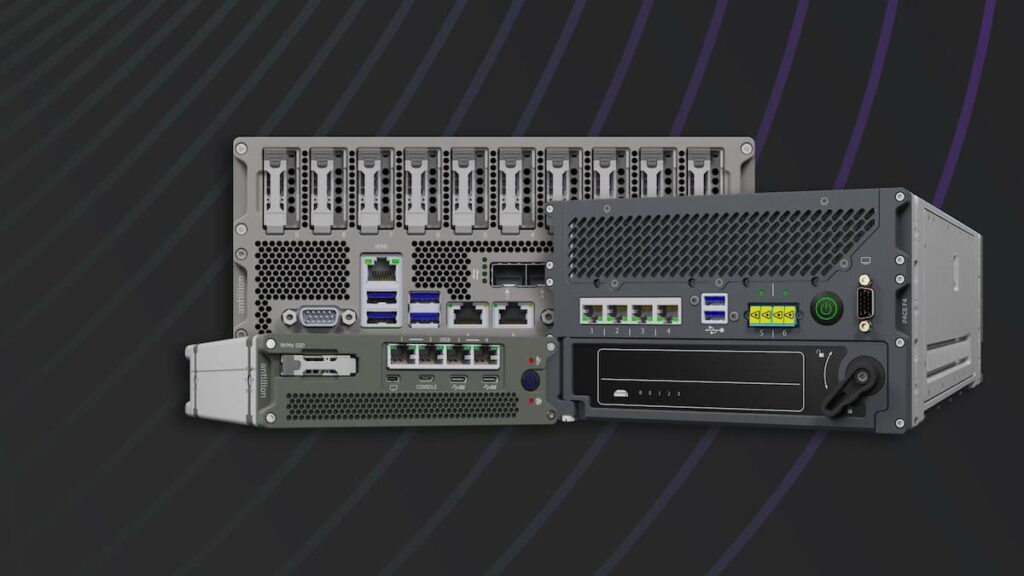
Antillion is addressing a key challenge in modern defense computing: defining what “the edge” means across operational environments where conditions vary significantly. Read more >>
Through its PACE platform, the company differentiates between deployment types, aligning system design with mission-specific requirements rather than broad classifications.
As edge computing continues to expand across defense and industrial sectors, the term itself is often applied loosely to any processing performed outside centralized infrastructure. Antillion’s approach reframes this concept by emphasizing the importance of environmental conditions and operational constraints, introducing a clearer distinction between near edge and far edge deployments. This perspective underpins the development of its two platforms, PACE AIR and PACE Frontier, each designed for specific use cases.
Defining the Edge in Operational Contexts
Edge computing shifts processing capability closer to where data is generated. Instead of transmitting all data back to a centralized cloud or data center, functions such as AI inferencing, analytics, and communications are executed locally. This enables faster response times, reduces reliance on bandwidth, and supports continued operation in low-connectivity or disconnected environments.
However, the definition of the edge varies widely depending on the application. In commercial environments, it may refer to systems deployed in retail locations, factory floors, or telecommunications infrastructure. In defense scenarios, it can involve ruggedized computing platforms installed in vehicles, onboard naval assets, or deployed to forward positions. These use cases differ significantly in terms of mobility, environmental exposure, and available infrastructure.
Near Edge and Far Edge: Clarifying the Distinction
Antillion characterizes edge deployments through the concepts of near edge and far edge, which are defined less by physical distance and more by environmental exposure and operational limitations.
Near edge environments are those where computing systems operate close to the data source while still benefiting from some level of infrastructure support. These deployments may include access to power, partial environmental protection, and moderate climate control. Typical examples include smart factories managing industrial automation, semi-sheltered mobile command posts, and vehicle-based systems where size and power are constrained but not extreme.
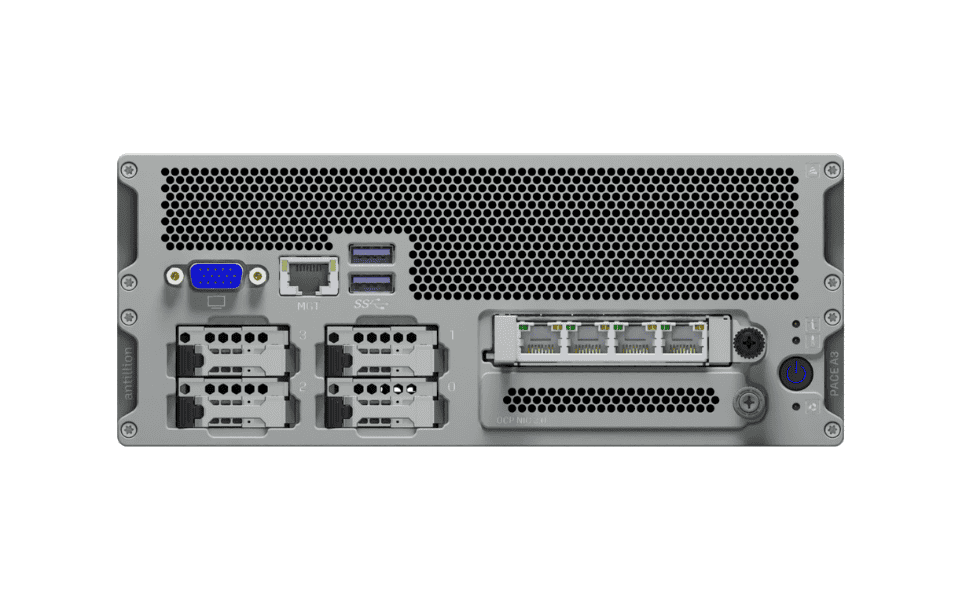
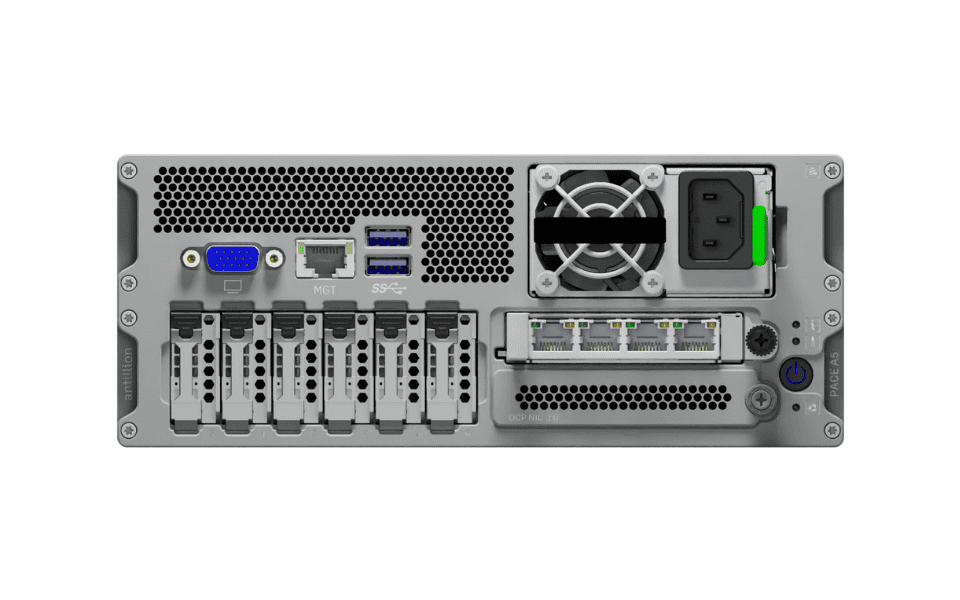
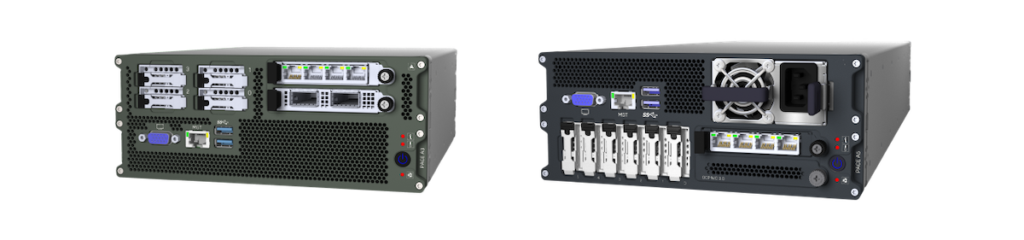
For these scenarios, PACE AIR is designed to deliver high compute density in a compact, portable form factor. The platform provides industrial-grade durability without full environmental sealing, making it suitable for deployments where size, weight, and power considerations are critical, but exposure to water, sand, and mechanical shock is limited.
Far edge deployments, in contrast, involve significantly harsher and more unpredictable conditions. These deployments often lack physical protection, environmental control, and reliable infrastructure. Examples include military operations in extreme climates, remote industrial installations, and tactical scenarios with intermittent or no connectivity.
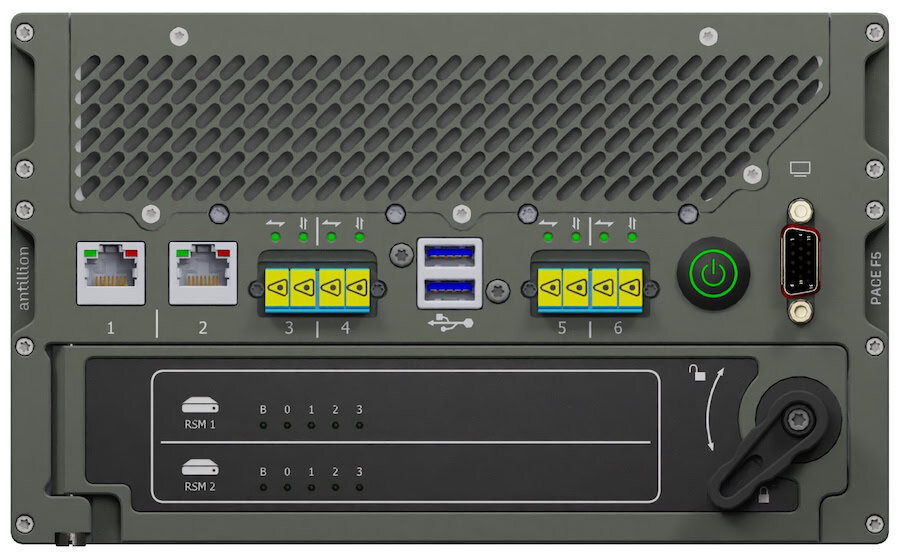
PACE Frontier is designed for these far edge conditions. The platform features IP65 and IP68-rated sealing, resistance to shock and vibration, and a sealed design. It is built to operate in environments where systems may be exposed to water, dust, sand, and sustained mechanical stress, and where conventional IT hardware may not operate reliably.
Environment as the Defining Factor
While edge computing is often described in terms of proximity to centralized systems, Antillion considers environmental conditions and deployment requirements to be the more meaningful differentiators. Several key factors influence how edge systems must be designed and deployed.
Physical environment plays a central role, including exposure to extreme temperatures, dust, moisture, water, sand, and mechanical impact. Far edge systems may operate outdoors, in transit, or under sustained operational stress.
Ruggedization requirements vary accordingly. Far edge deployments require protection against ingress, as well as tolerance to shock and vibration. This typically involves IP-rated enclosures, fanless cooling architectures, and reinforced chassis construction.
Portability and form factor are particularly important for near edge deployments. Systems must often be compact and rapidly deployable, whether installed in vehicles, transit cases, or confined control spaces.
Power and connectivity further distinguish deployment types. Near edge systems generally benefit from stable power and network access, while far edge systems may depend on backup batteries or solar power, or operate entirely offline. As a result, efficiency and self-contained operation are critical design considerations.
Purpose-Built Platforms for Distinct Requirements
Recognizing the diversity of edge environments, Antillion has developed two dedicated platforms rather than adapting a single system to all scenarios.
PACE AIR is optimized for near edge applications, combining processing performance with a compact, mobile design and industrial-grade durability. It is intended for deployments where portability and compute capability are essential, but where environmental conditions remain relatively controlled.
PACE Frontier is designed for far edge use cases, incorporating full environmental sealing, rugged construction, and resistance to shock and vibration. Its IP65 and IP68 ratings make it suitable for deployment in demanding operational environments, including vehicles, field installations, and maritime settings.
This dual-platform strategy is not intended as a marketing distinction, but as a direct response to differing operational requirements. By aligning system architecture with deployment conditions, Antillion reduces potential points of failure, improves performance at the edge, and supports mission continuity across both defense and industrial applications.
Aligning Edge Strategy with Real-World Demands
Edge computing encompasses a wide range of deployment scenarios, each with its own constraints and requirements. Distinguishing between near edge and far edge deployments provides a practical framework for selecting appropriate hardware and ensuring reliable operation.
Through its PACE AIR and PACE Frontier platforms, Antillion applies this framework to deliver computing solutions tailored to specific operational contexts. Whether supporting industrial processes or mission-critical defense operations, this approach ensures that systems are aligned with the environmental and operational demands of each deployment.