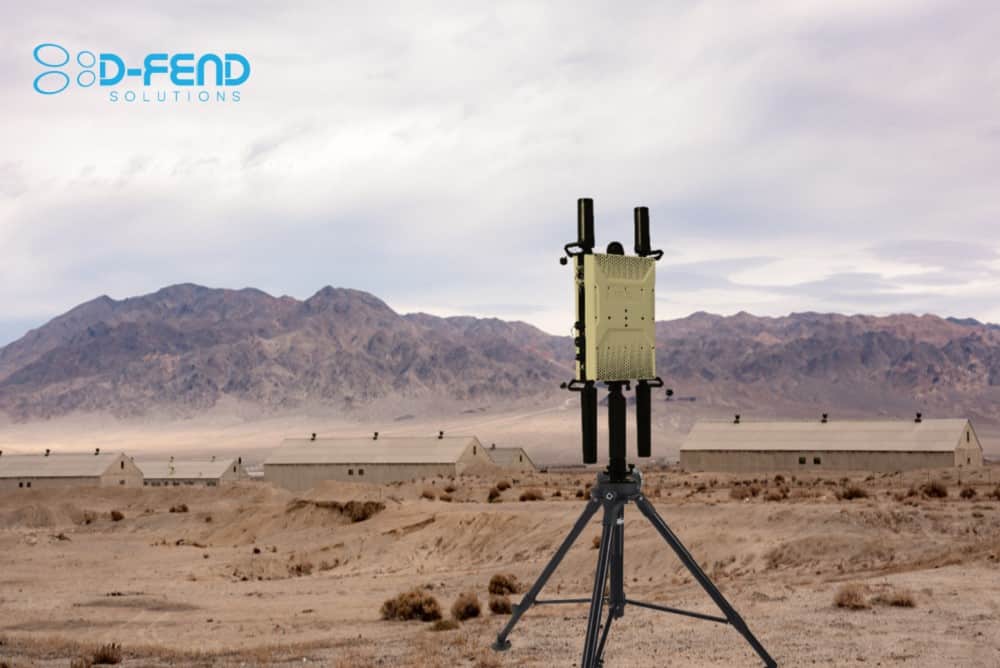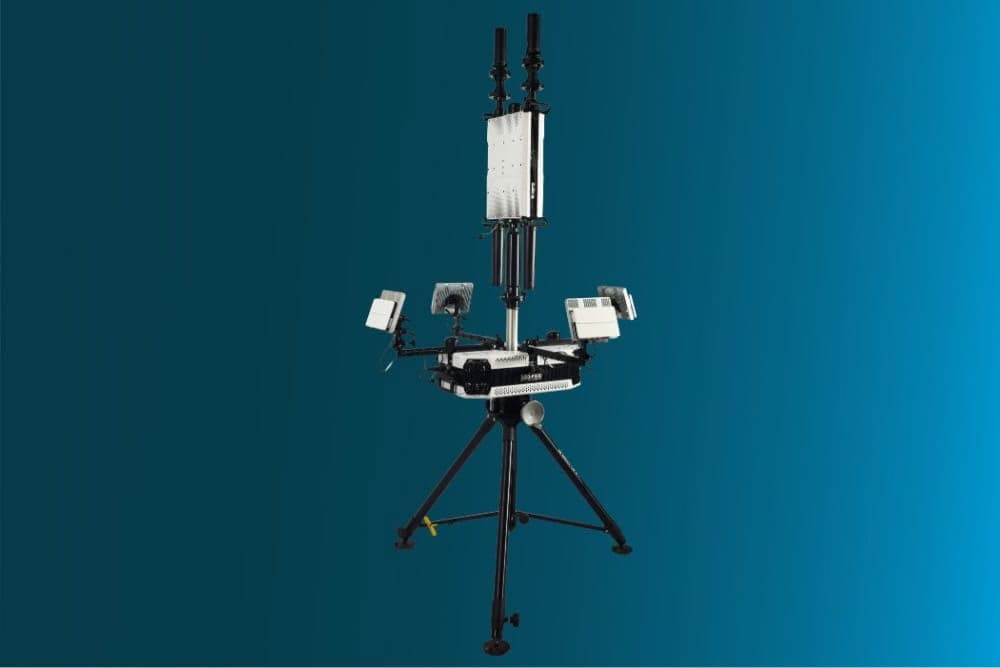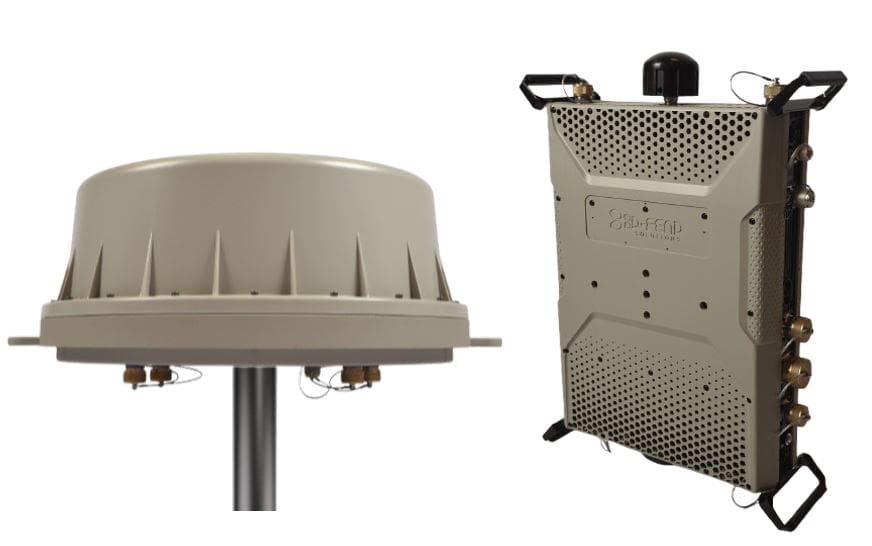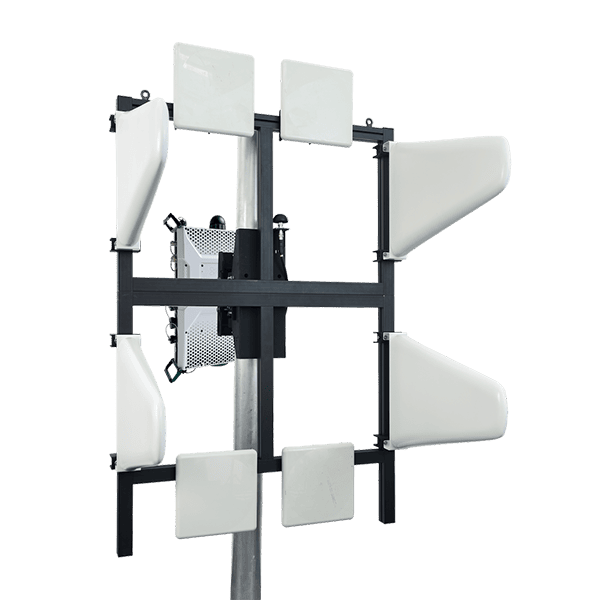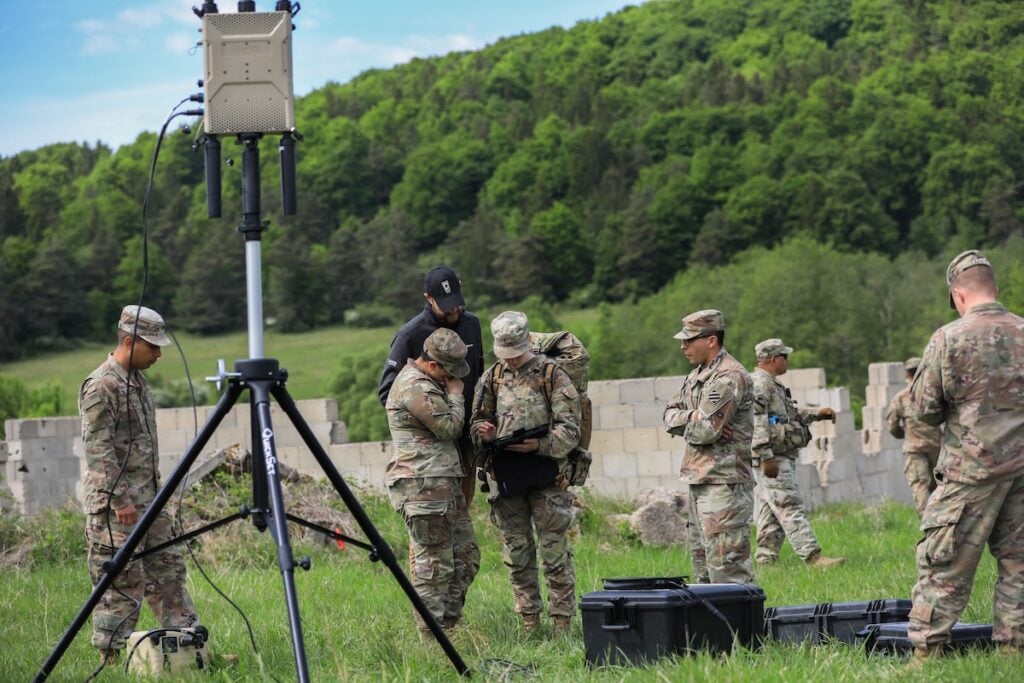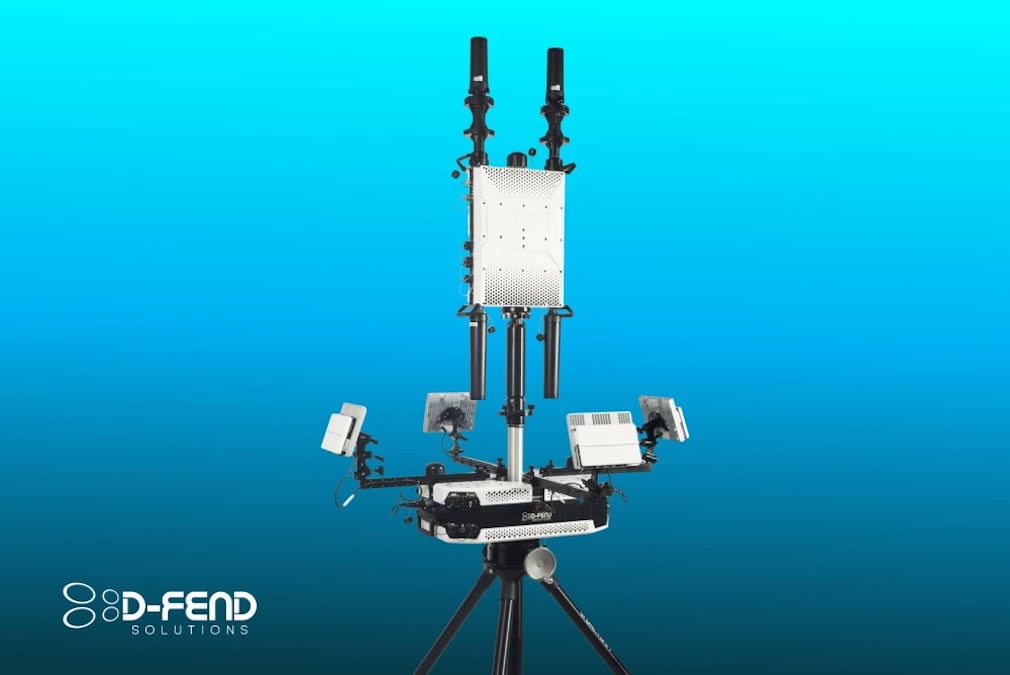

D-Fend Solutions, a developer of RF-Cyber based counter-drone technologies, provides a comprehensive guide examining different C-UAS mitigation technologies, comparing legacy solutions with recent advancements suitable to different operational needs. Read more >>
As drones become increasingly prevalent, the systems bring potential security concerns and challenges, so securing airspace against unauthorized or hostile use is critical.
Radio Frequency (RF) Jammers
RF jammers transmit bursts of RF energy in the drone’s direction to block the controller’s signal and prevent instructions. This C-UAS technology is inexpensive and simple to operate, with the ability to incapacitate multiple drones on the same RF band. Different type of jammers include directional jammers, omni-directional jammers and handheld jammers.
However, RF noise interference can disrupt nearby communications systems and disable authorized drones. The effectiveness of RF jammers depends on maintaining stronger signals than the controller’s signal within a specific range. If the jammer stops transmitting or the drone moves closer to its pilot, control can be regained.
Since jammers only block connections rather than take control, drones may attempt default emergency actions such as returning home, hovering, or landing, all of which can still pose risks. As a result, jammers may only temporarily disrupt, rather than fully eliminate, drone threats.
RF-Cyber Takeover
RF-Cyber Takeover is a non-jamming, non-kinetic approach, transmitting precise and short targeted signals to seize control of hostile drones and redirect them to a safe landing zone. This method can be deployed automatically, and is characterized by comprehensive, end-to-end capabilities.
The drone takeover solution minimizes collateral damage, distinguishes between authorized and unauthorized drones, and does not destroy the drone preserving onboard intelligence. Short-targeted transmissions mean it can address drone swarms, mitigating each one within their own transmission and frequency patterns.
Global Navigation Satellite System (GNSS) Spoofing
By broadcasting false satellite navigation signals, GNSS spoofing can control the perceived location of a drone, redirecting it on a controlled path and deterring it from following its pre-programmed flight or returning home.
However, this technique disrupts other navigation systems in the area, potentially affecting vehicles, aircraft, or authorized drones, making it unsuitable in many environments.
Electromagnetic Pulse (EMP) and High-Power Microwave (HPM)
EMP and HPM drone mitigation technologies utilize radiation and strong radio waves delivering intense bursts of energy to disable drones. These technologies act indiscriminately so they can damage nearby electronics and computers. The broad and destructive impact means these solutions are often last resort options.
Kinetic Solutions
Kinetic methods physically disable drones through physical intervention, such as projectiles, and aim to cause the drone to fall from the sky.
Kinetic solutions include drone-killing drones, capturing unauthorized targets with nets, ramming into hostile drones or launching projectiles to disable them. While effective, these approaches carry significant risks of collateral damage, particularly in urban or sensitive environments.
Intelligent shooter systems, which use rifle-mounted targeting scopes for accurate shots against nearby drones, offer cost-effective engagement and support multi-layer counter drone systems in open environments.
Lasers
High-energy laser systems neutralize airborne threats, destroying their structure or electronics by emitting an intense beam of light. Although effective, these systems require line-of-sight with its target, risk collateral damage from falling debris, and complicate data recovery due to total destruction of the drone. It is also harder to hit smaller and faster drones with lasers.