Tactical lighting systems provide deployable illumination solutions that enable military and defense operations to continue safely and effectively in low-light and nighttime environments. Used across expeditionary airfields, forward operating bases, command posts, field hospitals, and logistics hubs, these systems support operational continuity, safety, and situational awareness.
This page features leading suppliers of military light towers, portable floodlights, military base lighting, and high-intensity tactical lighting solutions designed for rapid deployment and reliable performance across defense infrastructure and austere environments.
If you design, build or supply Tactical Lighting Systems, create a profile to showcase your capabilities and connect with visitors who have an active requirement for your solutions.
Mobile & portable lighting systems for emergency services and law enforcement
Mobile & portable lighting systems for emergency services and law enforcement
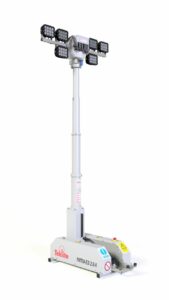
...n air pressure systems. Foldable pneumatic or electromechanical roof-mounted systems are available... Teklite lighting masts are globally recognized for high performance in a variety of emergency...
Introduction to Tactical Lighting Solutions for Military & Defense
Tactical lighting enables safe, continuous military operations in low-light and nighttime conditions. These lighting systems provide high-intensity illumination across various operational environments and are engineered to support mission effectiveness while maintaining tactical discretion.
These systems are designed to emphasize portability, modularity, and survivability. From airfields and forward operating bases to field hospitals and command posts, tactical lighting systems ensure that operations remain functional and personnel stay safe regardless of lighting conditions.
Core Applications of Tactical Lighting Systems
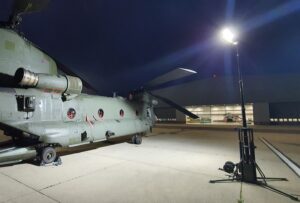
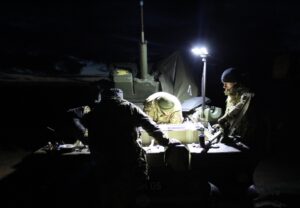
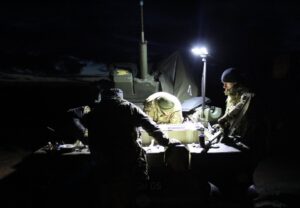
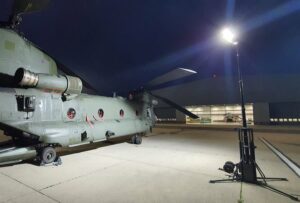
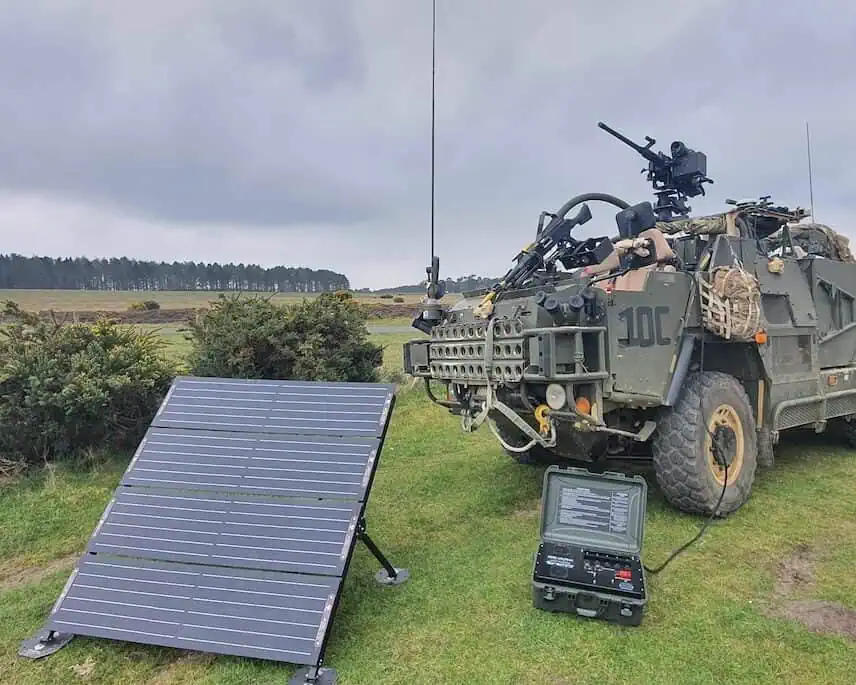
FOBLite MAX 360 Tactical Lighting System by ZeroAlpha Solutions
Military applications for tactical lighting span numerous mission profiles and infrastructure types. These systems ensure visual clarity, operational safety, and logistical efficiency in field-deployed conditions.
One of the most critical applications is illuminating expeditionary airfields, where precision lighting enables takeoffs, landings, and ground operations under blackout or degraded visual conditions. Tactical lighting is also indispensable for sustaining operations at forward operating bases, where movement, maintenance, and security must be maintained around the clock. Additionally, medical and humanitarian operations rely on field lighting systems to enable emergency care and triage during night shifts or low-visibility scenarios.
Everyday operational use cases include:
Airfield Lighting: Provides functional lighting for runway thresholds, taxiways, and apron areas in austere or temporary airfield deployments.
Forward Operating Base (FOB) Illumination: Supports daily operations, security perimeters, and vehicle staging areas.
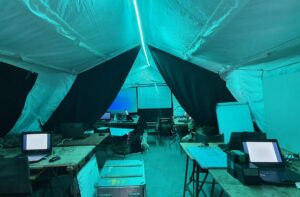
Tactical Headquarters (HQ): Military shelter lighting enables continuous command and control functions within command posts and briefing tents.
Field Medical Facilities: Facilitates surgical and diagnostic operations in field hospitals or mobile treatment centers.
Tactical lighting systems are built to address a wide spectrum of mission requirements, from small-scale point illumination to wide-area lighting solutions. Configurations vary based on deployment speed, light coverage, energy efficiency, and terrain adaptability.
FOBLite MAX 360 by ZeroAlpha Solutions
One of the most common system types is the tactical light tower, which offers broad-area lighting from an elevated position and can be mounted on trailers or vehicles. Portable floodlights, in contrast, offer highly mobile solutions for localized lighting tasks, such as illuminating equipment stations or interior tents. Modular kits, which can be customized with various power and mounting options, are preferred for their scalability and integration flexibility.
Primary system types include:
Military Light Towers: High-lumen lighting systems can illuminate large outdoor areas from an elevated mount point.
Portable Floodlights: Compact units designed for quick deployment and repositioning in changing field conditions.
Modular Lighting Kits: Configurable packages featuring multiple lights, control units, and optional battery storage.
Solar Lighting for Military Bases: Off-grid systems utilizing photovoltaic panels for daytime charging and illumination.
Hybrid Configurations: Multi-source energy systems combining battery, solar, and generator input for extended endurance.
Tactical Lighting System Components
To deliver flexible and mission-capable lighting solutions, tactical lighting systems are composed of various specialized components. These elements are selected based on the operational environment, lighting requirements, and logistical constraints.
The core of any tactical lighting system is the lighting element, typically high-performance LED floodlights capable of delivering focused or diffuse illumination over a wide area. These are often paired with mounting solutions, such as tripods or fixed poles, which provide stability and elevation. Energy delivery and storage systems such as battery packs, solar arrays, or field generators supply continuous power under variable conditions. Control units are increasingly used to manage light intensity, scheduling, and remote activation.
Typical components include:
LED Floodlights: Energy-efficient light sources optimized for intensity, durability, and operational life.
Tripod and Pole Mounts: Adjustable platforms for elevating and positioning lights across variable terrain.
Battery Packs and Generators: Provide off-grid power and charging support for autonomous operation.
Control Units: Enable remote dimming, scheduling, or adaptive response based on motion or daylight sensors.
Light Diffusers and Reflectors: Shape beam profiles and enhance area coverage or target specificity.
Comparisons & Operational Trade-offs
Selecting the correct tactical lighting configuration requires understanding the trade-offs between system capabilities, logistical footprint, and operational flexibility. Systems must be tailored to the operational tempo, environmental conditions, and specific mission parameters.
Light towers, for example, offer unmatched coverage for large staging areas or perimeter security but require transport assets and setup time. Portable floodlights, while offering reduced coverage, can be rapidly deployed and repositioned as needed. Solar-powered systems provide long-term sustainability but are weather-dependent and may require backup storage. Fixed systems deliver stability and durability, making them ideal for semi-permanent installations, while modular systems allow dynamic deployment in rapidly changing operational theaters.
Key comparisons include:
Mobility vs. Coverage: Light towers offer superior coverage but are less agile; portable systems sacrifice range for flexibility.
Power Source Logistics: Generator-based systems offer high output but require fuel and maintenance; solar/battery setups provide silent, low-maintenance operation.
Deployment Time: Portable kits are faster to deploy but may offer limited duration or area lighting; hybrid systems require more setup but ensure endurance.
Standards & Compliance
All tactical lighting systems deployed in military operations must comply with stringent defense standards (MIL-STD) to ensure reliability, interoperability, and safety. These standards cover environmental testing, electromagnetic compatibility, and specialized operational scenarios like airfield lighting.
For U.S. and NATO operations, systems are typically required to meet MIL-STD-810 for environmental durability and MIL-STD-461 for electromagnetic interference limits. Airfield lighting systems must comply with STANAG 3316, which outlines NATO procedures for airfield ground lighting. Additionally, IP ratings (Ingress Protection) ensure systems can withstand dust, water, and other environmental hazards encountered in expeditionary settings.
Relevant standards include:
MIL-STD-810: Environmental durability testing for shock, temperature, and moisture.
MIL-STD-461: Standards for electromagnetic emissions and susceptibility.
STANAG 3316: NATO guidance on deployable airfield ground lighting systems.
ICAO Annex 14, Vol 1: Regulations for lighting at military airfields used in civil or joint operations.
Ingress Protection Ratings (IP65/IP67): Certification of environmental sealing against water and particulate intrusion.
Integration with Military Infrastructure
Effective use of tactical lighting relies on close coordination with broader military infrastructure planning and support systems. Lighting must be compatible with transport, deployment, power, and command systems for an integrated operational setup.
Installation and operation responsibilities often fall to multiple stakeholders. Logistics units ensure the transport and maintenance of lighting gear, while engineering elements prepare sites and manage deployment. Aviation elements help coordinate the positioning and configuration of airfield lights to support mission requirements. Medical teams, humanitarian support elements, and special operations forces depend on lighting systems adapted to their specific operating environments.
Tactical lighting is increasingly integrated with digital and sensor-driven control systems, enabling programmable lighting profiles, automated power management, and adaptive operation based on environmental inputs. These trends support more sustainable, responsive, mission-aligned illumination strategies in field operations.
The latest defense technology news, straight to your inbox.
Get our weekly roundup of technology developments, new products and industry news.
THANK YOU FOR SIGNING UP
Thanks for joining us. Check your inbox.
We've sent you an email. Click the confirmation link to complete your subscription to the weekly eBrief. In the meantime, explore the latest news, suppliers and technologies on DA.
Advancing Defense Capability Through Strategic Collaboration
Defense Advancement works with major OEMs to foster collaboration and increase engagement with SMEs, to accelerate innovation and drive defense capabilities forward.