Accelerate Defense Modernization through Strategic Sourcing
Discover cutting-edge solutions from leading global suppliers
Throughout 2025, defense technology development witnessed significant advances in autonomy, sensing capabilities, resilient communications, and mission systems. An analysis of DefenseAdvancement.com’s most-read articles reveals where industry attention was most concentrated, highlighting the capabilities and innovations that resonated most strongly with the sector. From substantial procurement activity and cross-domain partnerships to new product launches and advances at the tactical edge, readership trends point to the technologies and innovations driving today’s modernization efforts.
This data-driven round-up brings together the year’s most-read articles, showing how defense organisations focused on strengthening unmanned capability across domains, enhancing soldier and operator effectiveness, and investing in the enabling systems that underpin resilient, multi-domain operations.
Jump to section:
Contracts Won & Partnerships
New Product Releases
Technology & Innovations
2025 in Review
Contracts Won & Partnerships
Major contract awards and industry partnerships played a defining role in shaping capability development this year, with several of the most-read articles showing how procurement activity is driving investment across critical defense programmes.

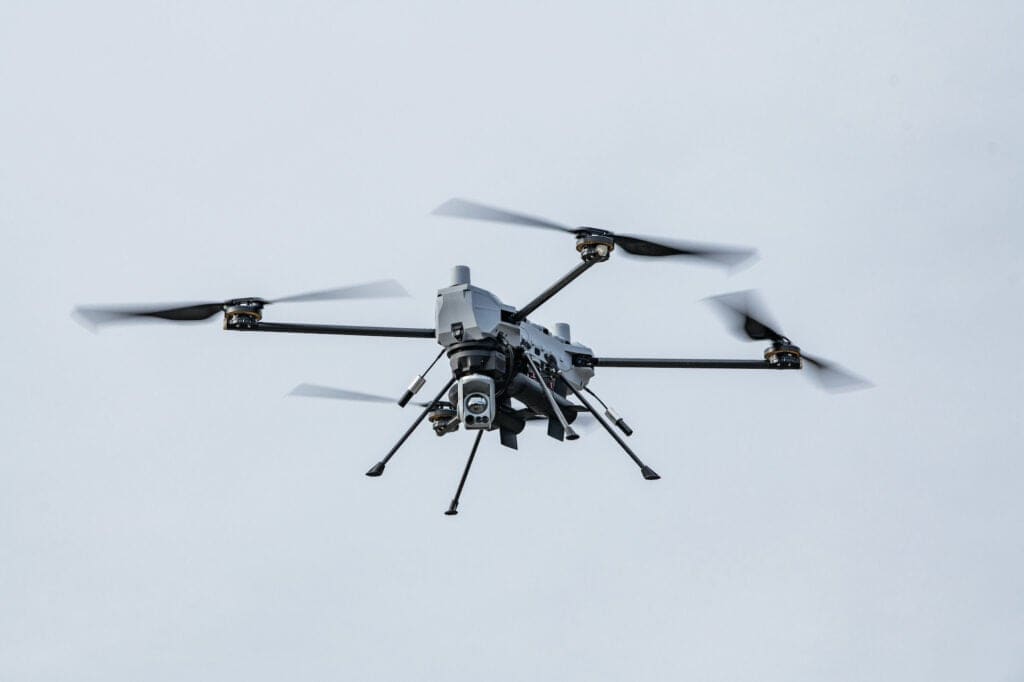
Performance Drone Works secured more than US$15.3 million in U.S. Army contracts to field its C100 heavy-lift quadcopter, an autonomous platform designed to transport payloads at extended ranges, while Galvion received a five-year IDIQ agreement worth up to US$131 million to equip the U.S. Marine Corps with its next-generation Integrated Helmet System. These procurement actions highlight how defense organisations are prioritising unmanned platforms and modernized soldier equipment to enhance operational capability.
Cross-border collaboration and multi-domain capability development were also prominent.
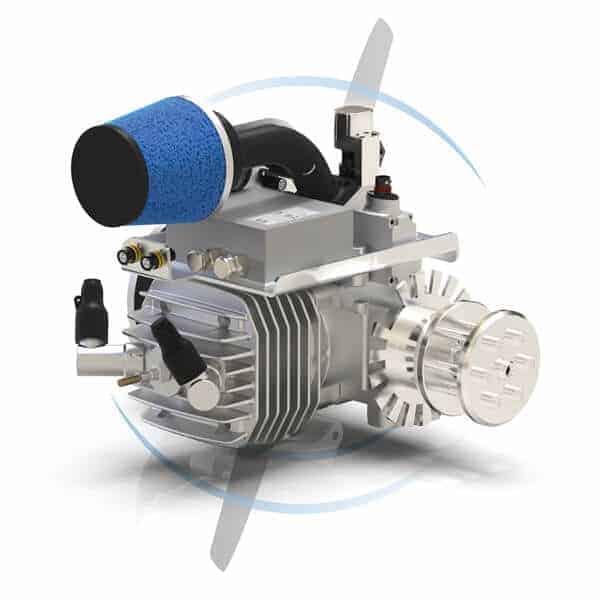
- Sky Power International delivered its SP-55 FI TS ROS propulsion units to Canada’s Sky Canoe for the Nimkii 42-S long-range Unmanned Aerial Systems (UAS), supporting the aircraft’s endurance and mission performance.
- Triad RF Systems supplied Taiwan with dual-channel bi-directional amplifiers to enhance Mobile Ad-Hoc Network (MANET) and Multiple-Input Multiple-Output (MIMO) radio communications on unmanned naval platforms.
- Red Cat Holdings further expanded its unmanned portfolio by introducing a new line of kinetic-capable unmanned surface vessels, marking the company’s entry into the maritime autonomy space.
These developments illustrate how contracts and cooperative efforts advanced capability growth across air, land, and maritime environments, underscoring a year characterized by investment in unmanned systems, soldier modernization, and the integration of multi-domain enablers.
New Product Releases
New product releases with clear operational relevance attracted significant attention in 2025, reflecting broader modernization priorities across the defense sector.

At DSEI 2025, Allen-Vanguard and its partners introduced the SECURIS mobile counter-drone trailer system, which combines Radio Frequency (RF) detection, radar acquisition and optical recognition in a single deployable platform for layered Counter-UAS (CUAS) protection. Its design demonstrates how industry continued to prioritise integrated, multi-sensor solutions that can be rapidly deployed to meet operational demand.
Honeywell unveiled the HON1600, a new small-thrust-class engine designed for emerging Collaborative Combat Aircraft (CCA) and UAS programmes. As a compact propulsion option purpose-built for unmanned aircraft, the engine reflects how 2025 product development focused on components tailored to support the growing use of uncrewed systems.

Advances in control, processing and sensing technology were equally prominent.
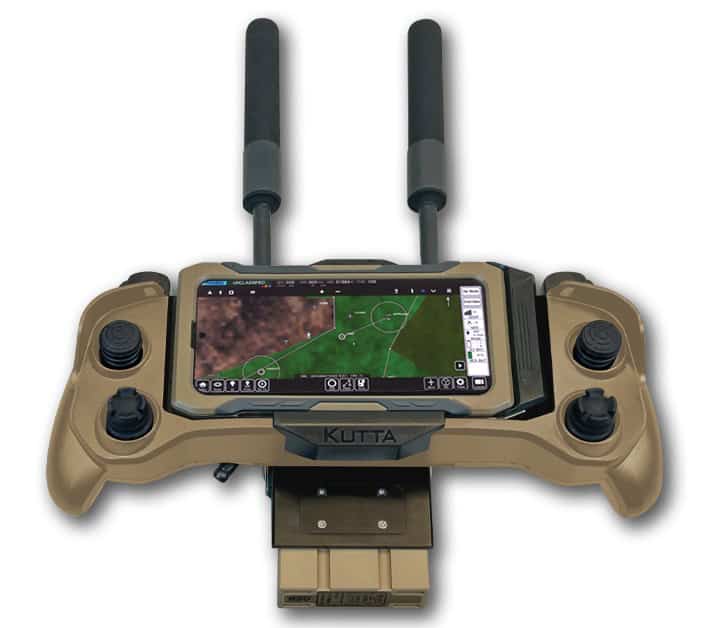
Kutta Technologies introduced the KTAC 2.0 tactical controller, a ruggedised handheld device designed to operate uncrewed systems across land, sea and air domains, reinforcing the sector’s focus on multi-domain operator tools.
Wolf Advanced Technology released new rugged 3U and 6U VPX modules built around NVIDIA’s Blackwell architecture, enabling high-performance AI workloads in harsh, mission-critical environments and highlighting continued investment in onboard processing for autonomy and real-time analysis.
Trillium Engineering debuted the HD59 EO/IR gimbal series, offering a durable, long-range imaging solution tailored for advanced UAS missions. Its rugged construction and extended-range optical performance align with ongoing efforts to strengthen Intelligence, Surveillance & Reconnaissance (ISR) capabilities for airborne platforms.

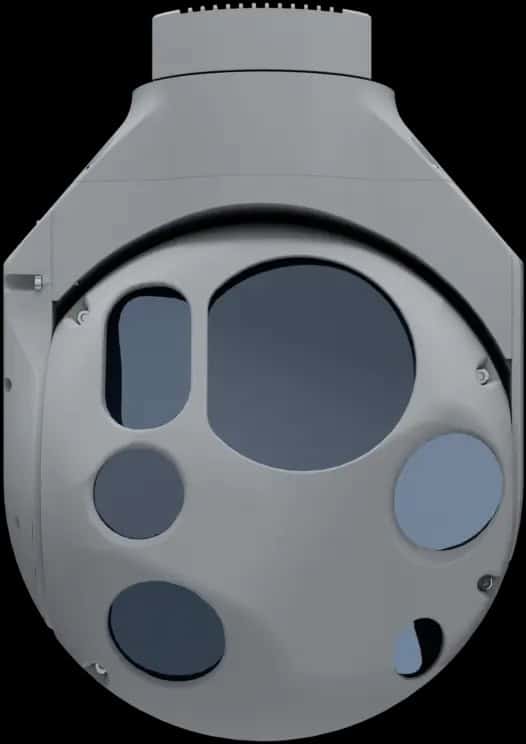

Together, these releases show how 2025 product innovation supported key modernization priorities, with advances in enabling technologies, spanning control interfaces, propulsion, sensing and onboard processing, strengthening the performance and relevance of uncrewed and ISR systems.
Technology & Innovations
Advances in resilient, multi-domain operations featured strongly among the year’s most-read innovations, reflecting how 2025 modernization efforts increasingly focused on strengthening capability at the tactical edge.

GA-ASI’s demonstration of an anti-submarine warfare capabilityon the MQ-9B SeaGuardian® marked a notable step for unmanned maritime systems, successfully deploying multiple sonobuoy-dispensing pods and processing thermal-depth and acoustic data onboard, tasks previously limited to manned maritime patrol aircraft.
Soldier connectivity stood out as a key priority.
DTC Codan, working with Anduril and Kägwerks, delivered a high-bandwidth MANET waveform designed to extend network connectivity from individual soldiers to brigade command posts while supporting rapid technology insertions, underscoring the year’s emphasis on secure, scalable mission communications.
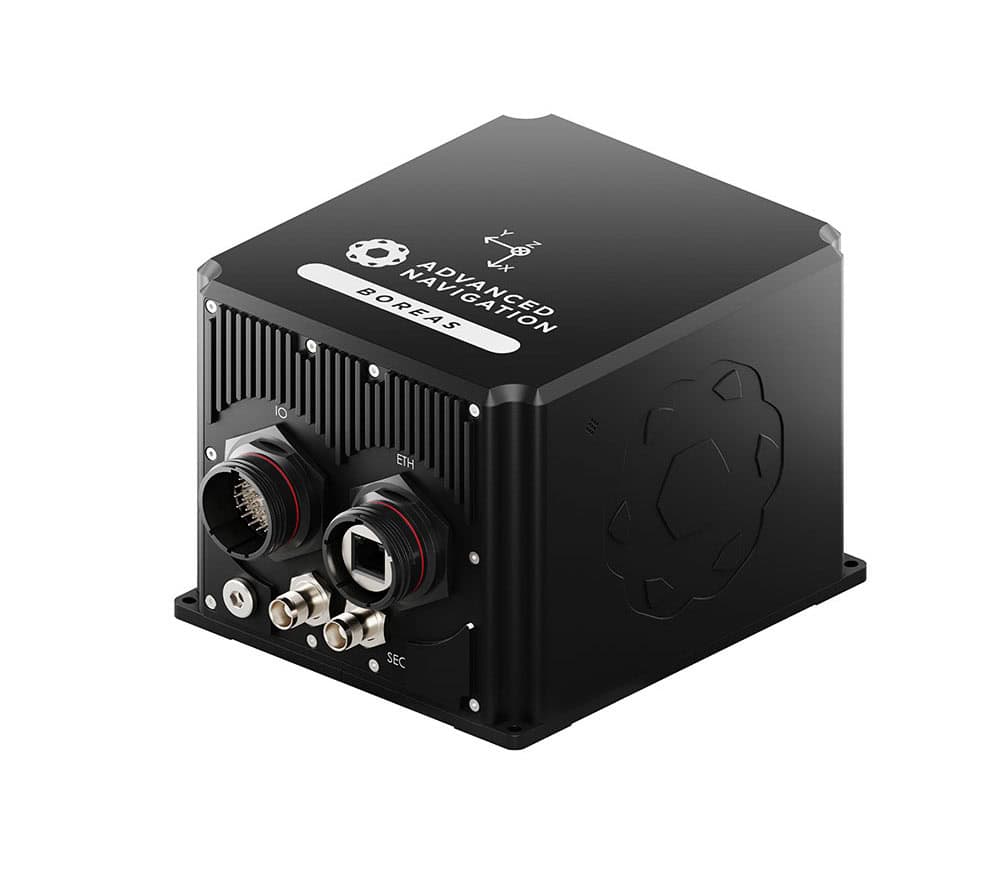
Navigation assurance featured prominently as well.
Advanced Navigation’s hybrid inertial-and-laser-aided solution for long-endurance Global Navigation Satellite System (GNSS) denied navigation delivered high accuracy in the absence of satellite signals, aligning with the wider 2025 focus on resilient Positioning, Navigation & Timing (PNT) for dispersed forces.
C-UAS and PNT protection rounded out the top innovations.
D-Fend Solutions introduced its EnforceAir PLUS system, an AI-enhanced, cyber-driven, multilayer C-UAS platform that combines RF-cyber takeover, automated radar detection and optional jamming mitigation in an out-of-the-box configuration, highlighting the move toward integrated, multi-sensor C-UAS solutions.

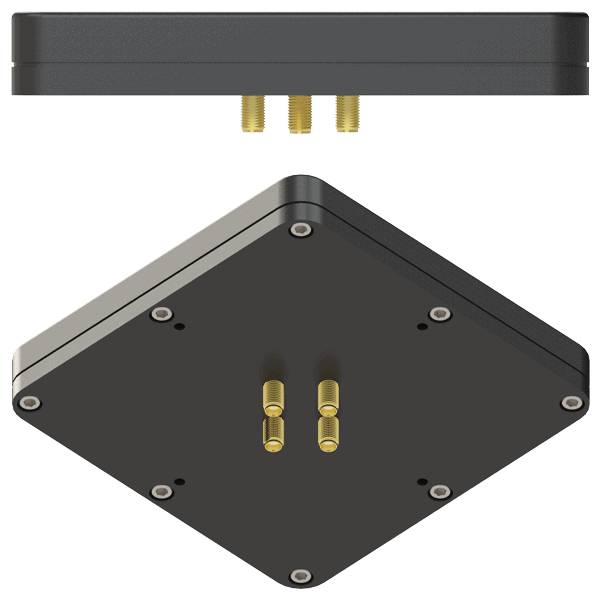
Inertial Labs reinforced this emphasis on PNT protection with the M-AJ-QUATRO CRPA system, providing advanced anti-jamming capability across GPS/GNSS bands for contested electromagnetic environments.
Together, these developments highlight how 2025’s most-read innovations centred on autonomy, secure connectivity and positioning resilience, core building blocks of modern multi-domain defense operations at the tactical edge.
2025 in Review
The defining themes across 2025’s most-read defense technologies are clear: autonomy, resilience and multi-domain integration.
Across advances in unmanned platforms, sensing, processing and contested-environment technologies, the year’s top articles point to a sector focused on greater capability and operational resilience. Defense programmes increasingly emphasise multi-domain systems, assured connectivity and dependable performance at the tactical edge.
Together, these trends highlight how practical, enabling innovations continued to drive progress in defense modernization throughout 2025.