RF Drone Detection
Discover cutting-edge solutions from leading global suppliersMetis has announced the launch of Skyperion Lightweight, a mobile Counter-Uncrewed Air System (C-UAS) designed to provide passive detection, tracking, and identification in a compact format.

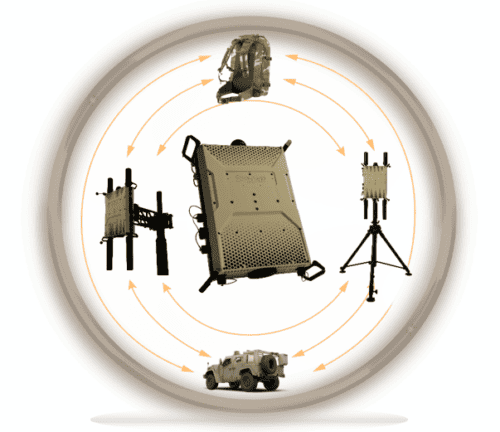
This new product retains the core sensor capabilities of the established Skyperion Rugged system but has been re-engineered into a Smaller Weight and Power (SWaP) configuration. This optimization is specifically intended for users who require high mobility, rapid deployment, and the ability to operate while on the move.
For a decade, Metis has focused on developing passive Radio Frequency (RF) detection capabilities. The technology underlying the Skyperion range is already integrated into high-profile systems such as the RAF’s ORCUS and Leonardo’s Falcon Shield, which are used by NATO allies to protect airspace and critical infrastructure from rogue drones. The system functions by capturing RF emissions across the spectrum, filtering background noise and known signals, and then analyzing the data to locate potential threats.
The Skyperion product line is currently at Technical Readiness Level (TRL) 9. A key technical differentiator is its non-library-based Open ESM waveform analysis. Unlike systems that rely on static signal libraries, this approach allows for the identification of both cooperative and non-cooperative emitters across a wide frequency range. This method provides a more agile and comprehensive detection capability.
Tony Burnell, CEO of Metis, said, “With the increasing proliferation of rogue drones being used for nefarious means, it is essential that we continue to innovate and develop new products to counter these threats. Skyperion Lightweight offers users ultimate flexibility on how it is deployed – not only protecting fixed locations but also providing virtually the same level of protection as Skyperion Rugged in a mobile format which we know many potential customers are seeking.”
The system’s modular, open architecture is designed to be system-agnostic. This allows sovereign nations and large system integrators to incorporate Metis technology with other counter-drone tools, such as radar, optics, and jamming solutions. By providing a flexible interface, the technology can be part of a broader, best-in-class suite for the detection and defeat of rogue drones.