Unmanned Underwater Vehicles (UUV)
Discover cutting-edge solutions from 4 leading global suppliers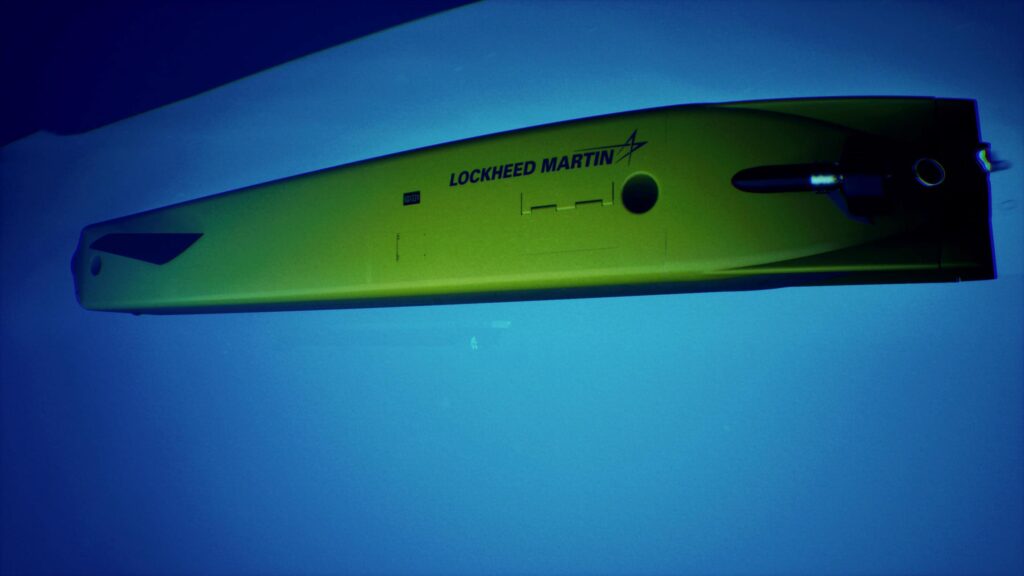
Lockheed Martin has introduced the Lamprey Multi-Mission Autonomous Undersea Vehicle (MMAUV) to provide a modular and persistent technological advantage in contested maritime environments.
The platform is designed to meet the U.S. Navy’s requirements for covert, assured access and sea denial. By mimicking biological organisms, the vehicle can attach itself to a host surface vessel or submarine without requiring modifications to the host. While attached, the Lamprey utilizes built-in hydrogenators to charge its batteries, allowing it to arrive in a mission theater fully powered and ready for immediate deployment.
The MMAUV features an open-architecture payload bay, allowing it to be tailored for a diverse range of mission sets. This payload-centric design supports the delivery of both undersea and air kinetic and non-kinetic effects, including the launch of anti-submarine torpedoes and unmanned aerial vehicles. Additionally, the craft can perform intelligence, surveillance, reconnaissance, targeting, and multi-intelligence collection, or deploy specialized equipment to the seafloor.
Paul Lemmo, Vice President and General Manager of Sensors, Effectors & Mission Systems at Lockheed Martin, said, “The modern battlespace demands platforms that hide, adapt and dominate. Lamprey MMAUV was internally funded, letting us iterate at lightning speed and hand the Navy a true multi mission weapon that detects, disrupts, decoys and engages on its own.”
The vehicle operates in two primary modes to flip the maritime balance of power. In Assured Access mode, it focuses on stealthy intelligence, persistent surveillance, and precision strikes. In Sea Denial mode, the platform shifts its focus to electronic disruption, decoy deployment, and kinetic attacks.
As a breakthrough in “plug-and-play” submersibles, the Lamprey MMAUV offers commanders a single, adaptable platform capable of executing complex missions autonomously. Lockheed Martin, a global security and aerospace company, developed the system using internal funding to accelerate the delivery of these strategic capabilities to U.S. and allied warfighters.