


Accelerate Defense Modernization through Strategic Sourcing
Discover cutting-edge solutions from leading global suppliers
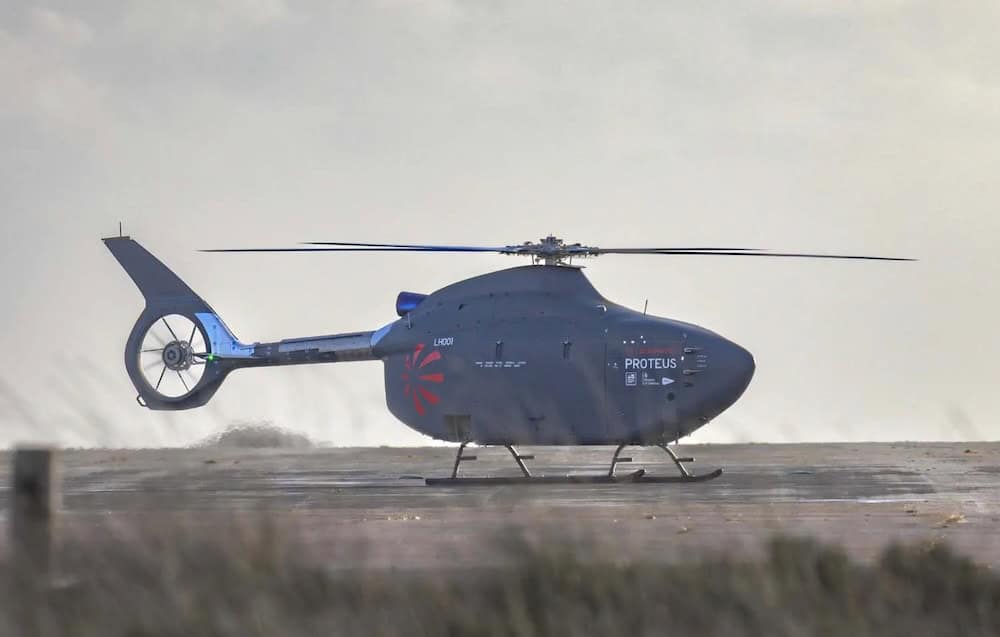
The United Kingdom’s first truly autonomous full-size helicopter has successfully completed its maiden flight at Predannack airfield in Cornwall.
Operating from the National Drone Hub on the Lizard Peninsula, the Proteus Technology Demonstrator represents a significant leap in British aviation history. Designed and manufactured by Leonardo as a demonstrator for the Royal Navy, the aircraft is part of a £60m programme that supports 100 highly skilled jobs. The flight follows extensive ground-running trials where systems, sensors, and engines were verified before the aircraft took to the air independently.
During the test, the aircraft operated its flying controls without human intervention, though it remained under the constant supervision of ground-based test pilots to ensure safety. Unlike smaller drones currently in service, such as the Malloy octocopter or the Peregrine surveillance craft, Proteus is a full-scale platform defined by its sophisticated autonomy. The cockpit and cabin are replaced by computer systems and sensors powered by software that allows the aircraft to process its environment and make real-time decisions.
With a payload capacity exceeding one tonne, the system is designed to operate in challenging weather conditions, including high sea and wind states. This capability is intended to free up crewed aircraft for other critical sorties while Proteus handles persistent or dangerous missions. The helicopter is a central component of the Strategic Defence Review’s vision for a “New Hybrid Navy,” where uncrewed systems work alongside crewed platforms in a hybrid air wing.
Luke Pollard, Minister for Defence Readiness and Industry, commented, “This maiden flight is a proud moment for British innovation. Designed and built in Yeovil, Proteus supports skilled UK jobs while helping deliver the hybrid navy outlined in our Strategic Defence Review. Autonomous systems like this will be vital in protecting our seas without putting personnel in harm’s way.”
The platform is expected to play a vital role in the Atlantic Bastion strategy, an initiative aimed at defending the UK and NATO allies against underwater threats. Its mission profile includes anti-submarine warfare and sea patrolling, utilizing data from a network of allied ships and detection systems to track vessels.
Commodore Steve Bolton, Royal Navy Deputy Director Aviation Future Programmes, added, “The successful first flight of Proteus is a significant step in delivering the Royal Navy’s maritime aviation transformation vision, and to demonstrating our steadfast commitment to investing in autonomy as part of a hybrid air wing. This milestone signals our intent to lead technological innovation, to enhance the fighting effectiveness of the Royal Navy in an increasingly complex operating environment, and to maintain operational advantage against evolving maritime threats.”
Nigel Colman, Managing Director Helicopters UK at Leonardo, stated, “Proteus represents a step-change in how maritime aviation can deliver persistence, adaptability and reach – conducting the dull, dirty and dangerous missions in challenging environments without putting human operators at risk. As the UK’s only end-to-end rotary wing manufacturer it has been a pleasure working with the Royal Navy and seeing Proteus take off for the first time after being designed, developed, and manufactured at Leonardo’s Yeovil site is a fantastic milestone.“
The successful first flight of Proteus marks a major step toward integrating full-scale autonomous helicopters into future Royal Navy operations.