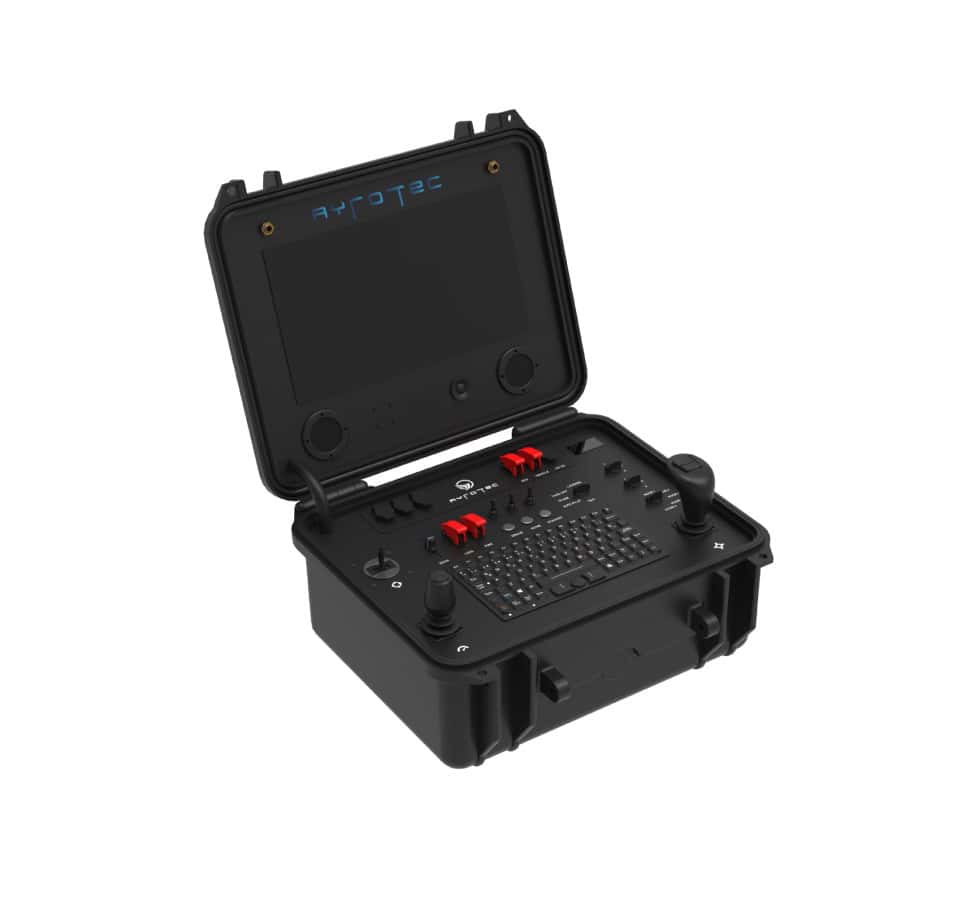
Ruggmate, a developer of rugged hardware and Human-Machine Interface (HMI) equipment, outlines why selective project acceptance is essential in project-based engineering and product development, and why technical feasibility alone is not a sufficient reason to proceed.
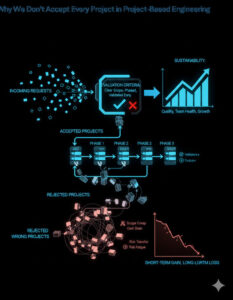
For organizations engaged in project-based engineering and development, the most significant risk is rarely technical difficulty. More often, it stems from committing to unsuitable projects. Such projects do not simply create engineering challenges. They gradually drain time, cash flow, and team capacity, and can ultimately undermine long-term sustainability.
In times of market uncertainty, companies often feel pressure to take on every new request. Each enquiry can seem like a potential opportunity. Within project-based organizations, however, this reflex can evolve into a structural vulnerability. Not every technically feasible project can be executed in a controlled and sustainable manner.
When assessing new opportunities, Ruggmate does not begin by asking whether a product can be built. Instead, the key consideration is whether the work can be managed with controlled risk, clear structure, and a sustainable working pace. This is particularly valuable when developing mission-critical hardware and interfaces that must meet strict performance, reliability, and environmental requirements for defense, naval, and military applications.
Problematic projects often share common traits. Their scope is poorly defined and continues to grow. The work cannot be broken into practical stages, and instead everything is expected to be delivered in a single effort. Long periods of uncertainty are accepted in place of early validation. Most importantly, these projects push a significant share of financial risk onto the supplier, effectively placing the engineering company in the role of an unintended financing partner.
Although these projects may generate short-term activity and the impression of growth, their medium-term impact is usually negative. Quality begins to decline, schedule pressure increases, teams become fatigued, and cash flow comes under strain. As a result, selective project acceptance is essential at Ruggmate.
Ruggmate focuses on work that can be clearly defined, organized into phases, and assessed early. A phased delivery approach helps keep both technical and financial risks within manageable limits. Early-stage activities such as preliminary design, feasibility analysis, prototyping, or pilot production make it possible to test key assumptions before any irreversible commitments are made.
A phased approach also enables quicker and more confident decision-making. On larger programs, uncertainty can slow progress and delay choices. Providing tangible results at each stage supports informed decisions, reduces ambiguity, and improves alignment across stakeholders.
Though being selective involves declining some opportunities, this approach helps maintain quality, protects engineering teams, and supports long-term credibility. For Ruggmate, sustainability means focusing on work that can be delivered responsibly and effectively.
To find out more information visit Ruggmate’s website here >>