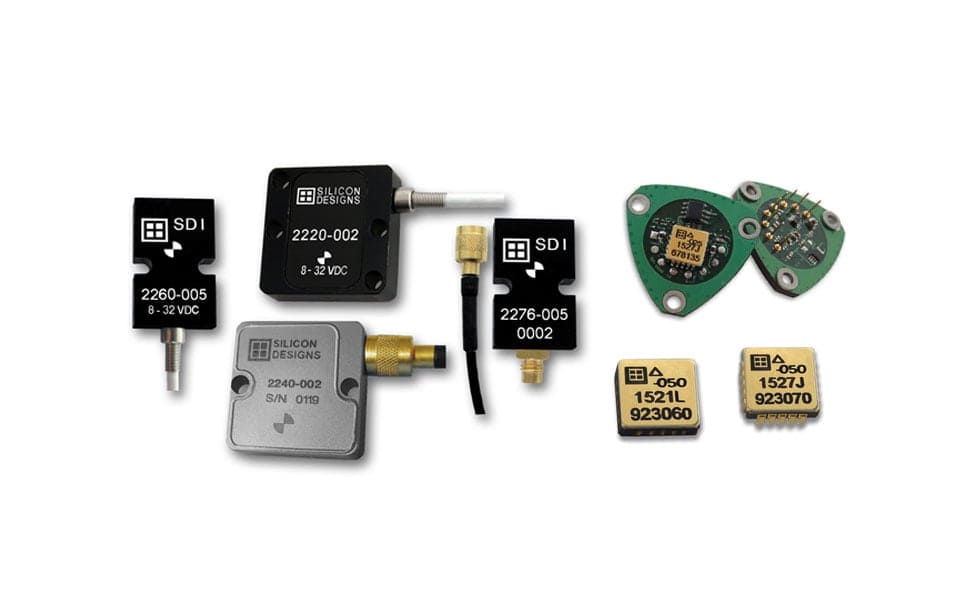




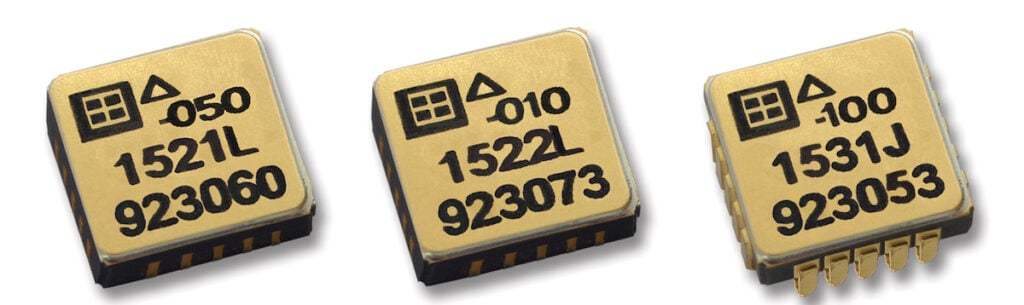
Silicon Designs provides precision MEMS DC accelerometers designed for applications ranging from general-purpose monitoring to operation in extreme thermal and environmental conditions.
With models built for varying g-ranges, environmental resilience, and integration requirements, the company offers solutions suited to industries such as seismic monitoring, aerospace, industrial equipment measurement, and military applications.
Selecting a MEMS DC accelerometer depends on several factors: operating environment, acceleration range, power supply, size constraints, and how the sensor will be installed. This guide covers the most common considerations to help defense operators choose the right Silicon Designs model for specific mission requirements.
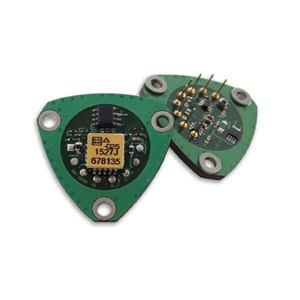
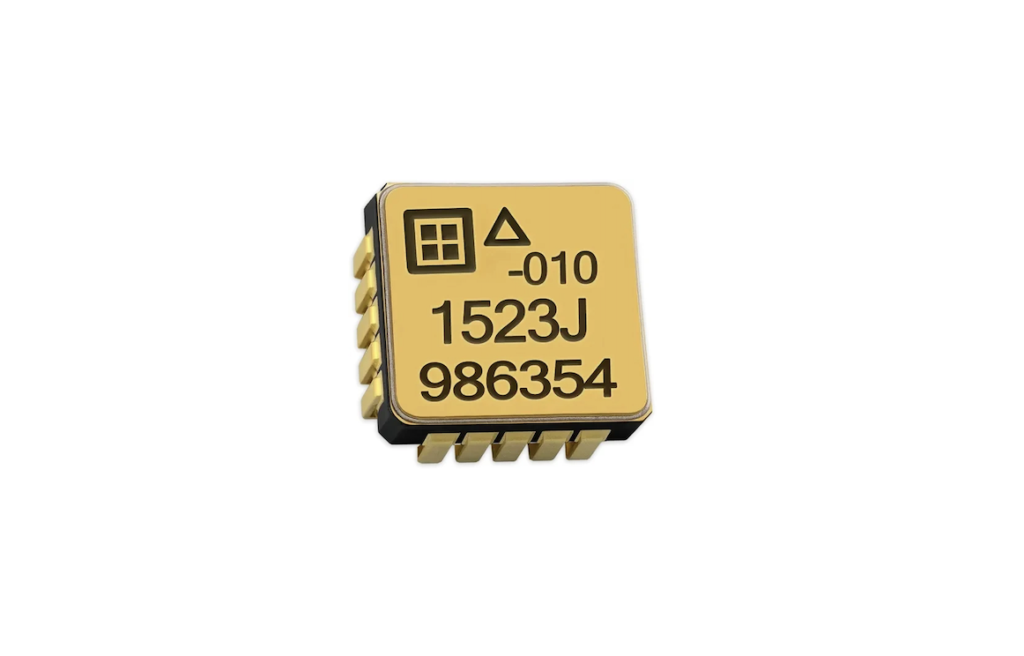
Surface Mount Accelerometer Chips
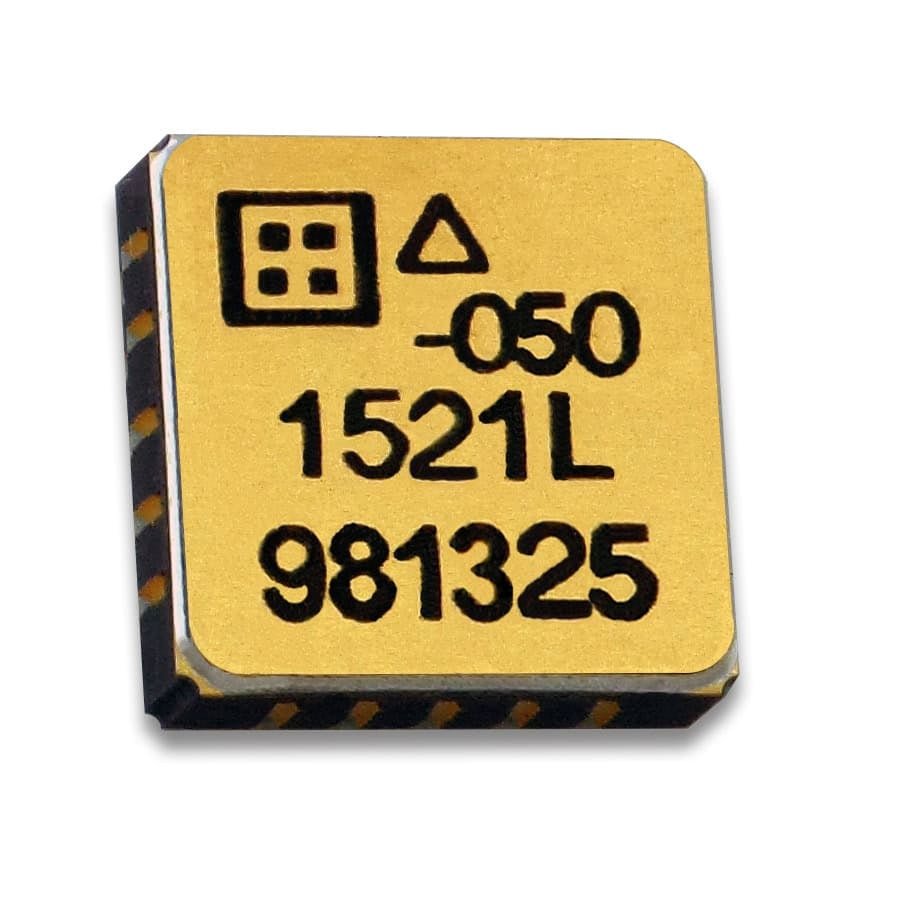
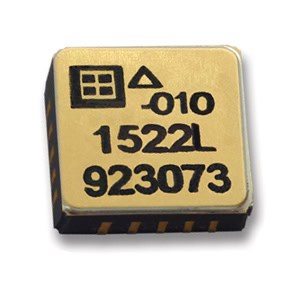
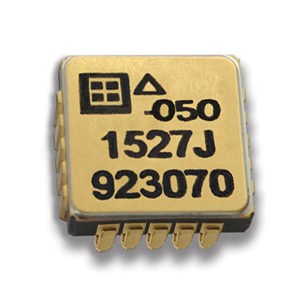
Silicon Designs’ surface mount chips all use precision MEMS variable capacitive sensing elements, but each model is built for a specific level of thermal stability, durability, or inertial performance:
- 1521 – A proven, rugged general-purpose chip used in thousands of applications. Stable, easy to integrate, and ideal for most standard environments.
- 1522 – A temperature-compensated upgrade to the 1521, with improved bias and scale factor stability across fluctuating or extreme temperatures.
- 1531 – Designed to withstand sustained operation at up to +175°C, with the same electrical performance as the 1521, but built for heat-intensive environments.
G-Range
To avoid signal loss or reduced resolution, it is important to select a g-range that closely matches the maximum expected acceleration for your application. Selecting a sensor with too high a g-range can reduce sensitivity, while too low a range can cause saturation and missed data when acceleration exceeds the sensor’s limits.
For reference, a stationary object on Earth measures approximately 1G due to gravity. Driving around a corner typically produces less than 0.5G, and humans may lose consciousness at 6–8G. Seismic systems often use accelerometers with 2G ranges or lower, while automotive safety testing may require sensors rated for 200G or more.
In free-fall, a sensor measures 0G until it impacts a surface. SDI’s MEMS sense elements are matched to the sensor’s g-range, which also affects frequency response. Higher-g sensors accommodate more motion and may support different bandwidths than lower-g models, so referring to the datasheet for detailed frequency and performance information is essential.
Low-Cost vs. High-Performance
Low-cost modules are ideal for standard environments where no special protection is required. These use standard SDI accelerometer chips and are individually calibrated for traceability and performance.
High-performance modules are intended for applications with rapid or sustained temperature extremes. They incorporate the 1522 chip, which is individually temperature tested and corrected for greater stability in bias and scale factor.
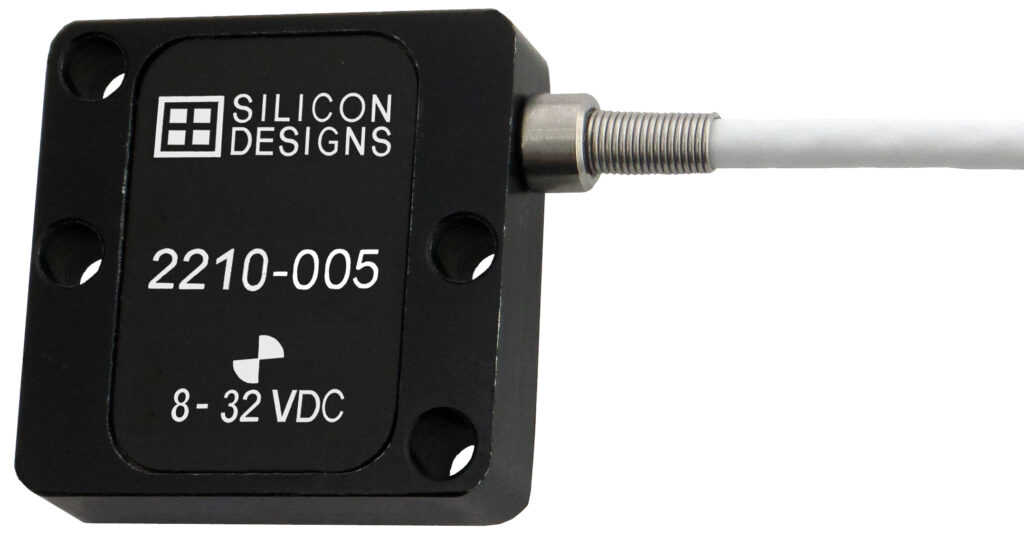
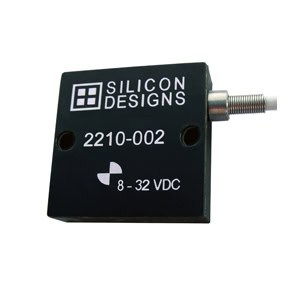
Low-cost 1-axis models include the 2210, 2260, and 2266, while 3-axis options include the 2460 and 2466. High-performance 1-axis models include the 2220, 2240, and 2276, while 3-axis options include the 2470 and 2476.
Integrated vs. Connectorized Cables
If the cable will remain fixed and undisturbed, an integrated cable module is the simplest option. These include the 1-axis 2210, 2220, and 2260, as well as the 3-axis 2460 and 2470.
If field flexibility, cable replacement, or custom lengths are required, connectorized modules are the better choice. These include the 1-axis 2266 and 2276, and the 3-axis 2466 and 2476. Custom-length integrated cables are also available with a minimum build of 10 pieces.
Environmental Considerations
The operating environment plays a major role in module selection. For most environments a human can tolerate without protective gear, low-cost universal modules are suitable, including the 1-axis 2210, 2260, and 2266, and the 3-axis 2460 and 2466.
In extreme hot or cold conditions, high-performance models with improved temperature coefficients should be used, such as the 1-axis 2220 and 2276, and the 3-axis 2470 and 2476. For environments with humidity, pressure, or debris, hermetically sealed titanium modules are recommended, including the 1-axis 2240 and the 3-axis 2480.
Power Supply Compatibility
Silicon Designs’ universal accelerometers are compatible with +8 to +32V DC and support both single-ended and differential outputs. Compatible models include the 1-axis 2210, 2220, 2240, 2260, 2266, and 2276, as well as the 3-axis 2460, 2466, 2470, 2476, and 2480. For DAQ systems limited to +5V DC, low-voltage models are available, including the 1-axis 2012 and the 3-axis 2422 (standard) and 2422H (hermetic).
Size & Mass Constraints
When space or mass is limited, compact modules are the best choice. These are about 33% smaller than standard modules and are commonly used in UAVs, portable instruments, or tight panel enclosures. If space is not a concern, traditional 1″ × 1″ packages may reduce cost and simplify mounting. Compact models include the 2260, 2266, and 2276, while standard size models include the 2210 and 2220.
Summary
Selecting the ideal Silicon Designs accelerometer depends on the maximum expected acceleration (g-range), temperature exposure, and thermal stability requirements for your application.