



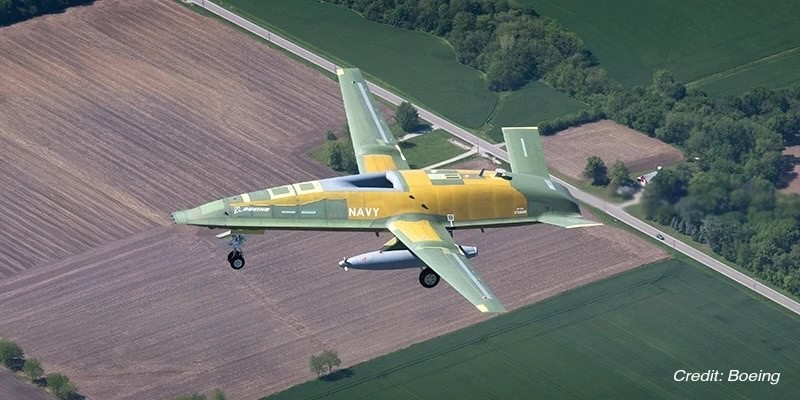
Aurora Flight Sciences has contributed manufacturing, engineering, and software development expertise to the MQ-25A Stingray™, supporting the U.S. Navy’s first operational carrier-based unmanned aerial refueling aircraft. Read more >>
The company helped support the aircraft’s readiness for a major program milestone, with the first MQ-25A successfully completing its inaugural flight on April 25.
Aurora’s contributions span composite aerostructure manufacturing, engineering analysis, and autonomous flight software development, supporting key elements of the aircraft’s flight test program.
Manufacturing Composite Structures for Carrier Operations
Aurora produced 145 components and assemblies for the MQ-25A flight test aircraft at its facilities in Mississippi and West Virginia. These contributions included most of the aircraft’s external surface structure, consisting of lightweight composite skins engineered to provide strength and durability in the demanding maritime environment associated with carrier-based operations.
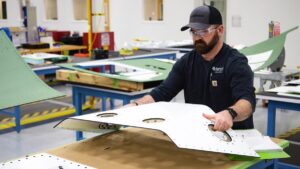
In addition to manufacturing responsibilities, Aurora engineers in Virginia performed design and analysis work on several aircraft components, including the tail stabilators, engine inlet, and fuselage edge structures.
The company’s involvement extends beyond a single aircraft build. Across multiple MQ-25A airframes, Aurora has delivered more than 1,100 components and assemblies. The Mississippi facility produces the majority of these structures, including fuselage skins, wing components, and door assemblies. Meanwhile, the West Virginia site supplies the complete tail assembly along with additional airframe, wing, and fuselage structures.
Enhancing Autonomous Flight Software
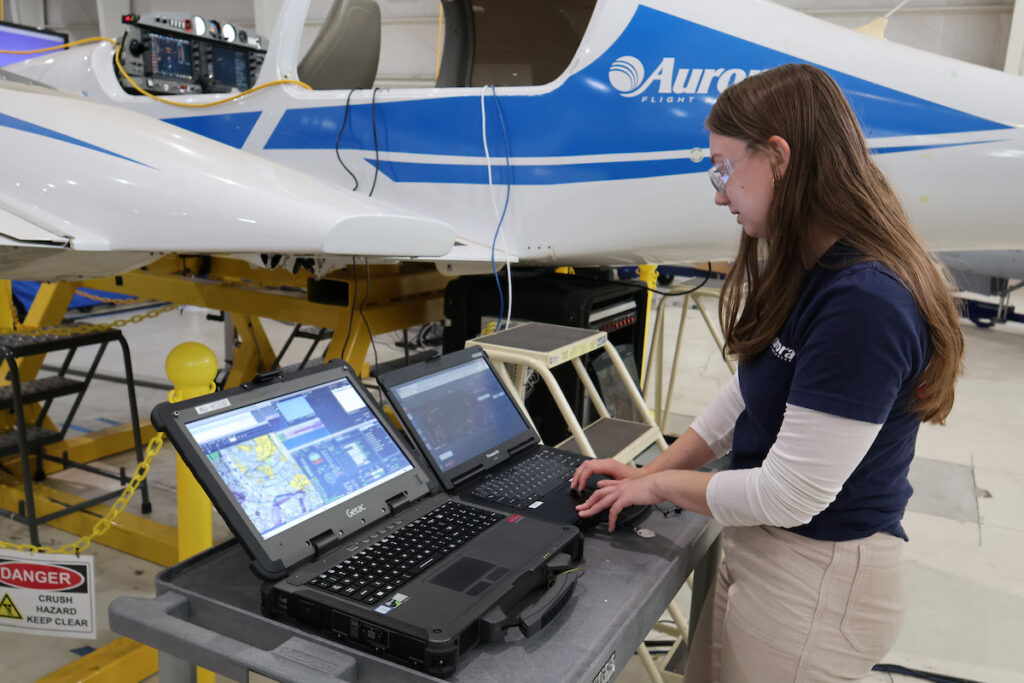
Aurora also contributed to development of the aircraft’s flight software by integrating software and autonomy specialists within a joint Boeing engineering team.
The MQ-25A operates as an autonomous platform, carrying out commands issued by Air Vehicle Pilots through the Unmanned Carrier Aviation Mission Control System MD-5 Ground Control Station (GCS). This architecture allows the aircraft to conduct taxi, takeoff, flight, and landing operations autonomously.
Aurora engineers enhanced Guidance, Navigation, and Control (GNC) systems, streamlined software-directed mission procedures, and validated software responses under demanding operational conditions. These efforts focused on supporting safe and reliable aircraft operation across a range of scenarios, including wind, turbulence, ship-relative maneuvers, and catapult launches.
Supporting the Future of Carrier Aviation
The MQ-25A Stingray represents a significant capability enhancement for the U.S. Navy as its first operational unmanned aircraft designed for carrier deployment. Through unmanned aerial refueling and manned-unmanned teaming, the aircraft will extend the reach of the carrier air wing.
Aurora Flight Sciences’ contributions in composite manufacturing, structural engineering, and autonomous systems development support the technologies behind the MQ-25A program and its role in the future of naval aviation.