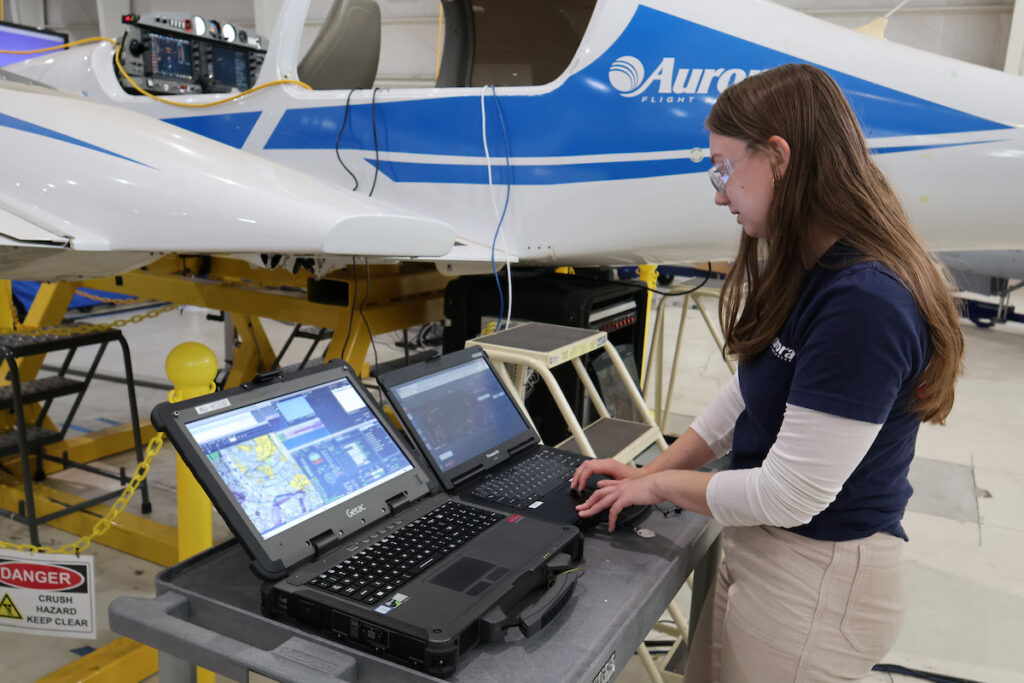
The path to flight testing at Aurora Flight Sciences, a Boeing company, is now smoother thanks to recent upgrades to its Centaur Hardware-in-the-Loop Simulator (HILSim).
The Centaur HILSim features a complete Centaur airframe with the same hardware and software as the actual aircraft, allowing engineers to accurately predict how the Optionally Piloted Aircraft (OPA) will behave in flight. The Centaur OPA can operate as a surrogate uncrewed system, flown from a ground station with an on-board safety pilot, to allow flight testing of autonomous capabilities in the National Airspace System.
Software Engineer Erica Powers said, “The Centaur HILSim gives us a nearly complete picture of how hardware and software interact under realistic flight conditions. It allows us to uncover integration issues early and resolve challenges faster and more efficiently while still on the ground.”
Aurora’s flight test team recently finished a HILSim test campaign focused on validating a key connection between the aircraft’s Mission Management System (MMS) and Aurora’s autonomy framework. By replicating flight-like conditions in simulation, the team was able to observe how data flowed across the network and test how the MMS responded to conditions such as delayed or corrupted messages. The results confirmed that the system maintained stable communication and proper coordination across nodes, even under demanding conditions.
Erica Powers added, “Validating the MMS to our autonomy interface in simulation gave us a level of confidence that would have taken weeks of flight time to achieve. We confirmed message integrity, timing, and fault recovery in a fully controlled environment – all before the hardware ever left the ground.”
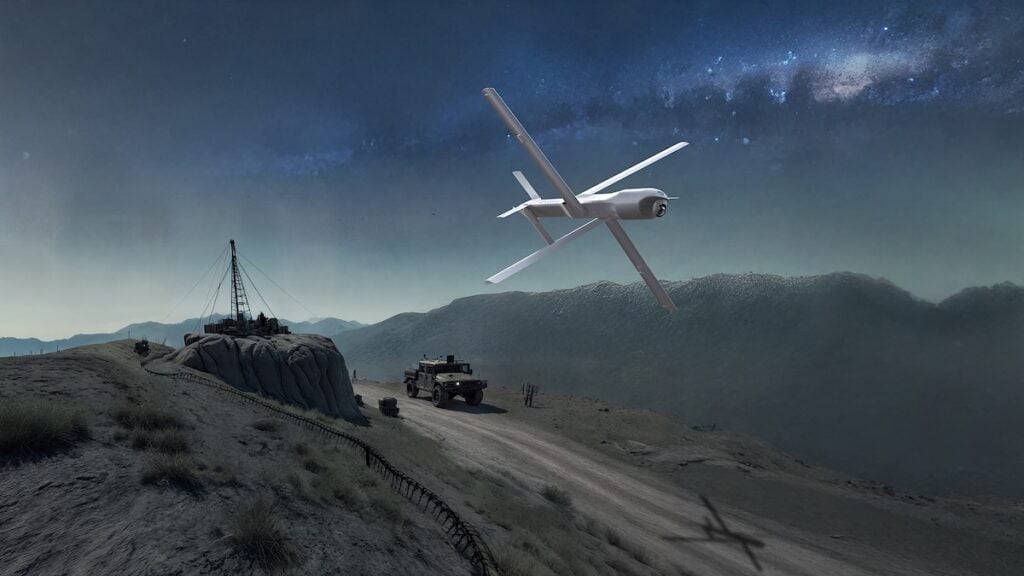
This validation establishes a common interface for autonomy testing across Aurora’s SKIRON-X small UAS, its HILSim, foam-constructed surrogate air vehicle, and the Centaur HILSim and aircraft. Engineering teams developing new autonomous capabilities can now begin testing with Group 1 and 2 drones and seamlessly advance to testing with the optionally piloted, twin-engine Group 4 Centaur aircraft.
HIL simulation has become a critical step in Aurora’s flight test process. By validating software, hardware, and interface behavior early, HILSim reduces flight risk and shortens test schedules by providing engineers with valuable insight before the aircraft reaches the flight line.
Erica added, “It’s important to note that HIL simulation doesn’t replace flight testing. HILSim ensures that when an aircraft moves from ground to flight testing, system behaviors are well understood, and the flight tests can focus more on refinement rather than troubleshooting.”