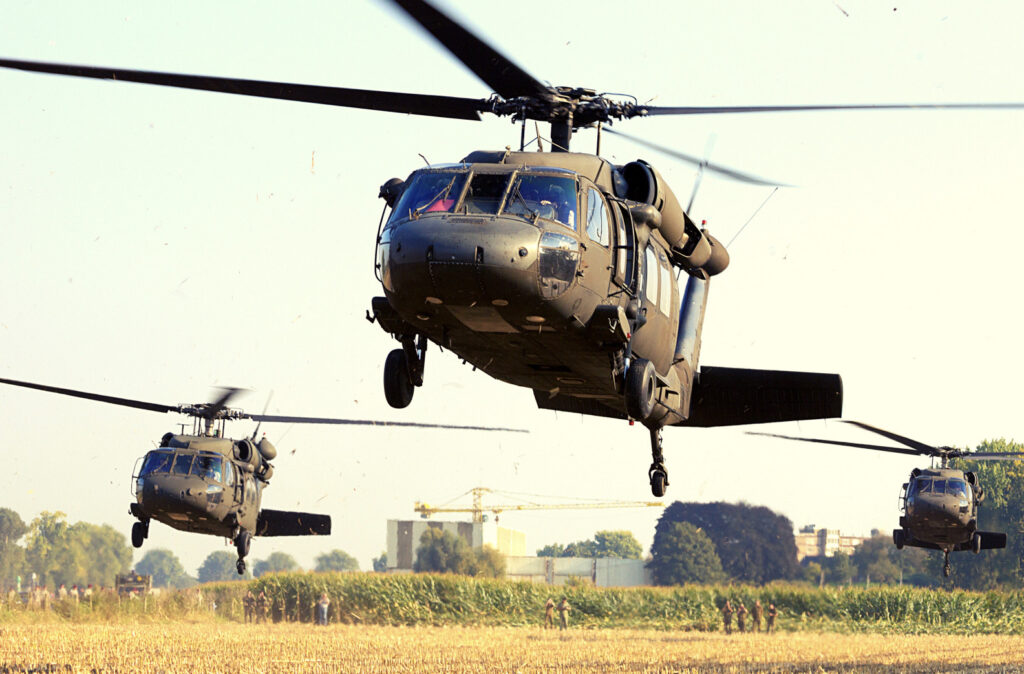
The H-60 Black Hawk remains one of the world’s most widely deployed military rotorcraft platforms, supporting utility, transport, and mission-critical operations across global defense forces. As these aircraft continue to serve well beyond their original service expectations, operators are increasingly focused on modernising key subsystems that directly affect readiness, reliability, and long-term sustainment costs.
One such area is the Auxiliary Power Unit (APU). The 36-150BH APU retrofit by Honeywell Aerospace provides Black Hawk operators with a direct replacement for their currently installed APU.
Among existing Black Hawk fleets, APU-related maintenance demand, reliability constraints, and supportability challenges can directly impact aircraft availability and mission effectiveness. According to Kevin Terrell, Vice-President of Channel Development at Sherwood Aviation, a Honeywell Aerospace-authorized worldwide distributor for the 36-150BH and Licensed Service Center, reliability concerns remain one of the primary drivers behind APU modernization efforts.
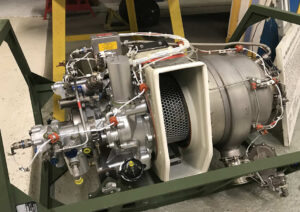
Honeywell Aerospace 36-150BH APU.
“The Honeywell Aerospace APU is a more reliable APU,” he explained. “We’ve completed retrofits for operators including the Colombian Army and National Police, and their goal was to move toward an all-BH fleet because of the reliability and life-cycle cost benefits.”
As Black Hawk fleets age and operational tempos increase, legacy APU architectures such as the T62 are facing growing sustainment pressures. increased overhaul requirements, life-limited parts, and reliability-related maintenance events can contribute to increased downtime, decreased mission readiness/availability , and a larger logistics burden.
Honeywell Aerospace’s 36-150BH APU was developed to address these challenges while providing operators with a straightforward path that improves reliability, reduces lifecycle costs, and simplifies long-term sustainment.
The 36-150BH is a single-shaft, constant-speed gas turbine APU designed specifically as a direct replacement for legacy UH-60 systems. It provides both pneumatic and shaft power for ground and airborne applications, supporting engine starting, environmental control systems, anti-ice functions, electrical generation, hydraulic pumps, cooling fans, and other aircraft accessories.
A key advantage of the 36-150BH is its ability to deliver pneumatic and shaft power either simultaneously or independently, providing flexibility across a wide range of mission requirements. This model is part of Honeywell Aerospace’s long-established and highly successful 36-150 APU family, which encompasses more than 20 variants supporting military and commercial aircraft platforms.
While improved reliability is a major attraction, Terrell believes the business case ultimately comes down to lifecycle economics.
“What we’re really talking about here is cost,” he said. “When the life-limited parts on a T62 need to be replaced per the DMWR requirements, we can often put a Honeywell Aerospace APU in for the same price, sometimes even less. Significant benefits are the 36-150BH’s lifecycle cost savings, reliability, and performance improvements. The Honeywell Aerospace APU will also handle the larger UH APU generator, the 35 kVA generator.”
Not having life-limited parts is central to the 36-150BH value proposition. By removing a major driver of scheduled maintenance and overhaul costs, operators can reduce sustainment expenditure while simplifying long-term fleet planning. The 36-150BH design also incorporates carbon seals that help eliminate oil leakage issues, a common source of maintenance events in legacy systems.
For operators, however, reliability and mission availability remains the most immediate benefits.
“You want your car to start every time you turn the key,” Terrell said. “That’s what operators get with the Honeywell Aerospace APU. If the APU doesn’t start successfully, carrying out the mission is at risk.”
He explained that a dependable APU gives Black Hawk crews confidence that the aircraft will have the bleed air and electrical power needed to start the engines, enabling the mission, even when operating far from established infrastructure.
“If the APU doesn’t work, you’ve got to drag out an AGPU cart,” he said. “That’s fine if you’re operating from a fixed base, but helicopters are designed to go places where there isn’t support equipment available. Having a reliable APU so you can start your engines is kind of important.”
That capability becomes especially valuable during expeditionary operations, where access to external ground support equipment may be limited or unavailable. By reducing dependence on support assets, operators gain greater flexibility when deploying to remote or austere locations.
Another significant advantage of the 36-150BH retrofit is its ease of integration. The 36-150BH was designed by Honeywell Aerospace, and approved by the US Army, as a direct replacement for existing Black Hawk APUs, fitting into the aircraft’s existing mounts without requiring airframe modifications. Installation can be completed using existing US Army work instructions, minimizing downtime and simplifying fleet-wide implementation.
“Not having any aircraft modifications is really important,” said Terrell. “The operator knows exactly what their cost will be and does not have to budget for engineering changes, structural modifications, or additional installation work.”
He likened the retrofit to replacing one tire brand with another.
“The actual remove-and-replace time is essentially unchanged,” he said. “The only difference is changing a couple of fuel fittings, which are included in the provided Sherwood kit. We also offer turn-key swap-out/installation at the customer’s location as well as offering APU maintenance training and full depot-level repair capability. The installation process remains straightforward.”
The Sherwood provided retrofit “kit” also includes replacement of the existing Electronic Sequencing Unit (ESU) with a higher-reliability Honeywell Aerospace plug-and-play controller, further improving system performance, maintainability and reliability.
Beyond maintenance and reliability benefits, the 36-150BH can support the larger 35 kVA generator already fielded on some UH-60 variants. This provides additional electrical power capacity for aircraft equipped with advanced avionics, sensors, communications systems, and mission equipment.
“Many special mission Black Hawks draw significantly more electrical power than earlier aircraft,” Terrell noted. “The ability to utilize the 35 kVA generator without modifying the aircraft provides another advantage for operators with more demanding mission equipment.”
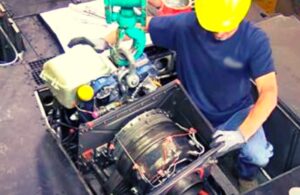
The operational impact of improved reliability extends well beyond maintenance metrics. Greater confidence in APU performance contributes directly to aircraft availability, mission readiness, and operational responsiveness.
“Every mission depends on that aircraft getting off the ground,” said Terrell. “Whether you’re moving troops, conducting a rescue mission, or supporting operations in remote locations, having confidence that the APU will start and perform when needed is incredibly important.”
As Black Hawk fleets continue to serve around the world, sustainment strategies are increasingly focused on targeted subsystem upgrades rather than wholesale platform replacement. In this environment, APUs represent an opportunity to deliver measurable improvements in readiness, reliability, and lifecycle efficiency without introducing major aircraft modifications or operational disruption.
By combining improved reliability, lower sustainment costs, simplified installation, and enhanced operational capability, the Honeywell Aerospace 36-150BH provides Black Hawk operators with a practical modernization path that supports fleet effectiveness and readiness throughout the remaining service life of the Black Hawk.
Find out more about Honeywell Aerospace Military Auxiliary Power Unit on their website.