
Tactical Grade IMU for Military Navigation Systems
Discover cutting-edge solutions from 7 leading global suppliersGuideNav, a leading developer of high-precision inertial sensors and navigation systems, highlights six key inertial measurement unit (IMU) trends redefining tactical navigation systems across defense and aerospace platforms.
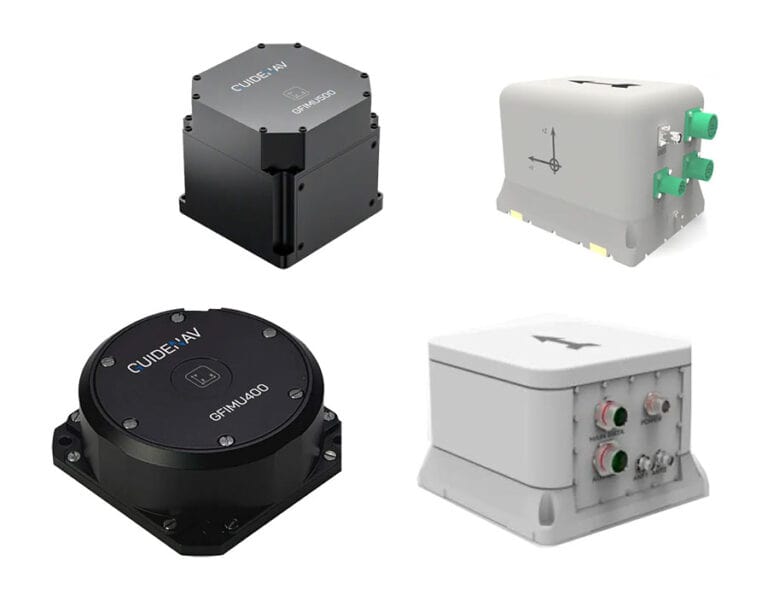
FOG IMUs by GuideNav
GuideNav’s accelerometers, gyroscopes, IMUs, and INS are deployed in over 35 countries worldwide. Designed to withstand extreme conditions and fully ITAR-free, these systems provide assured performance across a wide range of military and aerospace applications.
According to GuideNav, the most significant developments include MEMS IMUs achieving tactical-grade precision, fiber-optic gyro (FOG) IMUs enabling long-duration accuracy, AI-driven calibration and sensor fusion, IMU array redundancy, SWaP-C optimization, and resilient GPS-denied navigation capabilities.
Inertial measurement units (IMUs) are fundamental to tactical navigation, ensuring precision and reliability even in environments where GPS signals are degraded or unavailable. As defense forces prepare for increasingly complex and contested operational domains, advances in IMU technology are unlocking new levels of performance and resilience.
GuideNav identifies the following six major trends defining the future of IMUs in 2025:
- MEMS IMUs are reaching tactical-grade performance, offering precision once only possible with larger, more expensive systems.
- Fiber-Optic Gyro (FOG) IMUs are delivering ultra-low drift, ensuring accuracy over long-duration missions in demanding environments.
- Artificial intelligence is transforming calibration and fusion, enhancing accuracy by reducing drift and intelligently combining multiple sensor inputs.
- IMU arrays are being deployed for redundancy and precision, increasing resilience for mission-critical applications.
- Optimization of size, weight, power, and cost (SWaP-C) is making advanced IMUs more practical for integration into compact defense platforms.
- GPS-denied navigation is becoming more robust, with IMUs now working alongside LiDAR, radar SLAM, and visual odometry for assured autonomy.
These developments reinforce the strategic role of IMUs as a backbone for modern navigation across unmanned systems, guided munitions, and long-endurance defense platforms.
Read Top 6 IMU Technology Trends Shaping Tactical Navigation in 2025 for an in-depth analysis of these six trends and their implications for tactical navigation.