




Oscilloquartz explains how assured synchronization can be sustained in contested defense and aerospace environments where GNSS disruption is an operational reality. Read more >>
Precision timing underpins secure communications, coordinated avionics and multi-domain operations, yet increasing exposure to jamming and spoofing means satellite-based timing alone is no longer sufficient. Maintaining trusted time across platforms therefore requires resilient architectures capable of operating independently while preserving synchronization locally when GNSS signals are degraded or denied.
Integrating STANAG and Have Quick time codes at the network edge enables this by bridging legacy military interfaces with modern, network-based synchronization. Historically, delivering these time codes has required multiple components, including a GNSS receiver, Time of Day (ToD) converter, Have Quick generator and serial interface module, each adding Size, Weight and Power (SWaP), system complexity and potential points of failure.

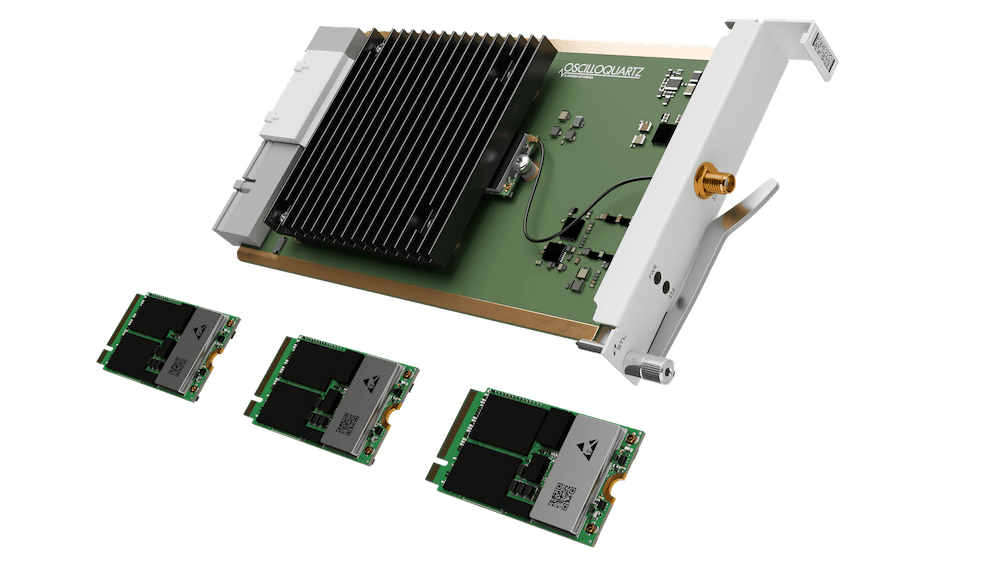
OSA 5422 Grandmaster Clock.
The edgeSync+™ Series OSA 5422 PTP grandmaster consolidates these functions into a single platform, bringing together these capabilities while enabling aircraft, radios and mission systems to interface directly without external converters. The OSA 5422 also directly generates key NATO timing formats including STANAG 4430 / XHQ, STANAG 4246 HQ I / HQ II, STANAG 4372 HQ IIA and Have Quick ICD ToD, alongside NTP, PTP and White Rabbit.
These formats provide standardized, deterministic and low-jitter timing, supporting time of day as an absolute reference, word of day as encoded synchronization and control data, and hopping sequences that define radio frequency patterns. The platform also delivers high-performance holdover, network-based synchronization and optical cesium clock integration, enabling accurate timing to be maintained locally in GNSS-denied conditions.
This unified approach supports interoperability across air, naval and ground forces, including applications such as Have Quick radio operations, synchronized avionics, mixed radio environments, ship-wide synchronization and tactical radio networks.
Legacy STANAG serial interfaces and modern network-based synchronization operate simultaneously under tightening SWaP constraints, enabling consistent timing across platforms, domains and coalition operations in contested environments.
Read ‘Keeping time in contested environments: Assured synchronization beyond GNSS’ to find out more information.