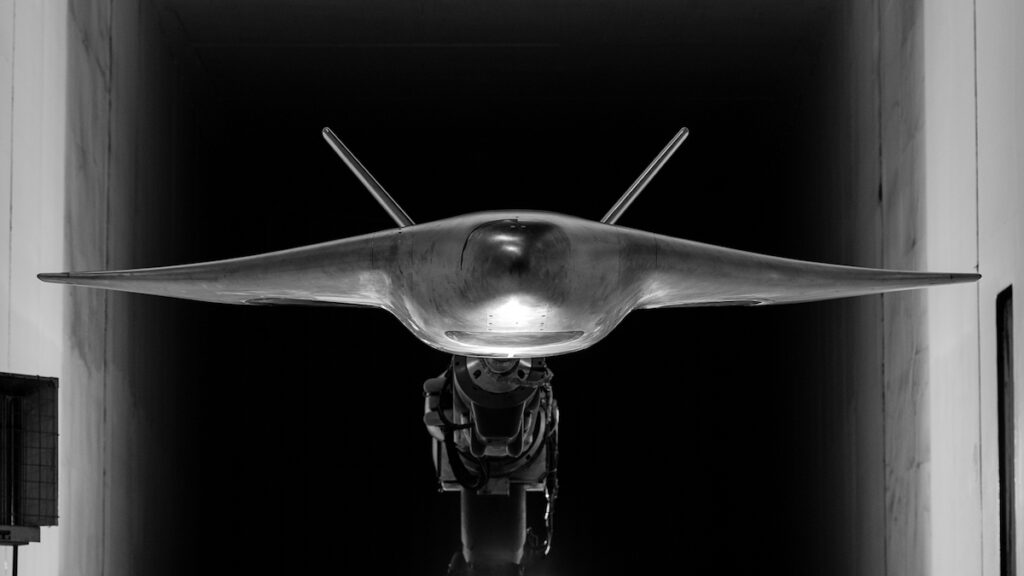




Aurora Flight Sciences, a Boeing company, is developing next-generation autonomous flight systems by integrating advanced simulation, flight testing, and AI-enabled technologies. Read more >>
Drawing on more than three decades of experience in autonomy, aircraft design, and operational testing, the company is applying its expertise to deliver intelligent systems that improve safety, adaptability, and performance across aviation and aerospace platforms.
Dr. Mia Stevens, Chief Engineer of the Accelerating Testing of Live Autonomy Software (ATLAS) program at Aurora, commented, “Aurora has been advancing autonomous flight for over 35 years. What sets us apart is how we bring together research, flight testing, and real aircraft to make autonomy operational. We’re building systems that will define how the next generation of aircraft think and fly.”
Optionally Piloted Systems Enable Operational Testing
Aurora’s work in Optionally Piloted Aircraft (OPA) has established a bridge between conventionally piloted operations and fully autonomous flight. The company’s first OPA, Chiron, developed in 1996, marked the beginning of this approach and laid the foundation for integrating autonomy within existing flight architectures.
Chiron’s flight control software provided a measure of autonomy, giving onboard computers control of the autopilot system, navigation, propulsion, and the data link used to send and receive information to and from a ground control station.
Building on this experience, Aurora developed Centaur, a next-generation OPA that serves as a key testbed for validating autonomy algorithms and collecting flight data. Centaur allows test teams to conduct complex, repeatable missions under real-world conditions with or without a safety pilot onboard. This system supports the safe evaluation of human–machine collaboration in practical flight scenarios.
Applying Autonomy Across Airborne Platforms
Aurora’s technical approach combines expertise in Guidance, Navigation, and Control (GNC), perception, and early-stage research in decision-making architectures. These core capabilities allow aircraft systems to sense their surroundings, identify landing zones, avoid obstacles, and execute mission objectives accurately and reliably.
The company applies these technologies across multiple platforms:
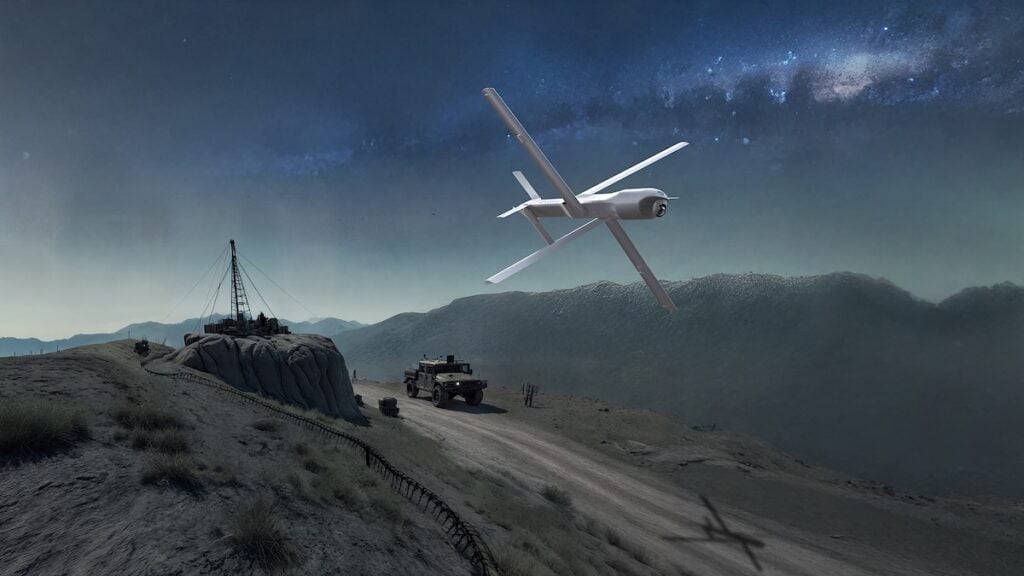
- SKIRON-X, a Group 2 small Unmanned Aircraft System (sUAS), provides a fast, flexible platform for testing autonomy software, perception systems, and decision-making algorithms. Its design enables rapid experimentation across a variety of mission profiles.
- Centaur demonstrates how autonomous functions can safely operate within the National Airspace System (NAS), integrating human oversight and automated control in live flight environments.
- The Autonomous Aerial Cargo Utility System (AACUS) program demonstrated a UH-1 helicopter operating autonomously through all phases of flight, including takeoff, navigation, landing site selection, and payload delivery, without direct human control.
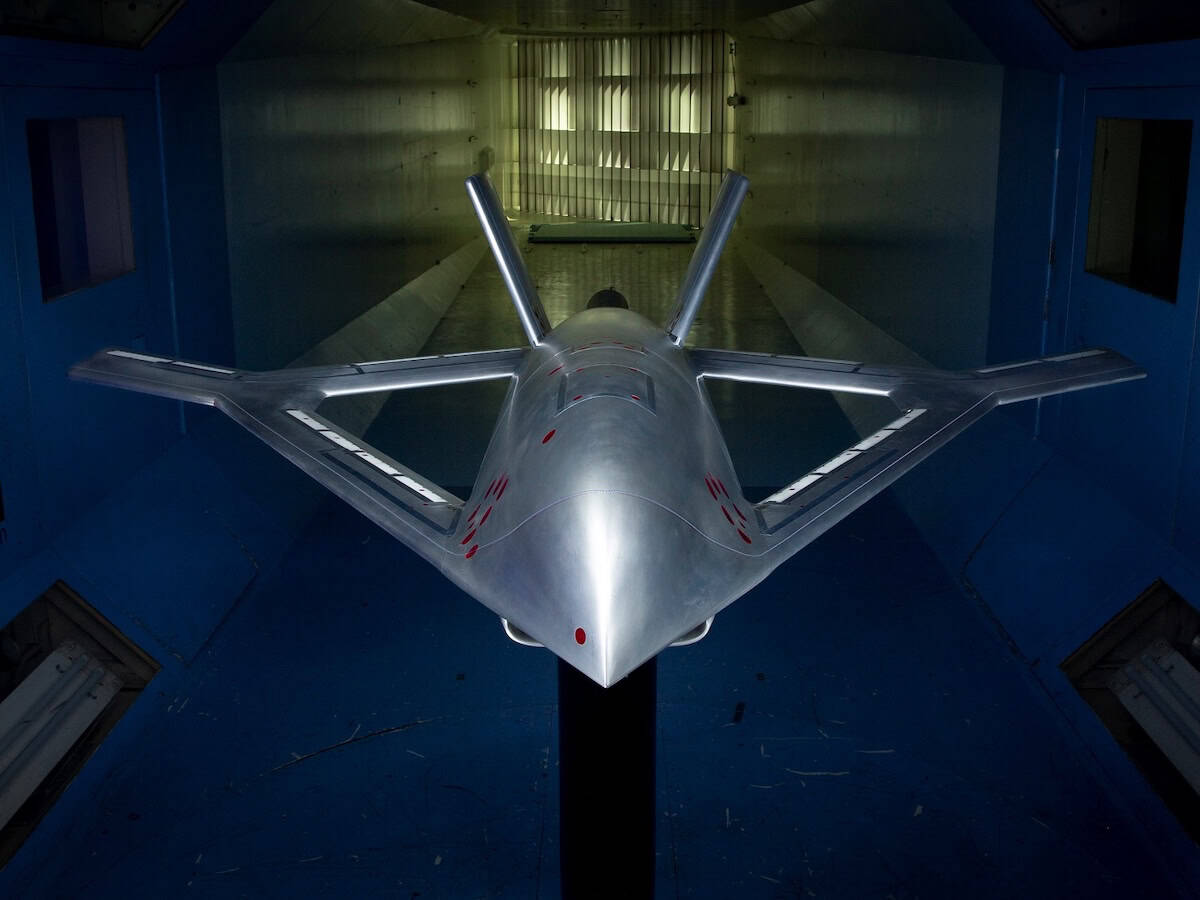
- Aurora’s experimental aircraft research explores new aerodynamic designs, propulsion systems, and flight-control concepts. Autonomous operation enables risk reduction and repeatability during early-stage flight testing.
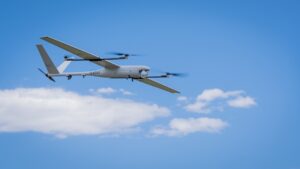
SKIRON-X is a Group 2 drone that combines the simple operation of an electric vertical take-off and landing configuration with the longer range and endurance of a fixed-wing design.
Developing Trust Through Human-Centric Design
Aurora’s autonomy development process prioritizes trust, predictability, and collaboration between human operators and automated systems. Engineers study pilot interactions with automation to create systems that perform reliably and support decision-making in the cockpit.
Testing begins in simulation environments where pilots and autonomous systems operate together. Using physiological monitoring tools such as eye tracking and heart-rate measurement, Aurora’s teams analyze how pilots respond to automation and adapt interface designs accordingly.
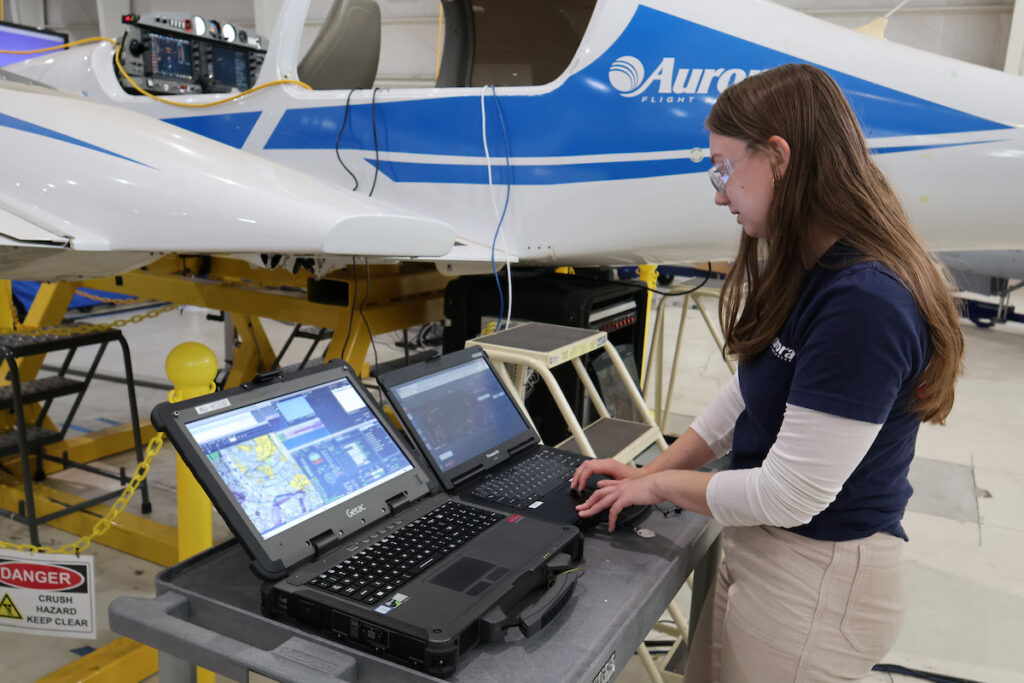
Validation continues within the Hardware-in-the-Loop Simulator (HILSim), where flight-ready software and avionics are tested alongside digital simulation models. This enables system evaluation under complex, dynamic flight conditions before live testing occurs.
During flight operations, aircraft such as Centaur are monitored from Aurora’s remote operation centers. A safety pilot often remains onboard to assume control if required.
In many applications, autonomy enhances rather than replaces human capability. By combining human judgment with autonomous precision, Aurora’s systems enable more complex missions, extended operational duration, and increased safety. This integrated human–machine approach underpins the company’s continued work in advancing the next generation of autonomous aviation systems.