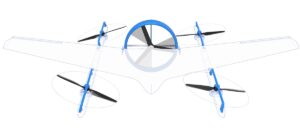
Thrust Vectoring Propulsors for Military Drones: Applications, Types & Technology Insights
Thrust vectoring propulsors (TVPs) control the orientation and stability of a drone by redirecting engine or fan thrust, rather than relying solely on aerodynamic surfaces. This form of propulsion enables drones to maneuver precisely during vertical takeoff, hover, and forward flight, especially in environments where conventional control surfaces are less effective. In military applications, TVPs support vertical lift, enhance agility, and optimize payload delivery across various unmanned aerial platforms.
If you design, build or supply Thrust Vectoring Propulsors, create a profile to showcase your capabilities and connect with visitors who have an active requirement for your solutions.
Thrust Vectoring Propulsors for Military Drones: Applications, Types & Technology Insights
Overview by
William Mackenzie
Updated:
Thrust vectoring allows unmanned aerial vehicles to maintain control authority when traditional aerodynamic surfaces are limited or ineffective. Its integration into military drone systems expands operational flexibility, enabling more precise maneuvering, compact airframe designs, and a broader range of deployment scenarios.
What Is Thrust Vectoring & How Does It Work?
Thrust vectoring, commonly abbreviated as TV or TVP, refers to adjusting the direction of engine or motor exhaust to control attitude and trajectory. Instead of relying solely on aerodynamic surfaces like ailerons or rudders, vectoring redirects the thrust flow.
At the heart of TVPs is the thrust vectoring mechanism, often using movable vanes, rotating ducts, or swiveling nozzles. By deflecting thrust away from the drone’s longitudinal axis, TVPs generate torques around pitch, yaw, or roll axes, even at low speeds or hover, providing high-precision control.
Mechanically, one actuator tilts or rotates part of the thrust stream relative to the drone body. Differential control of multiple vectoring thrust outputs enables combined roll‑pitch‑yaw control for multicopters, hybrid VTOLs, and fixed-wing drones.
Types of Thrust Vectoring Propulsors
Open Thrust Vectoring Propulsors
Open TVPs expose the propeller and vectoring nozzle directly to ambient air. Components include:
Swiveling propellers or vanes that deflect airflow directly.
Simple actuators geared to motor shafts or stator blades.
Advantages: straightforward mechanics, reduced weight, high thrust efficiency. Disadvantages include noise, exposed components, and debris risk, though these are often manageable on rugged military drones.
Ducted Thrust Vectoring Propulsors
Ducted Thrust Vectoring Propulsor by Aerofex
Also known as ducted fans or fan thrust vectoring, these systems enclose the propeller in a cylindrical shroud. Vectoring occurs via:
Swiveling duct: the entire shroud tilts.
Vanes inside the duct redirect the airflow post-propeller.
Benefits include quieter operation, lower radar cross-section (RCS), added safety, and improved low-speed control. The duct can also integrate de‑icing or infrared suppression systems.
Nested Thrust Vectoring Propulsors
Nested TVPs consist of multiple coaxial rotors or concentric ducts—often an inner and outer fan. Vectoring comes from relative motion or swiveled duct structures.
Advantages include:
Higher thrust density, with coaxial lift per unit disk.
Compact designs are ideal for payload-heavy or weaponized drones.
Tradeoffs involve increased mechanical complexity and control architecture.
How Thrust Vectoring Mechanisms Function
Four common mechanisms:
Swivel nozzle – Motor or fan assembly pivots on a gimbal, tilting its thrust frame.
Vectoring vanes – Deployable fins at the outlet redirect airflow.
Duct rotation – The entire tube rotates around the central axis.
Coaxial differential control – Varying thrust or tilt between concentric fans yields vector forces.
These mechanisms translate motor signals (pitch, yaw, roll commands) into deflection angles, then actuators move components accordingly. Clever designs use differential motor control in multicopters or embedded gyroscopic precession to smooth transitions and offset torque.
Military Drone & Armed Forces Applications
VTOL Strike Drones
In the armed forces, hybrid VTOL UAVs like strike drones leverage TVPs for vertical takeoff, cruise flight, precision strikes, and efficient loitering. Thrust vectoring enables prompt hover-to-jet transitions.
UCAVs and Combat Drones
Unmanned Combat Aerial Vehicles (UCAVs) such as war‑ready combat UAVs gain from thrust vectoring in evasive maneuvers, rapid altitude changes, and reduced takeoff footprint. Vector-capable multicopters or bicopters achieve agile battlefield ops and tighter turn radii.
High-Altitude ISR UAVs
For intelligence, surveillance, and reconnaissance (ISR) missions, thrust vectoring enhances station-keeping in gusty high-altitude conditions and simplifies dynamic surveillance tasks, especially over hostile or rugged terrain.
Naval and SEAD Missions
Nested TVP by Aerofex
Ducted fan TVPs are ideal aboard ships or compact platforms due to minimal ingestion risk and low acoustic signature. Naval armed forces and SEAD (Suppression of Enemy Air Defenses) units use vectoring for precise launch/recovery and low-altitude combat.
Special Forces & Battlefield Drones
Compact ducted fan thrust vectoring drones offer stealthy reconnaissance and fast “drop and dart” ops. Nested propulsors allow weapon loadout while retaining high tactical agility, making them valuable assets for battlefield UAV packs.
Comparing Open, Ducted & Nested TVPs
Open TVP
Ducted TVP
Nested TVP
Mechanical Complexity:
Low
Medium
High
Weight:
Light
Moderate
Moderate-to-heavy
Thrust-to-Weight Ratio:
High
Slightly lower
High due to coaxial efficiency
Noise and RCS:
High
Low
Very low
Debris/Ingestion Protection:
None
Good
Excellent
Application Suitability:
Agile VTOL, combat drones
Naval ops, covert missions, UCAVs
Payload-heavy strike drones. Next-gen UCAVs
Integration & Control Architecture
Thrust vectoring systems integrate tightly with flight control software, sensor arrays (gyroscompes, IMUs, GNSS), and mission logic. In differential motor control setups, the flight controller issues independent commands to each motor and vector vane. This enables smooth, real-time coordinated attitude control without large control surfaces.
Gyroscopic precession, especially in spinning or coaxial systems, is factored into control laws to ensure stability during rapid maneuvers. Thus, command inputs are offset or compensated to maintain crisp trajectory tracking.
Why TVPs Matter
Versatility: Enable vertical takeoff, precision loiter, and fast cruise transitions.
Agility: High thrust control translates to sharper turns and evasive action.
Compactness: Multicopters, hybrid VTOLs, or nested systems fit within tight fuselage volumes.
Secrecy: Ducted systems yield reduced acoustic and radar profiles for covert ops.
Payload support: Nested designs sustain heavier warheads or sensor arrays without sacrificing control.
Future Developments
Ongoing advancements focus on:
Lightweight smart materials that reduce actuator mass and improve responsiveness
AI‑coordinated flight control using machine learning for thrust vectoring adaptation
Fully redundant TVP systems for greater fault tolerance in UCAV missions
Modular plug‑and‑play TVP kits to retrofit legacy drones or small army bots
Expect armed forces worldwide to deploy advanced thrust vectoring propulsor drones in future air dominance, maritime reconnaissance, and battlefield strike roles.
Thrust Vectoring Propulsors for Mission-Ready Military Drones
Thrust vectoring propulsors, whether open, ducted, or nested, offer unprecedented control, stealth, and adaptability for military drone platforms. They represent a foundational advancement in unmanned aerial systems, empowering modern armed forces to achieve agile flight, rapid role changes, and strategic advantage in the battlespace. As AI-led control and materials improve, TVP-equipped drones will likely become core assets in global defense fleets.
Advancing Defense Capability Through Strategic Collaboration
Defense Advancement works with major OEMs to foster collaboration and increase engagement with SMEs, to accelerate innovation and drive defense capabilities forward.