


Aurora Flight Sciences is developing an intelligent Human-Machine Interface (HMI) designed to dynamically adapt the information presented to a user based on their unique needs.
As Uncrewed Aircraft Systems (UAS) see increasing use in defense operations, human pilots are being tasked with overseeing a growing number of drone teammates. Managing the cognitive demands of such complex operations is crucial for maximizing both safety and effectiveness. The HMI being developed by Aurora, a Boeing company, is part of a project named FARSIGHT (Flexible Adaptations to Remote Supervisory Interfaces for Generalizable Human-autonomy Teams) and uses autonomy to modify the timing and content of information presented to a human operator. The system bases its adaptations on the urgency of the data and the human’s current cognitive capacity.
The FARSIGHT project is part of an internal Aurora program that invests in employee innovation and encourages new idea exploration, which has also resulted in new technologies across areas such as sustainable manufacturing and rapid prototyping.
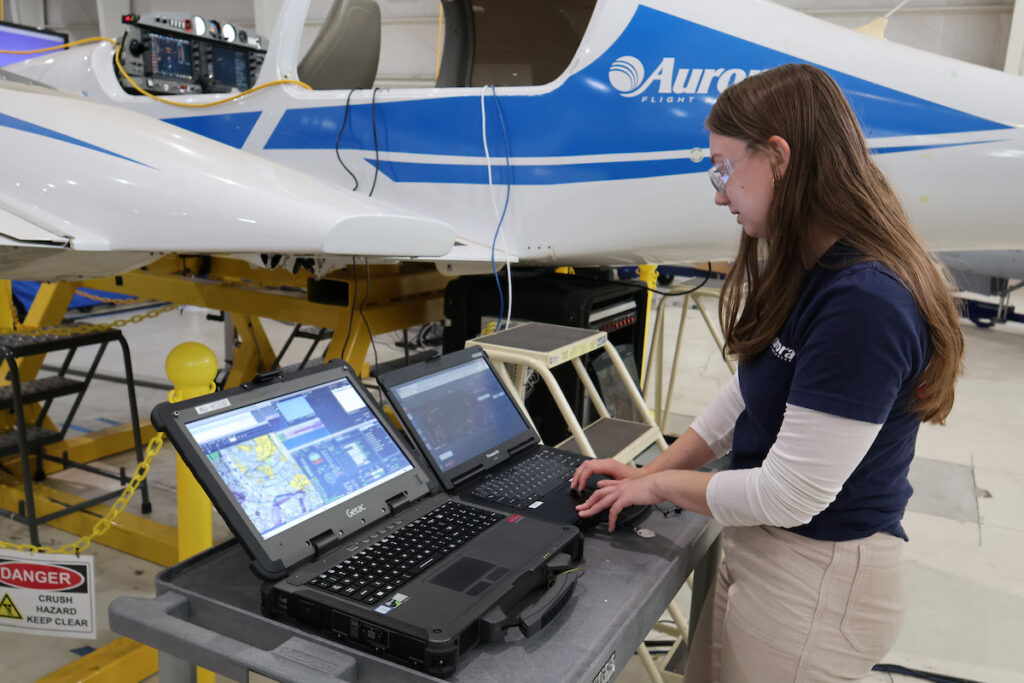
The goal of FARSIGHT is to create autonomous systems that can understand and appropriately respond to human cognition. It builds on Aurora’s existing work in cognitive inference, where engineers utilize the company’s flight simulation lab and noninvasive sensors, including eye trackers and heart rate monitors, to develop algorithms that estimate a pilot’s workload, fatigue, and situational awareness. The FARSIGHT HMI has undergone testing in a smart chair virtual reality environment and a desktop processor-in-the-loop simulation.
Sildomar Monteiro, autonomy group manager at Aurora, stated, “FARSIGHT is advancing the future of human-machine teaming. Until now, we haven’t given autonomous systems information about their human teammates. With FARSIGHT, autonomous systems can moderate communication based on their human counterpart’s readiness to accept it. This more closely approximates how humans interact with each other and improves the functionality of the team.”
Effective partnerships between humans and machines are expected to yield better outcomes compared to either operating in isolation. A human-machine team can enhance safety and accomplish more intricate missions, broadening the scope and duration of tasks that can be completed. By allowing humans to collaborate more naturally with autonomous teammates, FARSIGHT is designed to enable a single pilot to supervise a larger team of uncrewed aircraft, whether from a ground station or as autonomous wingmen during a flight, while sustaining optimal performance.