



Accelerate Defense Modernization through Strategic Sourcing
Discover cutting-edge solutions from leading global suppliers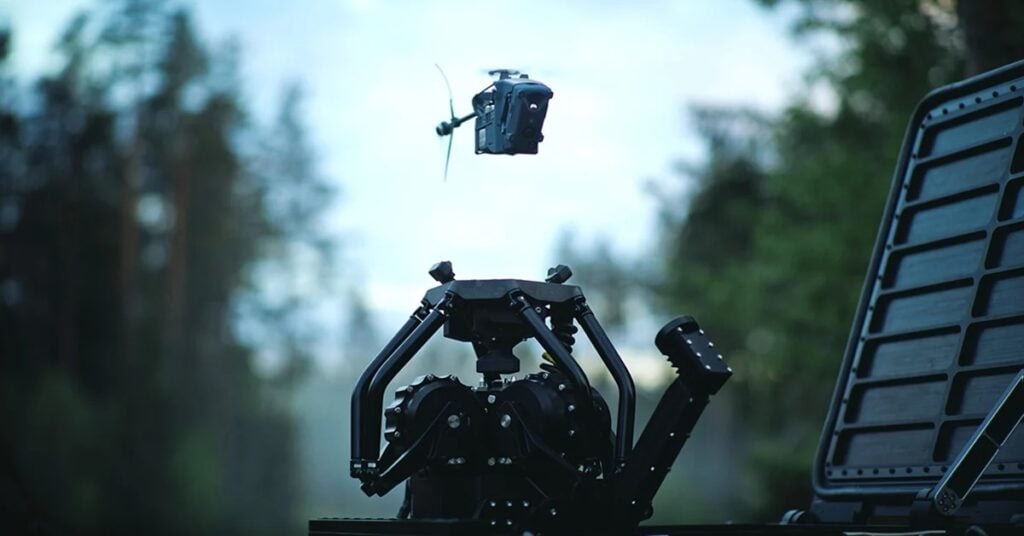
Teledyne FLIR Defense, part of Teledyne Technologies Incorporated, has launched Black Recon, an autonomously launched micro-drone system that delivers continuous, untethered reconnaissance from military vehicles and fixed installations.
Introduced at the Eurosatory exhibition, the vehicle-integrated system allows crews to launch, operate, recover, and recharge up to three unmanned aerial systems without leaving their platform. This design reduces risk and accelerates decision-making during high-tempo operations.
“Black Recon represents a major step forward in integrated reconnaissance for ground forces,” said Dr. JihFen Lei, President of Teledyne Defense and Aerospace Group and Senior Vice President of Teledyne Technologies. “By bringing autonomous launch, recovery, and recharging directly to the vehicle, we give operators persistent situational awareness, faster access to actionable intelligence, and greater protection in high-tempo missions.”
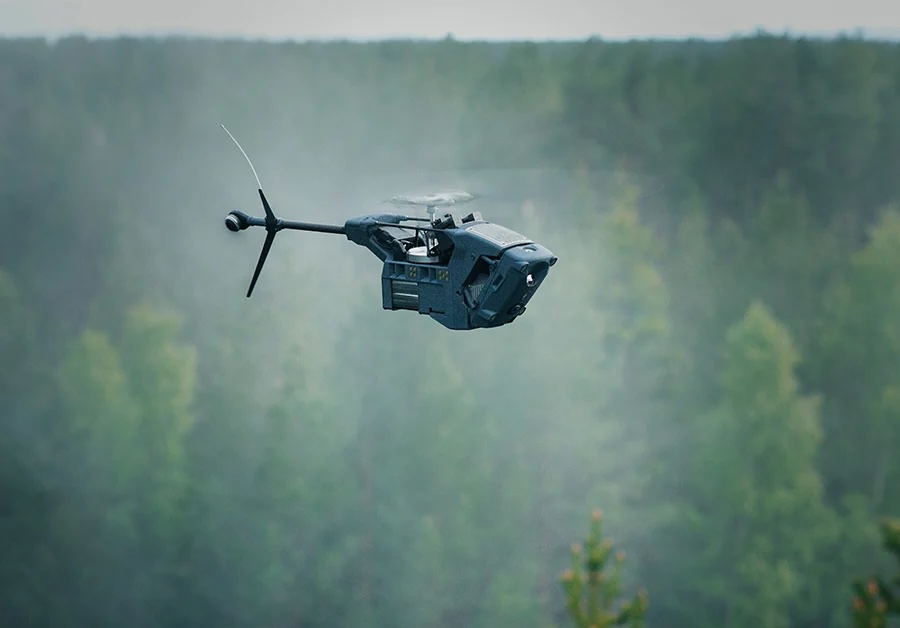
The compact, hardened system deploys up to three micro-UAVs in rotation for persistent surveillance. Each UAV launches autonomously, performs reconnaissance, surveillance, and target acquisition missions, and then returns to the launcher for capture, docking, and recharging. This setup results in uninterrupted coverage day or night while keeping personnel protected inside the platform.
Engineered specifically for mounted platforms rather than legacy drones adapted for dismounted use, Black Recon enables immediate deployment without external aviation support. With flight times of 50 to 60 minutes and speeds up to 25 meters per second per UAV, the system extends surveillance beyond traditional engagement ranges, supporting continuous target tracking and rapid threat detection to shorten the decision cycle across all mission profiles.

Weighing less than 450 grams, each UAV combines low size, weight, and power with advanced sensing derived from the company’s nano-UAS portfolio. Autonomous navigation allows missions to continue in Global Navigation Satellite System-denied, jammed, or spoofed environments. The drones can execute radio-silent missions using Visual Inertial Navigation without reliance on radio frequency links, while an onboard relay capability extends range and radio coverage. The system also features compatible operation with the Black Hornet 4 nano-drone.
The platform features an open mission-module architecture built to evolve with operational requirements. Planned future options include 100-gram mission modules for hazard detection and active engagement, expanding the system from persistent reconnaissance to include lethality payloads and chemical, biological, radiological, and nuclear detection sensors.
While originally developed for military use, the rugged, network-enabled design supports both fixed and mobile deployment across public safety and security applications. These secondary uses include remote first responder deployments for law enforcement, border and perimeter security, critical infrastructure monitoring, and maritime or riverine patrols. The system is available for order now, with deliveries expected to begin in 2027.