
LiDAR Systems
Discover cutting-edge solutions from leading global suppliers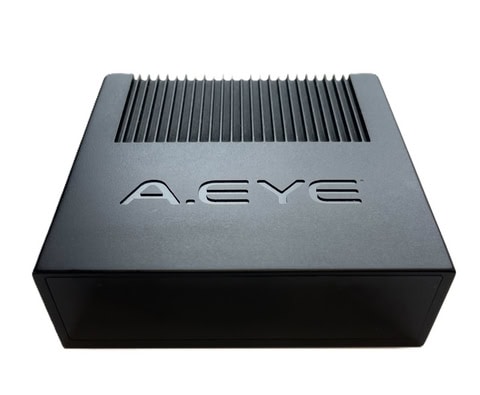
AEye has introduced Stratos, a third-generation ultra-long-range lidar sensor capable of identifying objects at distances up to 1.5 kilometers.
The new sensor aims to redefine performance benchmarks for lidar by combining advanced optics with a software-defined architecture. By extending reliable detection beyond the one-kilometer mark, the system allows for earlier object recognition and improved situational awareness. This increased range is particularly vital for safety-critical environments where high speeds require longer decision-making windows.
In addition to its extended range, Stratos provides resolution levels more than two times greater than the company’s existing Apollo sensor. Despite these performance gains, the hardware remains compact, with a form factor roughly equivalent to a standard smartphone. This small footprint allows for versatile installation; when mounted behind a vehicle windshield for automotive or trucking use, the sensor maintains a detection range of up to 500 meters.
The technology is positioned as a scalable solution for several demanding industries. Beyond traditional automotive applications, the 1.5-kilometer detection capability is designed to support the specific requirements of aviation, rail, and defense sectors.
Matt Fisch, CEO of AEye, said, “Stratos represents a significant leap forward in long-range lidar capability, bringing the ultimate perception capability to the realm of physical AI. By extending detection out to 1.5 kilometers while maintaining precision and system efficiency in a small form factor, we’re providing a cost disruptive solution that enables our customers to detect the smallest objects much earlier, react sooner, and operate more safely in real-world conditions, even at high speeds.”
As a global leader in software-defined lidar solutions and the manufacturer of the Apollo lidar sensor, AEye developed the Stratos platform to offer a high-performance alternative at a competitive price point. The integration of high resolution and extreme range into a compact package is intended to facilitate real-world deployment across various high-speed transit platforms.