Apella Solutions outlines why Right-Hand Circularly Polarized (RHCP) antennas deliver more reliable performance for UAV communications in the 4.4–5.0 GHz band.
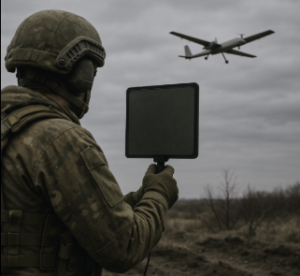 While vertical linear antennas are often chosen for their simplicity and low weight, real-world Unmanned Aerial Vehicle (UAV) operation introduces conditions that can significantly reduce their effectiveness.
UAV Attitude and Polarization Alignment
UAVs do not maintain a fixed antenna orientation during flight. Roll, pitch, stabilization inputs, and wind introduce continuous angular variation, typically between 10 and 30 degrees or more during maneuvers.
For linear antennas, this misalignment directly reduces signal strength. A 30-degree offset introduces approximately 1.25 dB of loss, increasing to 3 dB at 45 degrees, around 6 dB at 60 degrees, and reaching a deep null at 90 degrees. RHCP antennas avoid this sensitivity by maintaining consistent performance regardless of roll angle, supporting a more stable link as the UAV changes orientation.
Multipath Effects at 5 GHz
At 5 GHz, where wavelength is approximately 6 cm, small positional or environmental changes can create significant phase differences between signals. A receiver may detect both the direct signal and reflections from the ground or nearby objects, resulting in deep fades, rapid signal variation, and sudden link degradation.
Even in rural environments, strong ground reflections can create dominant secondary paths that lead to destructive interference.
Polarization Behavior of Reflected Signals
When an RHCP signal reflects from the ground, its handedness often reverses, becoming predominantly Left-Hand Circularly Polarized (LHCP). An RHCP receiver naturally rejects LHCP signals, reducing the impact of reflected signals and limiting destructive interference. This helps reduce the depth of fades and improves link consistency.
Interpreting the 3 dB Tradeoff
The commonly cited 3 dB loss applies when circular and linear antennas are combined under ideal conditions. However, linear systems in UAV use often experience greater losses, including around 6 dB from orientation changes and 10 to 20 dB fades due to multipath.
RHCP introduces a predictable penalty in some cases but avoids the larger and more variable losses seen with linear configurations.
Integration with Diversity and Directional Systems
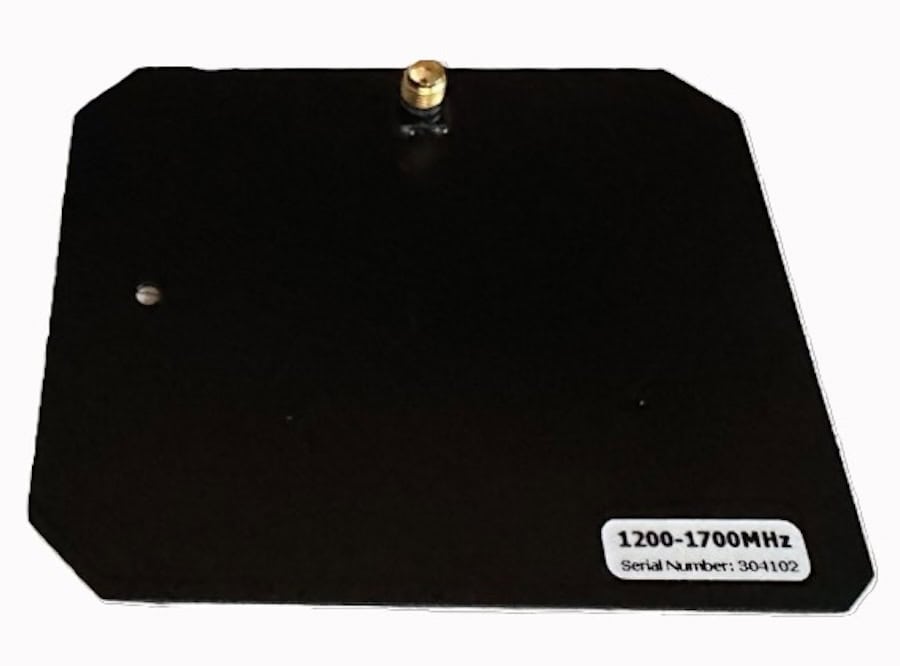
RHCP improves diversity performance by reducing the likelihood of correlated fading, increasing the probability that at least one antenna maintains a usable signal. Directional RHCP antennas, such as patch or helical designs, concentrate energy toward the UAV while reducing reception of reflected signals from the ground, improving performance at distances beyond 500 meters.
Practical Configuration Guidance
Reliable setups typically use RHCP antennas on both the UAV and ground, with ground diversity incorporated where possible.
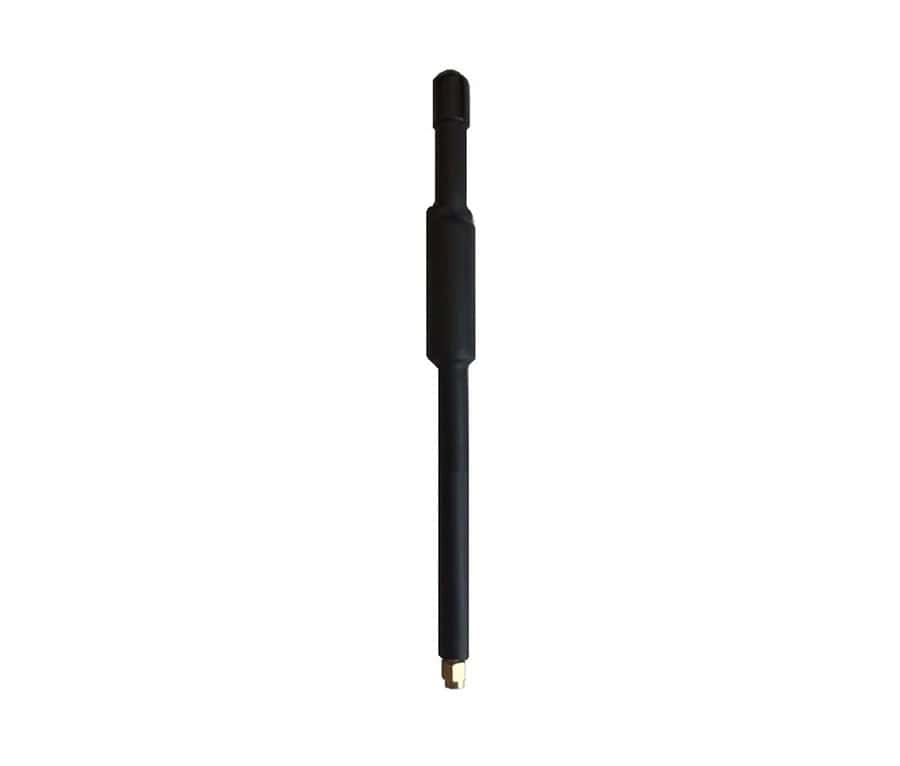
A common configuration combines an RHCP omnidirectional antenna on the UAV with both directional and omnidirectional RHCP antennas on the ground. Pairing RHCP with a linear antenna remains functional but introduces a consistent 3 dB loss.
RHCP antennas provide greater tolerance to UAV movement, reduced impact from multipath interference, fewer dropouts, and more consistent link performance. As outlined by Apella Solutions, they offer a more reliable option in many real-world UAV operating environments compared to vertical linear antennas.