


Accelerate Defense Modernization through Strategic Sourcing
Discover cutting-edge solutions from leading global suppliers
Defense Advancement’s most-read stories in June 2026 reflected reader interest in technologies developed for demanding defense, security, and mission-critical environments, spanning sensing, autonomy, uncrewed systems, space computing, and satellite connectivity.
The month’s top five articles covered low-germanium infrared optics, sovereign flight control and autonomy software, tactical uncrewed systems for electronic warfare environments, rugged AI computing for space missions, and software-defined 5G Non-Terrestrial Networks (NTN) modem technology.
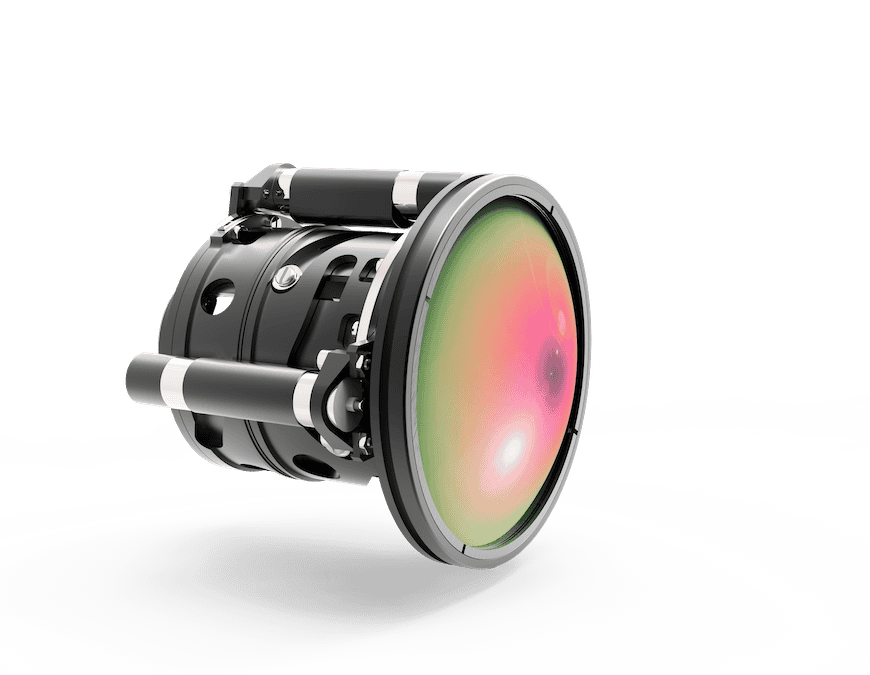
Leading June’s readership, MKS Ophir introduced the Ophir LightIR 15-75 mm f/1.2 Long-Wave Infrared (LWIR) motorized continuous zoom lens at Eurosatory 2026.
Developed as a low-germanium optical solution, the lens is designed to reduce dependence on germanium-based optical materials while supporting high-performance thermal imaging for defense, security, surveillance, and industrial applications. The compact lens is designed for VGA 10-12 µm uncooled LWIR detectors, provides a 29.9° wide field of view down to a 5.8° narrow field of view for 640×480 VGA 12 µm detectors, and features hard carbon and Diamond-Like Carbon coatings to support durability and environmental robustness.
Autonomy was also a key focus, with Volatus Aerospace publicly introducing its V-Cortex AI Flight Controller and Autonomy Operating System at CANSEC 2026.

Developed entirely in Canada using domestically controlled intellectual property, the ecosystem combines flight control hardware and firmware, embedded autonomy software, and mission systems integration. Built on a Modular Open Systems Architecture, V-Cortex is designed to support rapid integration of sensors, mission payloads, and third-party systems, while enabling edge computing, autonomous mission execution, onboard decision-making, seeker and targeting integration, and navigation in GNSS-denied environments.
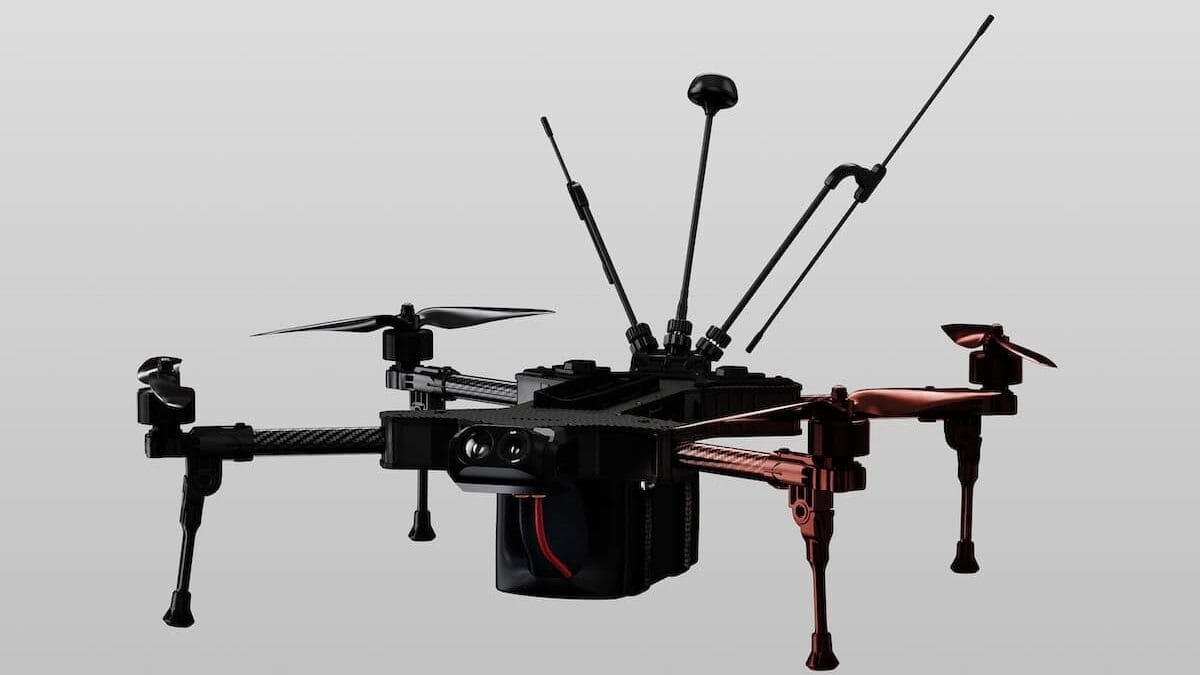
Electronic warfare resilience featured prominently among June’s top stories, with Orqa launching the MRM2-10AI tactical unmanned aerial system at Eurosatory 2026.
Developed to address radio-frequency jamming, GNSS disruption, and electronic attacks, the platform combines Orqa’s IRONghost radio control system with native fiber-optic connectivity and includes automatic failover to the radio-frequency link if the fiber-optic line is severed. A new autopilot board also supports autonomous capabilities including vision-based terminal guidance, computer vision applications, battlefield analytics, and collaborative multi-drone mission options.

Space-based AI processing also drew reader attention as Aitech confirmed it will integrate the NVIDIA IGX Thor platform into its S-A2300 Commercial Off-The-Shelf AI Supercomputer and future rugged space AI designs. The integration is intended to expand edge AI capabilities for critical space missions, building on the S-A2300’s use of the NVIDIA Jetson AGX Orin Industrial system-on-module for Low Earth Orbit missions. The current system delivers as much as 248 TOPS for advanced AI workloads, with an architecture optimized for applications including real-time image processing, autonomous navigation, climate monitoring, and space-debris tracking.
Rounding out June’s top five, TTP’s development of a software-defined, multi-band 5G NTN modem module highlighted work underway to support future satellite terminal architectures. Designed for flexible, upgradeable satellite solutions, including Ku- and Ka-band terminals, the module targets defense, commercial, and UAV connectivity applications. Its open architecture approach is intended to reduce vendor lock-in, while built-in observability supports network optimization, diagnostics, debugging, and performance analysis.

Together, June’s most-read Defense Advancement articles highlighted technologies designed to support sensing, autonomy, communications, and compute across defense-relevant environments. From infrared optics and autonomy systems to tactical drones, space AI hardware, and 5G NTN modem architecture, the month’s leading stories reflected a focus on integration, resilience, and operational flexibility.