


Unmanned Surface Vehicles
Discover cutting-edge solutions from leading global suppliers
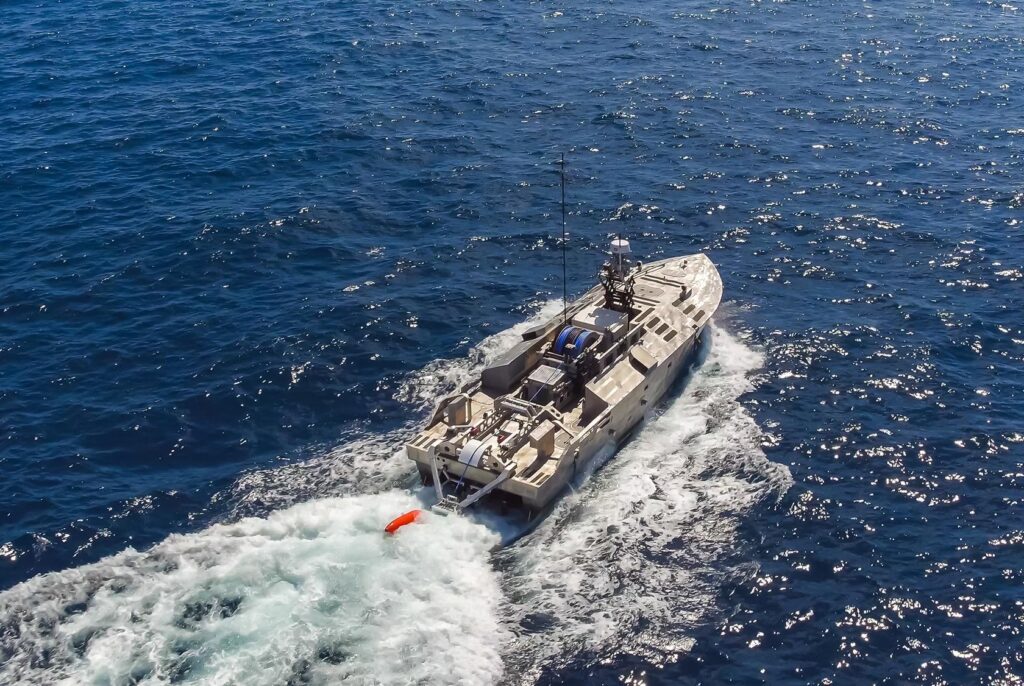
Marine AI and the Defence and Security Accelerator (DASA) have launched a research project to help uncrewed vessels communicate more naturally with crewed ships.
The programme, which began last week, will see trials take place in the Plymouth and Portsmouth trial areas.
The project builds on Marine AI’s earlier proof-of-concept work with large language models (LLMs) to create an autonomy system capable of understanding and generating natural language. Backed by DASA funding, the new phase will test the technology in real-world maritime environments, enabling uncrewed surface vessels (USVs) to communicate with both crewed and uncrewed platforms in the same way a human operator would.
Testing will use Marine AI’s Oceanus12 vessel and supporting craft, alongside high-profile platforms including the Patrick Blackett and XV Excalibur. Responses generated by the system will be assessed by master mariners, with findings captured in a formal evaluation report.
With autonomous platforms becoming increasingly common, the lack of seamless communication between them and conventional shipping is a growing operational challenge. At present, USVs depend on structured protocols or human oversight, limiting their ability to respond in complex, fast-moving situations. This project seeks to close that gap by proving that an uncrewed vessel can hold a natural language exchange that is context-aware, situationally appropriate and trusted by mariners.
Oliver Thompson, technical director at Marine AI, commented, “Uncrewed platforms can only operate safely alongside conventional vessels if they can be understood. This project is about proving that an autonomous system can use natural language in a way that makes sense to mariners in real-world conditions.”
If successful, the research will provide the first demonstration of natural language interoperability between uncrewed and conventional platforms, supporting safer mixed-traffic operations at sea and contributing to the UK’s position in maritime autonomy.