Accelerate Defense Modernization through Strategic Sourcing
Discover cutting-edge solutions from leading global suppliers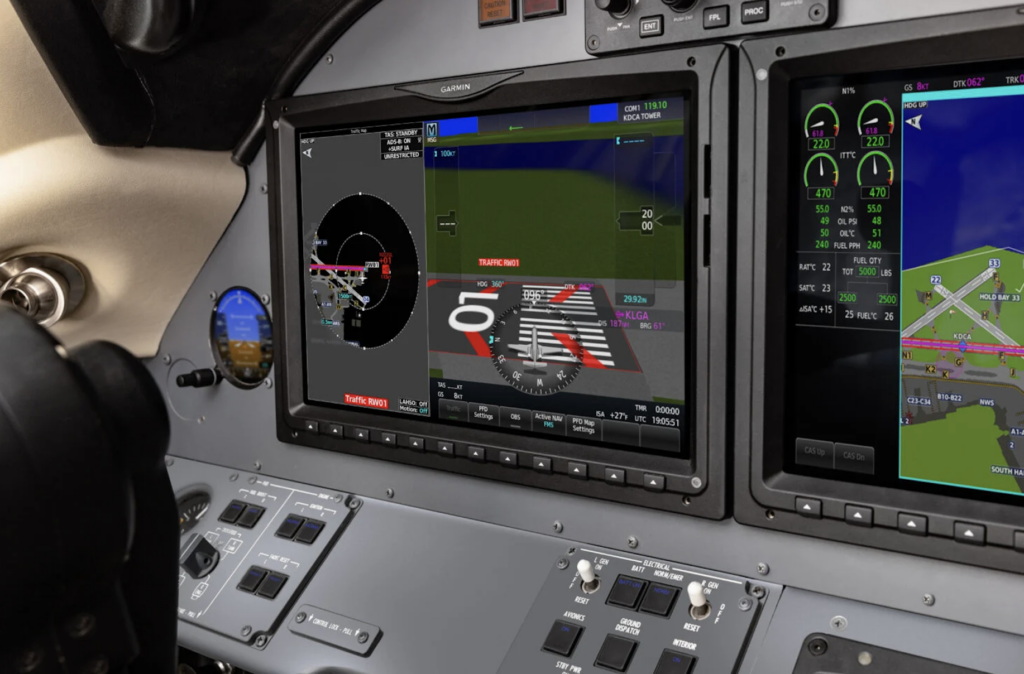
Garmin’s Runway Occupancy Awareness (ROA) has been certified, making it the first certified software solution utilizing the Surface Indications and Alert (SURF-IA) technology.
ROA uses ADS-B traffic to alert the crew of potential runway incursions caused by nearby airborne aircraft, aircraft on the ground and ground vehicles. The initial FAA certification was received by Textron Aviation on the G1000® NXi-equipped Cessna Caravan.
Garmin also expects to receive FAA certification for ROA in their G5000® STC covering the Cessna Citation Excel, XLS, XLS+ and XLS Gen2 in September of 2024 and expects for the technology to be certified on more Garmin-equipped aircraft in the coming months. ROA is initially available on select Garmin Integrated Flight Decks ranging from G1000 NXi to G5000 equipped aircraft serving the broad general and business aviation markets.
Phil Straub, Garmin Executive Vice President and Managing Director, Aviation, said; “With the rate of runway incursions increasing, there is a real need for increased safety tools in the cockpit. Equipping pilots with this technology can reduce the risk of runway incursions and help provide confidence for pilots navigating busy and complex airports.”
ROA technology analyzes aircraft GPS and ADS-B traffic information relevant to the airport’s runways and taxiways to assess and alert the crew of a possible runway incursion or collision. ROA provides visual crew-alerting system (CAS) caution and warning annunciations on the pilot’s primary flight display (PFD) and highlights the runway yellow or red, depending on the level of threat, on Garmin’s Synthetic Vision Technology (SVT™). It also provides similar caution and warning annunciations on the SafeTaxi® map displayed simultaneously on the multifunction window.
Both visual and aural alerts are provided to the flight crew based on the potential hazard, ranging from no immediate collision hazard to a warning level alert where a collision risk could occur within 15 seconds. Indications and alerts to the flight crew include: any traffic landing, taking off, stopped, or taxiing on the aircraft’s runway; traffic on approach to the aircraft’s runway or runway that crosses the aircraft’s runway; as well as any traffic on the runway at which the aircraft is holding.