Accelerate Defense Modernization through Strategic Sourcing
Discover cutting-edge solutions from leading global suppliers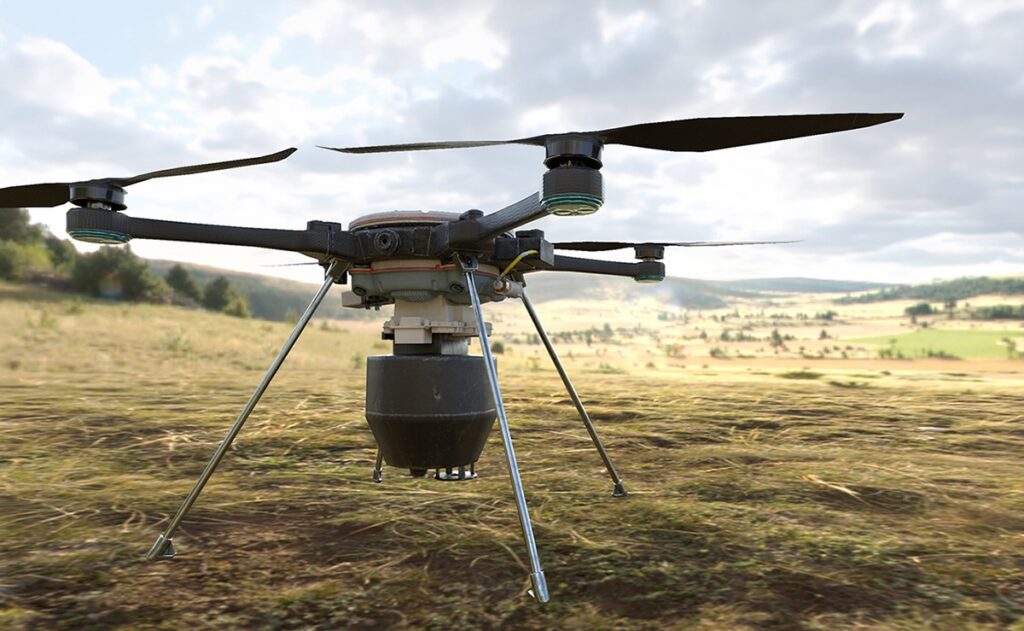
ForgeFX Simulations has been awarded a U.S. Army subcontract to convert its fielded Unmanned Vehicle Tele-Operation Training Simulator into a browser-based application, expanding access to critical biological threat detection training for drone pilots.
The program allows Unmanned Aerial System (UAS) pilots, sensor operators, and mission commanders to train remotely on the Teledyne FLIR R80D Skyraider drone, which utilizes an onboard MUVE B330 Continuous Biological Detector and Collector to sample airborne contamination. MRIGlobal serves as the prime contractor for the project, which is managed by the U.S. Army’s Capability Program Executive for Chemical, Biological, Radiological and Nuclear Defense (CPE CBRND). The finalized web-based simulator will be delivered through the Joint Acquisition CBRN Knowledge System (JACKS), the Army’s authoritative channel for training and information.
Deploying the simulator through a centralized, web-based platform addresses a long-standing challenge in military training by providing realistic and repeatable practice without requiring dedicated physical workstations or exposure to live-test environments. Physical CBRN training is frequently limited by high operational costs, low asset availability, and the inherent safety risks of live aerosol testing. By moving to a simulated environment hosted online, the Army can eliminate these constraints while ensuring future software updates are easily deployed.
“This effort is about removing barriers between the warfighter and the training they need,” said Greg Meyers, CEO and Co-Founder of ForgeFX Simulations. “We’re taking a high-fidelity simulator built around real equipment, real procedures, and real mission conditions, and making it available through a secure browser without local installation or specialized hardware. That changes the economics of military training and gives CBRN units a more scalable way to build readiness for high-consequence missions.”
To achieve the necessary level of technical fidelity, ForgeFX and MRIGlobal collaborated closely with Teledyne FLIR, the manufacturer of both the UAS platform and the biological sensor. Engineers utilized technical documentation, unclassified test data, and direct observations from live aerosol testing at the U.S. Army Dugway Proving Grounds in Utah to build the environment. Consequently, the virtual B330 sensor responds dynamically to the drone’s position relative to simulated contamination zones.
The training program features a five-lesson curriculum covering the complete reconnaissance mission cycle, including UAS launch, waypoint navigation using the Android Team Awareness Kit (ATAK), aerosol sampling, and post-mission close-out procedures. Learners must also complete an unguided capstone mission that evaluates performance against randomized contamination scenarios.
This initiative builds upon a multi-year partnership between ForgeFX and MRIGlobal focused on CBRN defense simulation. The two organizations previously developed an unmanned ground vehicle teleoperation trainer for the same reconnaissance program, alongside the CBRND HoloTrainer, a mixed-reality device training suite designed for CBRN Special Operations Forces under a separate engagement supporting the Joint Project Manager for Chemical, Biological, Radiological and Nuclear Special Operations Forces (JPM CBRN SOF).