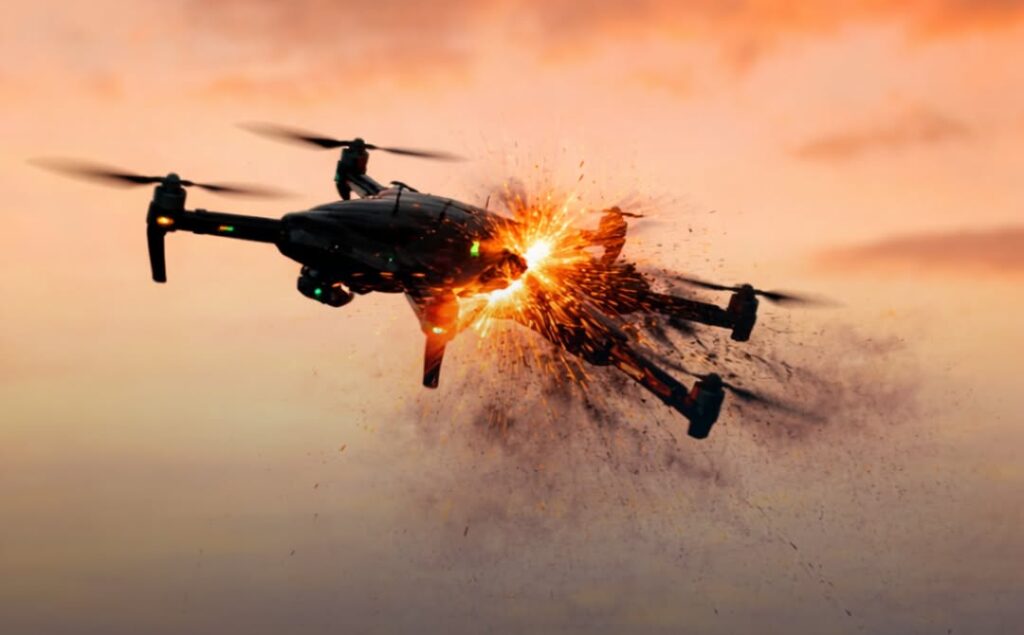
ZenaDrone highlights how drone defense, also known as Counter-Unmanned Aerial Systems (C-UAS), has become essential for safeguarding airspace against unauthorized or hostile unmanned aerial vehicles.
Drone defense combines detection and mitigation, using technologies such as radar, RF scanners, and optical sensors to identify threats, followed by countermeasures including jamming, lasers, or physical capture systems.
By 2026, the rapid proliferation of low-cost drones across military, commercial, and civilian sectors has significantly increased airspace risk. Conflicts have demonstrated the effectiveness of small reconnaissance and “kamikaze” UAVs, driving strong investment in counter-drone solutions across government and industry. As a result, drone defense now spans applications from military bases and borders to airports, critical infrastructure, and private estates.
Modern systems rely on layered approaches. “Soft-kill” methods like RF jamming disrupt control and GPS signals, forcing drones to land or return home, while “hard-kill” options such as high-energy lasers or net-based interception physically disable or capture targets. No single method is foolproof, making integrated, multi-sensor systems the preferred solution.
Legal restrictions remain important, particularly for civilians, where active countermeasures are typically prohibited without authorization. Consequently, most private use cases focus on detection and reporting, while certified systems are deployed by trained operators.
Looking ahead, AI-driven detection, autonomous interception, and real-time response capabilities are shaping the future of drone defense, delivering faster, smarter, and more adaptive protection for increasingly complex threat environments.
Read Drone Defense Systems: How to Take Down Unwanted Drones Safely on ZenaDrone’s website.