



Accelerate Defense Modernization through Strategic Sourcing
Discover cutting-edge solutions from leading global suppliers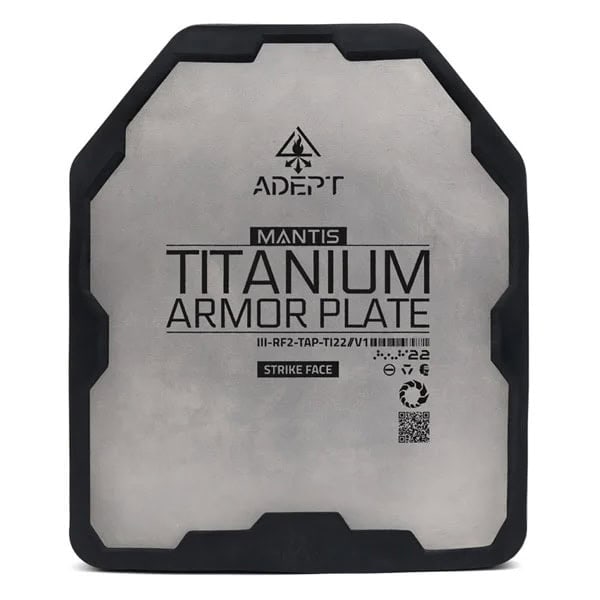
Adept Armor develops advanced body armor systems and personal protective gear for military, law enforcement and security personnel.
In this article, Adept Armor explores the development of the Mantis Titanium Armor Plate, which solved long-standing material challenges to create durable, high-performance protective equipment.
Early Foundations
Initial titanium experimentation began during America’s 1940s, when Ti6Al4V emerged representing half worldwide production. Military assessments recognized potential against projectile threats, though implementation remained limited. Despite decades examining enhanced formulations, protective applications never achieved widespread deployment.
Breakthrough Advancement
Modern development focused on addressing titanium’s fundamental challenge: adiabatic shear failure. When projectiles strike protective surfaces, localized strain, temperature, plus deformation rates increase dramatically. Traditional titanium’s limited shear resistance combined alongside poor thermal dissipation creates significant vulnerabilities, particularly affecting thinner protective equipment.
Engineering Solution
Developers of the Mantis Titanium Armor Plate approached these limitations differently, transforming perceived weaknesses into advantages. Rather than preventing shear effects, engineers incorporated controlled material displacement as protection mechanism. Upon impact, larger-diameter sections separate from primary surfaces at reduced velocities, effectively dispersing kinetic energy. UHMWPE backing materials successfully capture these fragments, completing protection sequence.
Performance Characteristics
Testing demonstrated exceptional capabilities against multiple threats:
- M80 Ball reaching 2800 fps
- M855 exceeding 3100 fps
- .22-250 achieving 4330 fps
Unique Advantages
Unlike ceramic alternatives, Mantis plates maintain structural integrity following impacts. Damage remains highly localized, preserving protective capabilities across remaining surface area. Lower-velocity projectiles including fragmentation or pistol rounds through .44 Magnum cause minimal effects, typically leaving surface marks without compromising integrity.
Compared against steel protection, Mantis technology offers superior weight-to-performance ratios while eliminating dangerous fragmentation concerns. Protection occurs within plate structure rather than surface areas, enhancing user safety.
Material Construction
Selected titanium formulation provides moderate hardness alongside exceptional toughness, ductility, plus dynamic response characteristics. These properties optimize performance against rifle ammunition, including steel-core variants like M855. Research continues examining higher-hardness compositions targeting Level IV protection, though increased mass becomes inevitable.
Future Development
Current iterations represent optimal balance between protective capabilities, weight considerations, plus manufacturing costs. Ongoing research explores enhanced protection levels, acknowledging necessary weight increases accompanying improved threat resistance. Engineers maintain focus toward durability, reliability, plus consistent multi-impact performance.
The Mantis Titanium Armor Plate establishes new protective equipment standards, combining steel’s durability alongside ceramic’s efficiency. Revolutionary design approach transforms traditional material limitations into functional advantages, creating exceptional general-purpose protection. Continued development promises expanded capabilities while maintaining core performance characteristics.
Visit the Adept Armor website to read the full article.