



Position Navigation and Timing (PNT)
Discover cutting-edge solutions from 8 leading global suppliersThe ELT0251 from GNSS.store is an ultra-light DroneCAN compass designed for Unmanned Aerial Vehicles (UAVs), robotics, and autonomous platforms.
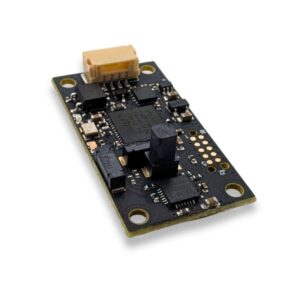 Built around the RM3100 magneto-inductive three-axis sensor, the module is designed to deliver clean, stable magnetic field data for more reliable heading estimation. Weighing 9 g, it features a robust DroneCAN interface and is compatible with Pixhawk, PX4, and ArduPilot.
Compass performance plays an important role in autonomous flight. Built-in compass modules are often positioned close to motors, Electronic Speed Controllers (ESCs), batteries, and high-current wiring, where magnetic interference is strongest. This can result in noisy magnetic data, unstable yaw estimation, and less reliable navigation.
The ELT0251 can be mounted away from power electronics to help reduce magnetic interference and improve navigation stability.
RM3100 Magneto-Inductive Sensor
 The ELT0251 is built around the RM3100 magneto-inductive three-axis sensor. Compared with many low-cost compass solutions, it offers higher sensitivity, low noise, and strong repeatability.
Based on PNI’s proprietary magneto-inductive technology, the RM3100 delivers professional-grade heading accuracy, ultra-low drift, exceptional resolution, and repeatability. With a resolution of 10 nT and extremely low magnetic hysteresis, the sensor is suited to applications that demand precise heading accuracy.
DroneCAN Integration
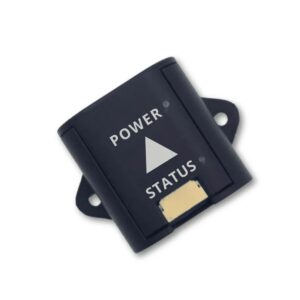
The ELT0251 features the DroneCAN output protocol, providing reliable long-distance connectivity and simplified integration without using serial ports. Despite its protective housing, the module remains highly compact and is fully compatible with Pixhawk, PX4, and ArduPilot, making it suitable for precise and stable navigation.
Physical Characteristics
- Dimensions: 27 × 36 × 15 mm
- Weight: 9 g
- Supply voltage: 4.75 to 5.25 V
- Operating temperature: -25 °C to +85 °C
- Connector type: 4-pin JST-GH 1.25
- Mounting option: Screw mount
- RoHS and REACH compliant
- Fully assembled, tested, and ready for use