Accelerate Defense Modernization through Strategic Sourcing
Discover cutting-edge solutions from leading global suppliers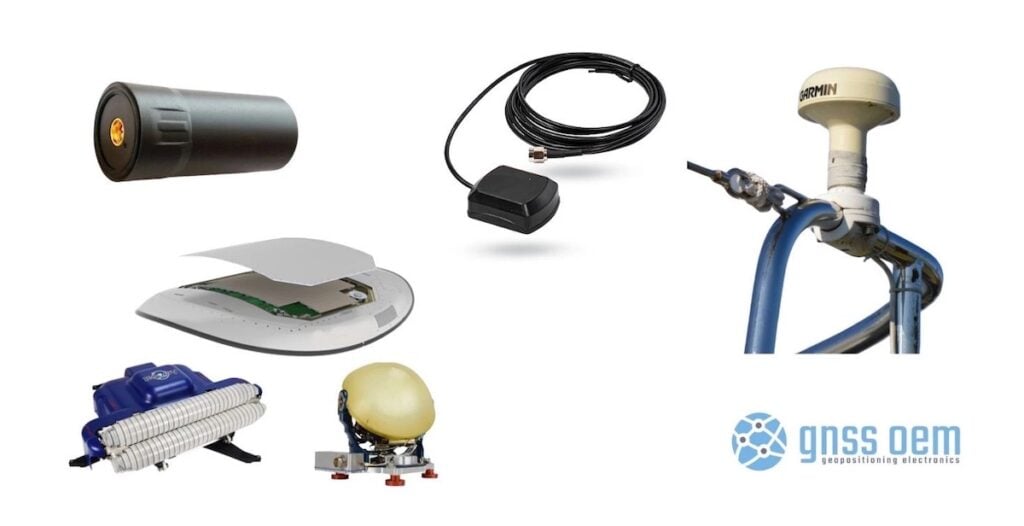
GNSS.store provides single, dual, and triple band RTK GNSS antennas fully developed in-house and designed to meet diverse performance and form factor needs.
The company’s range includes compact, lightweight models for seamless OEM integration, along with water and dustproof enclosures built for reliable use in demanding defense environments.
Proper antenna selection and installation is critical as these units are directly exposed to environmental and operational conditions. Satellite signals are extremely weak and are received from above, meaning any obstruction between the antenna and the sky can cause significant reception loss. For example, attempts to shield an antenna from rain with a tarpaulin will result in almost complete signal loss.
In another case, GNSS.store found that a satellite compass malfunctioned simply because its antennas were placed beneath a metal platform. Once moved to an unobstructed position, the system functioned correctly. Clear line-of-sight to the sky is essential for reliable operation.
Antenna Durability & Classifications
Antennas are often expected to provide at least 10 years of service. To meet these requirements, they are classified according to operating conditions, with specific designs for marine, aviation, geodetic, timing, and other specialized uses.
Marine Antennas
Marine applications place antennas under extreme stress. Storm conditions can subject them to heavy volumes of saltwater, snow, and ice. Despite such harsh exposure, well-designed marine antennas can provide service lifespans of up to 20 years.
Marine coaxial cables are built with large diameters to resist damage, yet even these may break under ice loading. Antennas themselves, however, are typically designed to survive such impacts.
Connectors used in marine systems are high-cost, waterproof components, often tested to IP68 standards. This includes submersion in water for 24 hours with no performance loss. While housings are highly durable, users must verify that the connector protection class matches the rest of the antenna, as some assemblies use standard, less waterproof connectors.
Most marine antennas operate only in the L1 frequency band, limiting their application range. They are commonly mounted using 1-inch threaded pegs or geodetic 5/8-inch mounts.
Aircraft Antennas
Aircraft antennas are produced to ARINC-734A standards. Their cost is driven largely by certification requirements rather than inherent performance. Typically designed only for GPS L1 and occasionally GLONASS reception, they are reliable within aviation but unsuitable for external applications due to their specific mountings and connectors.
Geodetic Antennas
Geodetic antennas are engineered for extreme measurement precision. Their performance is defined by the location and stability of the phase center, often documented to sub-millimeter tolerances. These specifications are vital for applications such as tectonic monitoring, continental drift measurement, and national geodetic networks where even minimal errors are unacceptable.
Many geodetic antennas integrate receivers, batteries, or radio modems into the housing, forming so-called “smart antennas.” These advanced designs are costly but necessary for critical geospatial measurement. Mounting typically uses a 5/8-inch geodetic peg.
Timing Antennas
Timing antennas support applications requiring extremely precise synchronization. To achieve this, they are designed to minimize interference and multipath effects, favoring signals from satellites at higher elevations where atmospheric delays are reduced.
A distinguishing feature is their polarization selectivity. Since satellite signals use right-hand circular polarization (RHCP) and reflections invert polarization, timing antennas are designed to strongly reject left-hand circular polarization (LHCP). This enhances resistance to interference and jamming.
Timing systems require transmission of precise one-pulse-per-second (1PPS) signals. The steep signal edges demand high-quality coaxial cables with proper impedance matching to avoid reflections. Consequently, receivers are often installed near time-sensitive equipment, with long cable runs connecting to the antenna. To compensate, timing antennas integrate low-noise amplifiers with gains up to 40 dB.
Designs often include bird-deterrent shapes, red anti-bird coatings, and basic lightning protection, capable of withstanding several strikes but serving only as secondary defense.
Stationary Antennas
Stationary antennas are simplified versions of geodetic models, designed to provide reliable accuracy without the cost of sub-millimeter specifications. They are commonly mounted on geodetic stakes, often in mushroom-shaped housings with integrated ground planes. The stake elevates the antenna above accumulated water or snow, reducing performance loss.
While suitable for surveying and vehicle mounting, these antennas use standard connectors that may corrode if submerged. Installations should therefore account for local precipitation or snow depth.
Magnetic Antennas
Magnetic antennas are lightweight solutions designed to attach temporarily to metallic surfaces such as vehicle roofs. Lacking dedicated ground planes, they rely on the mounting surface and are often used for testing.
Some include screw tabs for more secure placement. However, IP67 protection limits their long-term outdoor reliability, as prolonged submersion in water can cause failure. For permanent use, IP68-rated alternatives or stake-mounted antennas are recommended.
Drone Antennas
Drone antennas must function during significant tilt and maneuvering. To accommodate this, lightweight helical antennas with hemispherical radiation patterns are employed, typically weighing around 30 grams. Mounting is simplified, often directly onto SMA connectors. Given the risk of crashes, attachment strength is designed for practicality rather than survival during impact.
Groundless Antennas
Groundless antennas are semi-finished units used as components in integrated or custom systems, such as smart antennas. These are typically mounted on multilayer circuit boards, with the board itself serving as the ground plane while processing electronics are housed below.