



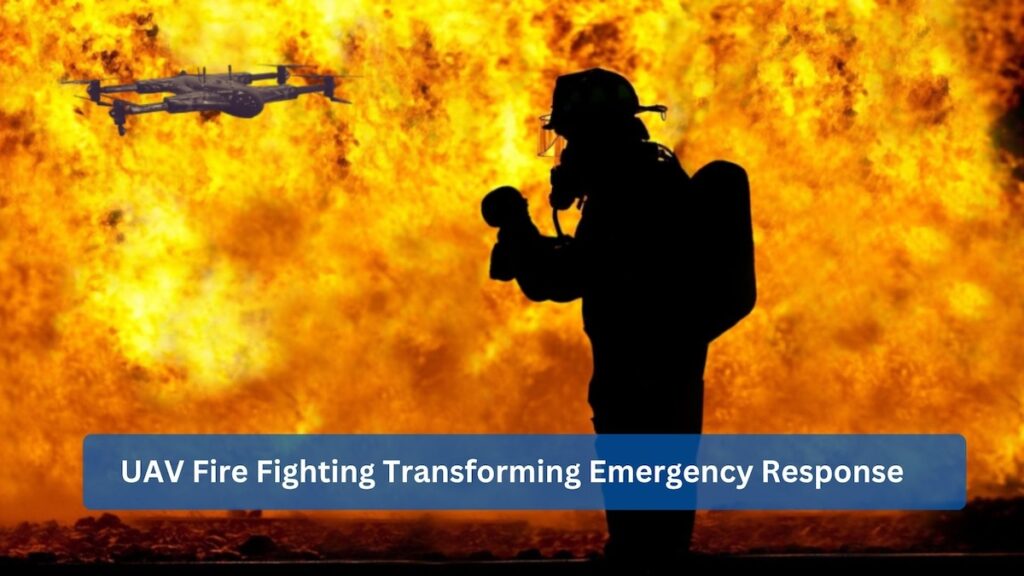
As fire departments seek new ways to respond to increasingly complex emergencies, ZenaDrone is developing UAV technology for emergency response, including platforms such as the ZenaDrone 1000 that are designed to support fire suppression operations. Read more >>
The company’s technology reflects a broader shift toward autonomous aerial systems that help emergency responders gather critical information, operate in hazardous environments, and improve coordination during fire incidents.
ZenaDrone examines how UAV fire fighting is changing modern emergency response, covering the different types of drones used for wildfire and structural fire operations, along with the technologies that enable them. Topics include thermal imaging, LiDAR, and AI-driven analytics for early fire detection, predictive fire behavior modeling, and real-time aerial intelligence. It also explores how platforms such as the ZenaDrone 1000 can support fire suppression by carrying water or fire-retardant payloads into areas that may be difficult or unsafe for ground crews to access.
Readers will also find an overview of the operational advantages and current limitations of fire fighting UAVs, including deployment speed, improved responder safety, battery endurance, regulatory considerations, and communications requirements. The article discusses how autonomous operation and multi-agency data sharing are enhancing emergency response while highlighting the challenges that must be addressed for broader adoption.
Looking ahead, the feature explores emerging developments such as AI-powered decision-making, swarm drone technology, and integration with smart city infrastructure and IoT networks. Together, these advances are expected to further expand the role of autonomous UAVs in fire prevention, suppression, and disaster response, making this an essential read for anyone following the future of emergency response technology.
Read UAV Fire Fighting: Transforming Emergency Response for more information >>